
We Can’t Forget About Africa During the Covid-19 Crisis

By Tsitsi Masiyiwa, English Sall and Jeff Walker
August 13, 2020 | Read Time: 4 minutes
If we’ve learned anything in the months since Covid-19 entered the world, it’s that this virus respects no boundaries. Even as we contend with rising cases and a faltering economy in the United States, we need to keep an eye on what’s happening across the globe if we are to succeed in containing this viral monster.
Among the places likely to be hardest hit in the months ahead is Africa, which is bracing for the full impact of the coronavirus. Last week, the number of coronavirus cases in Africa passed 1 million, including more than 22,000 dead, although the lack of testing means the number is likely far higher.
Given its weak health system and vulnerability to infectious disease, Africa faces a particularly daunting set of Covid-19 scenarios. The United Nations Economic Commission for Africa has warned that the number of deaths on the continent from the virus could climb as high as 3.3 million if actions aren’t taken quickly to stop its spread and treat those who become infected.
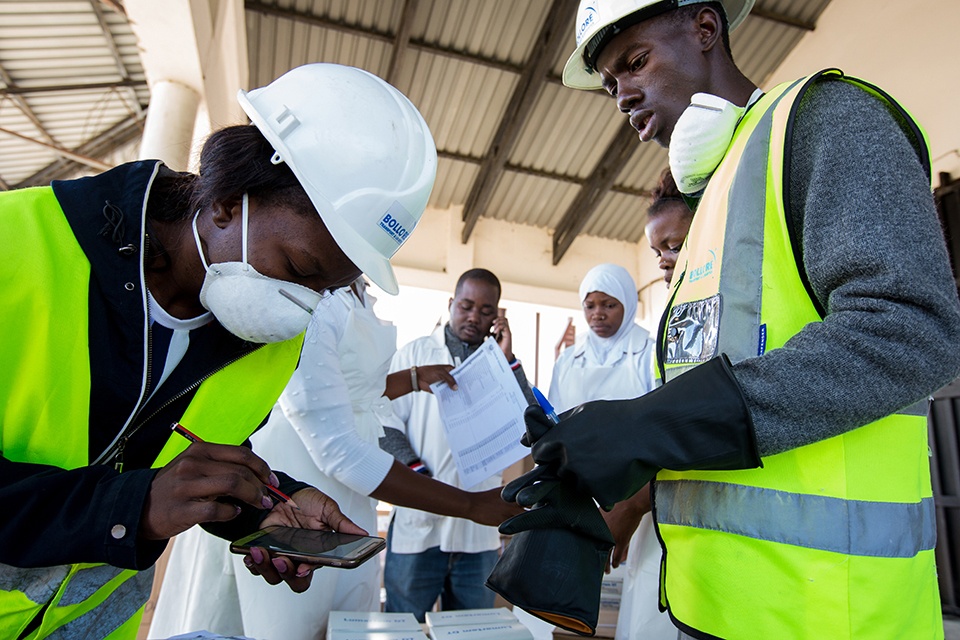
Fortunately, there is one proven way philanthropy can help: by supporting the continent’s vital network of community health workers.
In normal times, these workers administer essential services, such as immunizations, HIV prevention, and malaria control, while also often serving as the only point of care in many African communities. Research has shown that community health workers save lives. John Hopkins University estimates that if Africa had all the community health workers it needed, more than 30 percent fewer children under age 5 — or about 1 million — would die each year on the continent.
Community health workers are an invaluable component for creating healthy and prosperous societies. During a pandemic, they serve an even more critical role. In the Ebola crisis, for instance, they were pivotal players in the identification, containment, and treatment of the lethal virus. In turn, a number of African nations with well-established community-health-worker programs, such as Liberia and Ghana, have incorporated the lessons from Ebola into their Covid-19 plans with great success. In Liberia, for instance, community health workers deployed during Ebola have undergone training to address the specific elements of Covid-19, while also continuing to provide routine health services.
But building up the cadre of these health workers is urgently needed elsewhere in Africa. The greatest short-term funding needs are for personal protective equipment, training, and contact tracing. The Covid-19 Action Fund for Africa, a $100 million project launched this week to provide PPE to community health workers, offers one channel for philanthropists to provide resources for these frontline workers.
Building Resilience
Over the longer term, sustainable funding will help Africa build more resilient community-health systems. Efforts to bolster these programs, while a priority for many African countries, are stymied by fragmented resources and a lack of clearly defined financing. To activate more paid community health workers across Africa, donors could work with local African philanthropists to establish for the first time dedicated and consistent funding.
Perhaps the most compelling call for such support comes from African leaders who have dealt directly with pandemics and are now confronting this one. A recent statement by the End Malaria Council, whose membership includes former Liberian President Ellen Johnson Sirleaf, former Tanzanian President Jakaya Kikwete, and current Kenyan President Uhuru Kenyatta, noted that community health workers “will continue to play a consequential role in saving lives during the response to Covid-19. We urge governments and donors to prioritize these essential frontline health workers.”
Beyond health, Africa will almost certainly experience severe economic shocks as the fallout from Covid-19 puts the progress achieved in recent decades in peril. If Africa’s economies tumble, already high poverty rates will likely elevate. The World Food Programme has sounded the alarm that the pandemic “could further unravel into a food security emergency.” With at least 20 percent of Africa’s population already suffering from undernourishment, this confluence of factors could spiral into famine-like circumstances.
Recognizing Africa’s challenges, the World Bank and the International Monetary Fund have responded with direct support and expanded lending programs. Additionally, Africa’s foundations have mobilized to support the Covid-19 response. Strive Masiyiwa, co-founder for the Higherlife Foundation, is heading a partnership focused on local manufacturing of medical equipment. And Nigerian entrepreneur and philanthropist Aliko Dangote has launched the Coalition Against Coronavirus to address a range of health and economic needs.
Failing to help Africa wage the most effective possible fight against Covid-19 risks significant human loss within those countries and a perpetuation of the virus across the globe. A robust community-health system will not only aid the pandemic response now, but will also help prevent or lessen the impact of future health crises. To stop the spread of this deadly virus, we need to invest in Africa’s community health workers.





