
Leader Discusses Potential and Pitfalls of Efforts to Boost Equity in Grant Making

By Alex Daniels
Contributor
February 5, 2020 | Read Time: 5 minutes
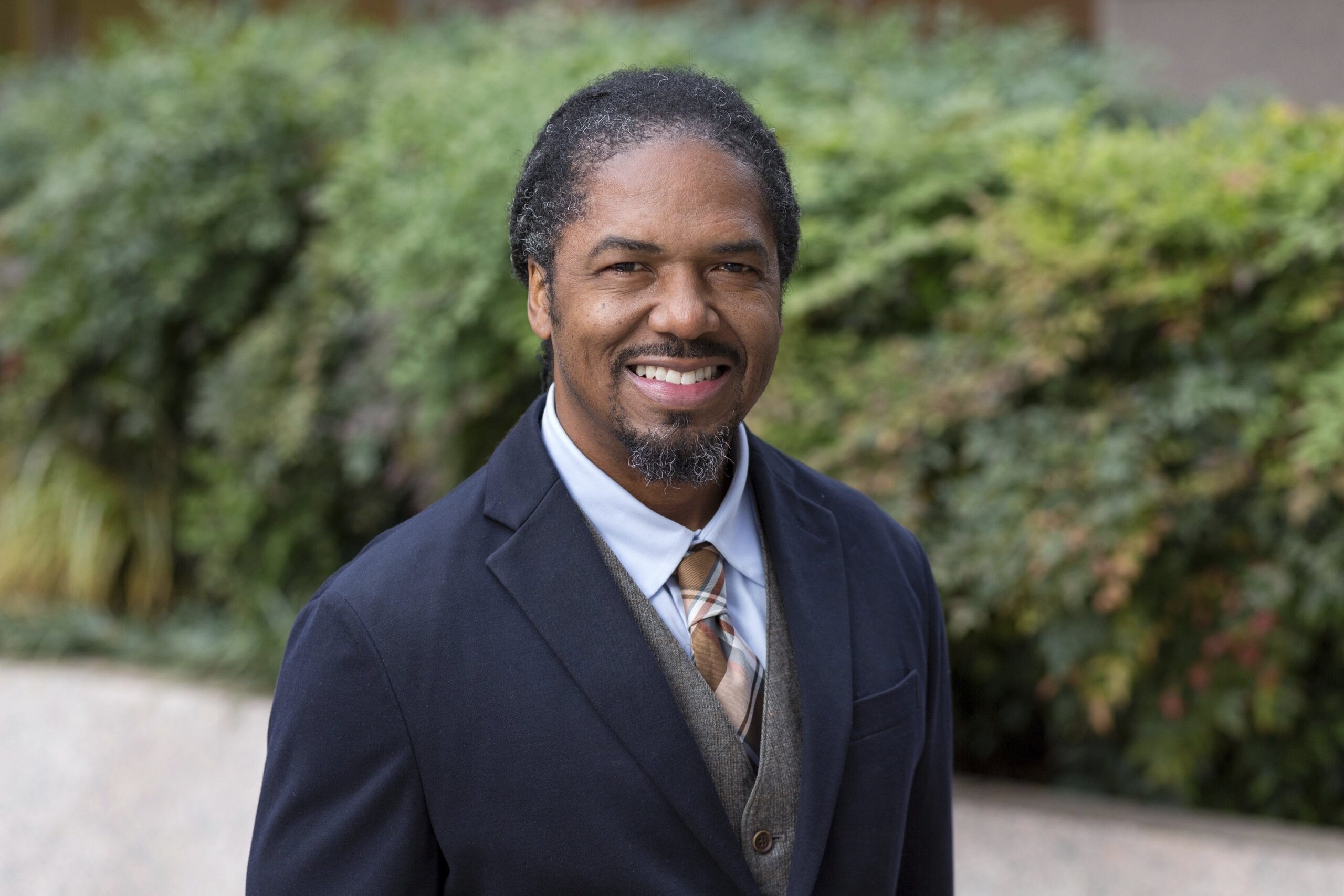
In his previous job directing a racial equity grant-making portfolio at Borealis Philanthropies, Marcus Walton supported a network of 18 organizations that made racial equity a top priority. Since taking over as president of Grantmakers for Effective Organizations (GEO) in September, Walton has tried to translate that work to an association with more than 7,000 members.
Under Walton’s predecessor Kathleen Enright, who now serves as president of the Council on Foundations, the group in 2018 committed to a four-year plan to incorporate racial equity into all its work. The group would like to increase the level of support for racial-equity programs and increase the number of philanthropies that make racial equity a central part of their work.
Walton plans to gather grant makers, nonprofits, and advocates in more than a dozen regions around the country to identify the roots of racial disparities and determine how to change public policy and nonprofit practice to achieve success.
Walton sat down with the Chronicle to talk about what he’s hearing along the way.
This interview has been edited for clarity.
Grantmakers for Effective Organizations is about halfway through its four-year racial-equity plan. What are you learning from your visits across the country?
Marcus Walton: My vision is to continue to collect knowledge and identify the thought leaders around the various issues in a particular geography. Then we can describe how things became the way that they are. From a legislative point of view, decisions were made, sometimes intentionally, to create advantages for some groups and disadvantages for others. The impact of those decisions has created or perpetuated disparities that philanthropy is trying to address.
Education, child welfare, transportation, and housing are all part of that story. So, there’s a social context, and there’s a political context that is being unearthed and refined with clarity. The strategy is to tell that story in the most dynamic way that informs our way of thinking about how to be effective in our grant making.
This seems more difficult than leading a typical professional-development association.
Marcus Walton: We’re still the traditional pay-my-dues organization. You can go to the learning conference, the national conference, you can join the fellowship, you do the webinars. Staff connects with other staff around the country and develop their networks.
One of the shifts under my leadership is to achieve the most practical application while painting the most vivid aspirational picture imaginable for a membership association.
So what do GEO members aspire to?
Marcus Walton: I’m noticing a generational shift in leadership. This generation is more grounded in change. They’re progressive-minded. So there’s an urgency that creates a lot of disruption when organizations adopt these racial-equity change agendas. Other organizations are experiencing a quiet desperation because they don’t have a clue what to do.
How can you help leaders in organizations that are struggling?
Marcus Walton: Our colleagues in the field are seeking the right tools. For instance, they want to be more equitable in their human-resources practices or in their grant making. But it’s not so much the tools; it’s the thinking that you’re using to identify the tool. An equity focus is a grant-making culture that informs our behavior. It prioritizes the groups that are most marginalized. By helping them, we’re covering the others.
The only real way to work collectively is to establish trust. The language that we use matters. I define racial equity one way. Someone else is defining it another way. Someone else is saying equity; someone else is saying diversity. And they’re all meaning the same thing. Or someone else might say racial justice” and feel like we’re farther apart than we actually are. So, part of being in a relationship is really having clarity around our definitions, how we’re defining success, and how we’re defining our priorities.
Developing an agenda around equity involves self-critique. How do you encourage foundation leaders to take that step?
Marcus Walton: Our members have said they want to go deeper in this work in ways that are transformative. Not in ways that generate shame or exclude members based on their ignorance of what to do. We understand that there is a growth trajectory to this. There is a developmental cycle of doing this work and mastering a set of analytic priorities to close disparities.
When does adopting that agenda begin to pay off?
Marcus Walton: We’re describing to people what they should anticipate without being able to tell them exactly what it is. We can tell them what it’ll feel like. We can point to examples of what other people have done when they move through a similar phase. I can describe a phase and a life cycle, but I can’t pinpoint what your exact experience is going to be. We all care about metrics. It’s so interesting when people say that it’s important for us to be able to measure. I agree. The implied question is “how long is it going to take us to do this?” Our response is that it takes as long as it takes. A journey is directional. It has milestones, but the time frames are not as concrete. The learning takes place outside of our comfort zone in spaces where there’s dissonance. We actually depend on a dissonance to leverage the best of what we bring to the table in terms of resources and experiences.
What frustrates you about the pace of progress?
Marcus Walton: The closest thing that I’ve experienced to frustration is the comfort level with the status quo. I could feel more encouraged about philanthropy’s potential if more of us were willing to use our very privileged positions, our very comfortable seats that are at an arms-length from any real blowback, and organize a set of riskier conversations. Too many of us are not acting, we’re not learning. Guess what? We never get it right. So why don’t we go big and try to get it right? You can’t incrementally transform anything.







