
Preserving a Culture — and the Planet
A leader at the Wildlife Conservation Society explains how the organization works with local residents to incorporate their cultural practices in ways that benefit nature.

By Ariella Phillips
Contributor
November 5, 2019 | Read Time: 2 minutes
Stacy Jupiter dreamed of being a marine biologist since the age of 12. Then after graduating from college, she volunteered in Gabon with the Peace Corps.
“I spent my life in mud for two years,” she says. “That’s where I fell in love with working with communities.”
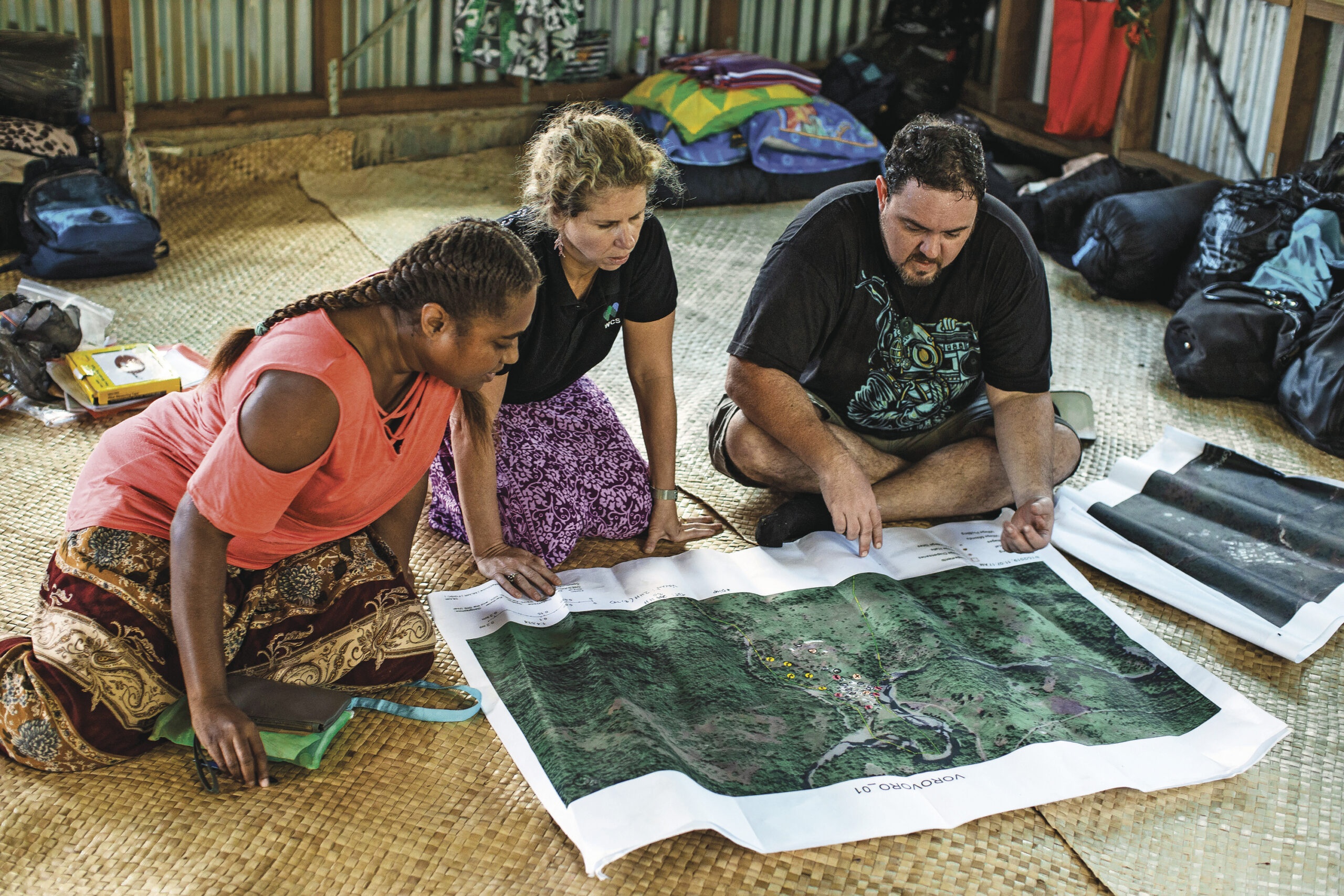
Today, Jupiter’s two passions come together in her work as director of the Melanesia program at the Wildlife Conservation Society, where she works with local residents to incorporate their cultural practices into conservation efforts.
Her research on periodic closures to fishing, known as tabu, has led to sustainable fishing practices across the Southwestern Pacific. For example, when a tribal chief dies, local residents do not fish in a particular area, usually for 100 nights. Once the ban is lifted, they enjoy a bountiful feast. The rest periods can be an effective tool for managing overfishing, she says.
None of Jupiter’s days are the same, she says. One day she might have meetings with government officials in Papua New Guinea. Another day she could be out in the field working with colleagues to design a watershed-management plan. By the end of the week, she could be in California meeting with other scientists.
This year, Jupiter was awarded a $625,000 MacArthur Fellowship for her work protecting the biodiversity of coastal ecosystems in Fiji, the Solomon Islands, Papua New Guinea, and Vanuatu.
Over the next five years, the length of the fellowship, Jupiter thinks she may start a cafe and market for sustainable seafood with her husband, a chef. She also plans to develop a scholarship for Pacific Island students who want to solve environmental problems.
In addition to her research and policy work, Jupiter also creates her own teaching tools, such as comic books and puppet shows to teach kids how to keep waterways healthy.
“It’s important to hit people while they are young,” she says.
Ariella Phillips is a web producer at the Chronicle. She often writes the monthly Face of Philanthropy column, which focuses on small nonprofits around the world. She recently wrote about a charity helping poor people living in the rainforest . Email Ariella or follow her on Twitter .




