
June 4, 2019 | Read Time: 2 minutes
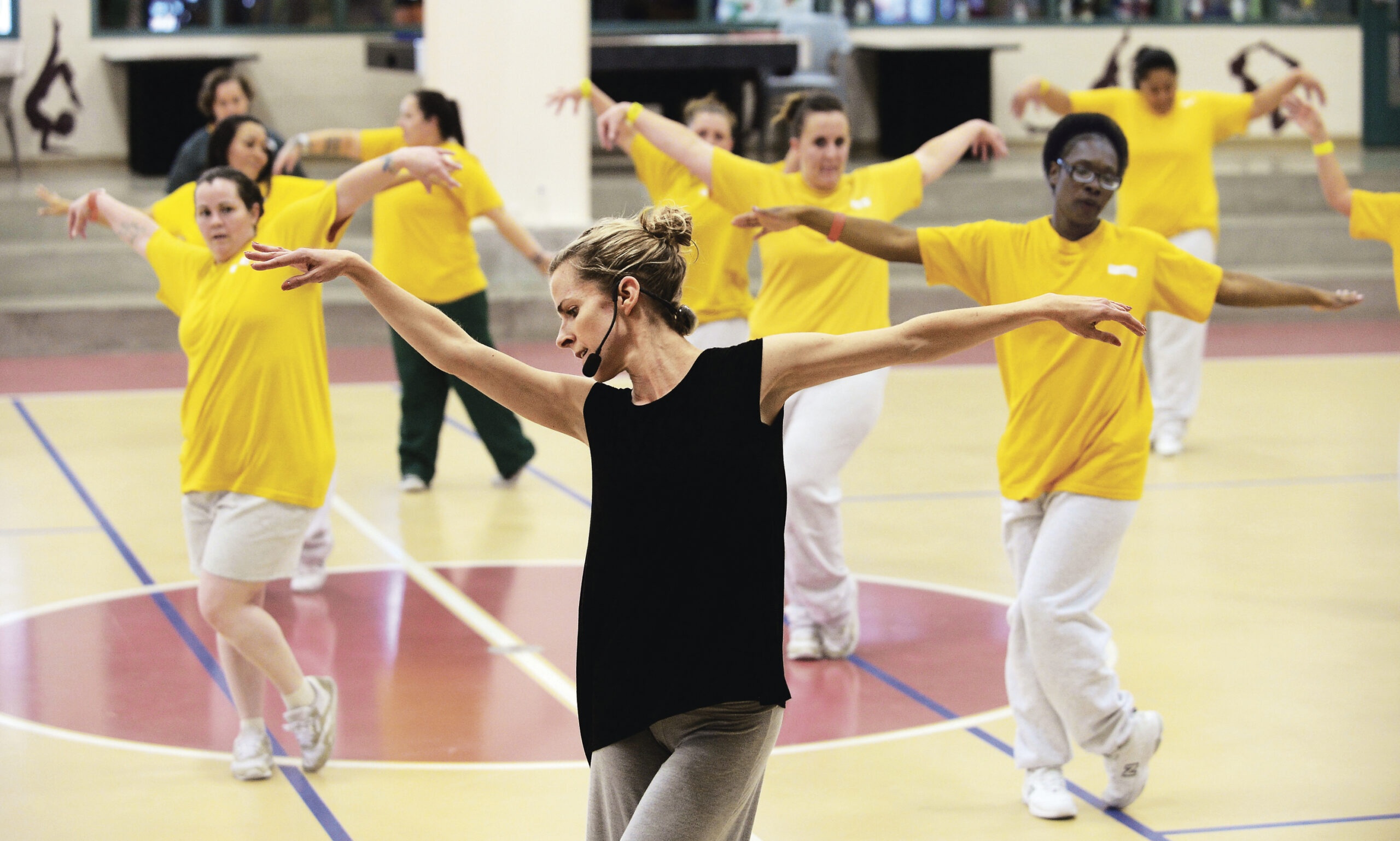
Lucy Wallace is a dancer who has spent a lot of time in prison. That’s because Wallace, the co-founder of Dance to Be Free, travels the country teaching dance classes to incarcerated women to help them cope with depression, despair, PTSD, and complex trauma.
Wallace taught her first classes at the Denver Women’s Correctional Facility in 2015 at the suggestion of friends and the following year began branching out to other prisons. Despite her assumption that most prisons would turn her away, not one has.
“I’ve never had a warden say, ‘No, we don’t want your program,’ ” Wallace says. “They’re grateful to get programming, especially in rural areas that are so remote no one goes there to volunteer.”
A former dance major who has a master’s degree in psychology, Wallace incorporates a mix of movement styles into her dance classes, including jazz, lyrical, and hip-hop, and a variety of musical genres. She might play a song by Nicki Minaj one moment and Coldplay the next.
The program involves writing exercises and group discussions that let the women talk about their lives, how they coped with their first few weeks in prison, their biggest challenges, and what they’re getting out of the classes. She provides the prisons with DVDs of the classes and has certified about 400 prisoners who can lead the courses.
Dance to Be Free is in 13 prisons in eight states and operates on a budget of about $100,000 a year. Few prisons will pay for the programming, something Wallace would like to change. For now, the charity receives all of its funding from individual donors, raising roughly $175,000 since 2015.
With no money to hire a professional fundraiser, she and her tiny board rely on online-fundraising campaigns, media coverage, and video footage that the nonprofit is sometimes allowed to shoot during classes to get the word out about its work and attract donations.
Wallace is holding off expanding the program for the time being and is instead focusing solely on the South, especially Mississippi and Florida, where she says women’s prisons are in deep need of programs.