
How U.S. Charity Could Be Transformed by Giving Cash Directly to the Needy

By BENJAMIN SOSKIS
Contributor
December 5, 2017 | Read Time: 14 minutes
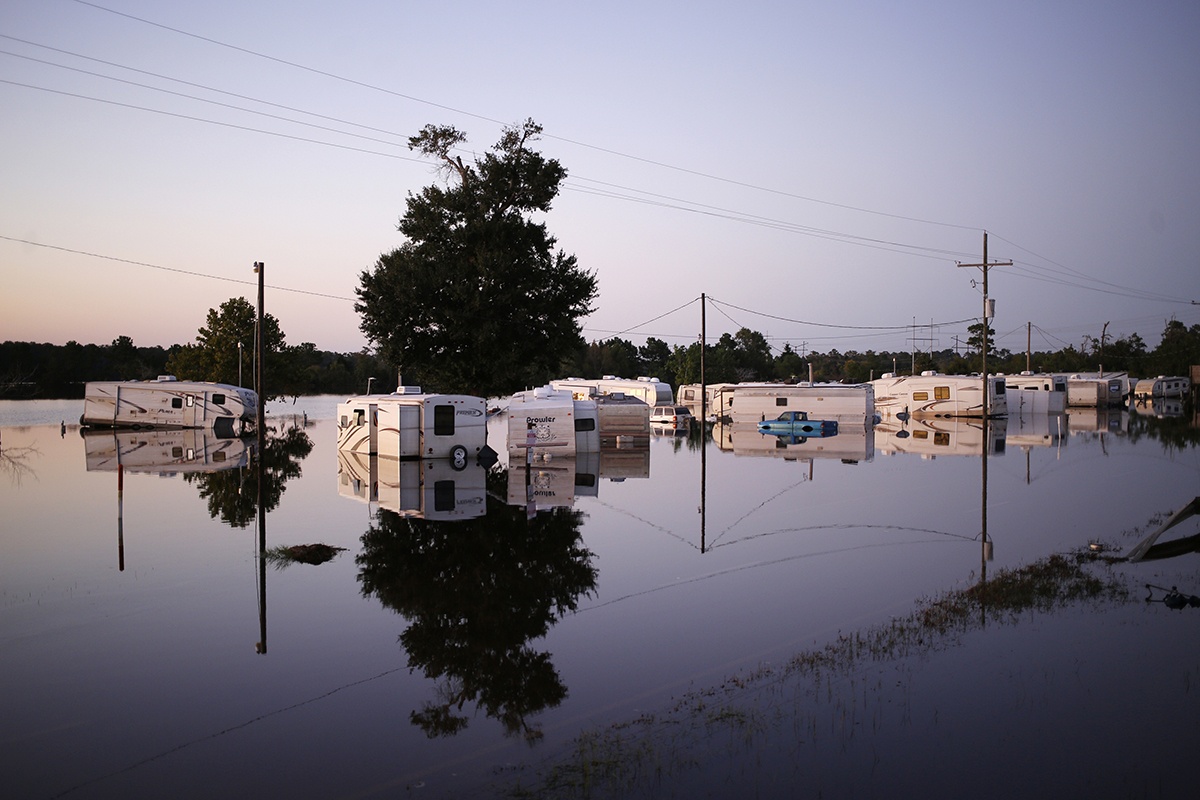
Not long after the start of Hurricane Harvey’s petulant encampment over Southeast Texas, the leaders of GiveDirectly began to consider how the nonprofit organization could help. On the face of it, there was nothing extraordinary about that urge; after all, the devastation caused by the hurricane led to a massive outpouring of hundreds of millions of dollars of charitable aid.
But offering help would represent a big step — and a significant risk — for GiveDirectly, a charity that has become one of the most successful groups to promote and manage a simple but innovative approach: encouraging donors to give cash directly to the world’s poorest individuals, allowing beneficiaries to decide how to improve their own lives, rather than rooting those decisions in programs designed by outsiders.
GiveDirectly’s work has so far been concentrated in East Africa; over the past six years, it’s shepherded $150 million to some of the neediest communities in Kenya and, more recently, to Rwanda and Uganda.
The choice of where to work has been driven by its origins in the “effective altruist” movement, which holds that givers are morally obligated to do the most good with their money, which often means supporting the world’s poorest places, where a dollar can go the furthest.
Southeast Texas, though ravaged by storm, is not one of those places.
GiveDirectly’s staff worried about what would happen if the young organization channeled donations away from Africa toward the United States.
Yet they also saw an opportunity. There was no existing dedicated option for donors to give cash directly to victims of domestic natural disasters, despite the mounting evidence that such programs are especially cost-effective humanitarian interventions.
By establishing a “demonstration project” in the Houston region (staff members were careful not to call it an experiment, since it would lack the methodological rigor of their work in East Africa), they could introduce Americans to the “effectiveness and dignity of cash.”
And down the line, the experience of giving cash directly to those who needed it in Texas might encourage more support for the approach in the developing world. GiveDirectly would raise a separate pot of funds to help victims of Hurricane Harvey, not using any that had been given for their work in Africa. Nor would the charity counsel its own donors to contribute to the effort. But its leaders hoped to persuade those who were already committed to helping the Texas recovery to do so by giving cash directly.
So GiveDirectly’s demonstration project would have two goals.
The immediate one was to help Harvey victims get back on their feet.
The longer-term goal was to change the way we think about disaster relief and the charitable relationship itself. It’s part of a broader movement, which includes a mounting interest in participatory philanthropy, in shifting power from givers to recipients. If the post-Harvey recovery poses a daunting challenge — initial estimates of the damage range from $65 to $190 billion — establishing cash as the humanitarian default might prove an even more difficult, consequential task.
Yet globally, there are signs that such a transformation is slowly starting to take shape, in part, due to the overwhelming evidence that giving cash is effective. In fact, the approach is “among the most well-researched and rigorously evaluated humanitarian tools of the last decade,” a panel of development researchers from the Center for Global Development and the Overseas Development Institute pronounced in 2015.
Uniform Eligibility
Such research is amplified by growing demand to respect the autonomy of aid beneficiaries. Unlike in-kind donations or humanitarian programs designed by technocrats, giving poor and needy people cash allows them to decide how best to improve their condition. Long-entrenched concerns that the poor would only waste money on extravagances or on drugs and alcohol have been shown to be largely unfounded. Several major humanitarian relief groups have recently made major commitments to provide cash, as opposed to material, relief.
In 2015, for instance, the International Rescue Committee pledged to deliver a quarter of its humanitarian aid in the form of cash by 2020 (up from around 6 percent). Last year, the United Nation’s secretary general urged that direct cash transfers become the “preferred and default method of support” for international aid.
And as Annie Lowrey recently noted in a piece about GiveDirectly’s Harvey demonstration program for the Atlantic, “The United States Agency for International Development now recommends that Americans stop giving goods and start giving money to disaster areas, whether here in the United States or abroad.”
By mid-September, GiveDirectly had sent one of its Kenyan field directors to scout out the region and search for a town on which to focus its efforts. The staff would come to rely heavily on the expertise they had developed in East Africa. “One nice thing about giving people money is that it’s probably the most transferable intervention,” notes GiveDirectly co-founder Paul Niehaus. “The whole point is to give people flexibility to react to local circumstances themselves.”
In its East African work, GiveDirectly has gravitated toward a simple framework for implementing cash transfers. It identifies relatively small, poor communities and seeks to enrolls everybody in them, thereby minimizing internal tensions and complaints about eligibility. It followed a similar approach in Southeast Texas, settling first on Rose City, a town of a little more than 500, located 90 miles northeast of Houston. Rose City experienced extensive flooding. Nearly every building in it was badly damaged, so GiveDirectly could establish a uniform eligibility criteria of residence.
GiveDirectly’s work in Kenya had also taught staff members the importance of securing full community buy-in to pre-emptively address concerns and suspicions. Before handing out money, the organization’s representatives reached out to the town’s mayor and to the pastor of the largest church, much as they first approached village elders in Kenya. They also scheduled a town-hall meeting, the equivalent of the baraza, the gatherings through which Kenyan communities make many major decisions. When team members joked that a town hall is what they call a baraza in Houston, they were registering how transportable much of their work proved to be.
They were also acknowledging another striking dimension of the Houston effort: Most of the knowledge about how best to ensure cash is an effective aid instrument comes from the developing world. Americans were now enjoying a sort of research remittance: experiments done abroad could help shape cash transfer programs in the United States.
Once GiveDirectly received the town’s support, it was able to build up a list of eligible recipients of the cash transfers from water bills and the Yellow Pages. At first, when the organization did not know how much money it would be able to raise for the project, it planned to select recipients randomly. As soon as it received enough funds (which it quickly did), the charity could distribute cash to the entire list.
GiveDirectly staff members contacted all of the eligible town residents and asked them to meet at the town hall at a scheduled time, where their identities were verified and where they received a prepaid debit card worth $1,500.
The staff faced some initial skepticism from residents: To many, the offer of no-strings cash seemed too good to be true. But those suspicions were quickly pushed aside by their frustrations with the in-kind aid that made up a sort of second-wave flood into the town. Piles of bottled water were stacked everywhere, even though the town’s water system was fully functioning. A nearby warehouse bulged with used clothes and furniture. Local volunteers reported to the Atlantic’s Ms. Lowrey that someone associated with Tommy Hilfiger had sent them $300,000 worth of the designer’s jeans. “I’ll buy my own damn pants,” one Rose City resident huffed.
With cash, he could. Or he could buy kitchen supplies and prescription medicine, pots and pans and pillow cases. He could fix a lawn mower or pay for mold-removal services — all things that residents reported they planned to do with their $1,500.
Red Cross Cash-Transfer Program
This idiosyncratic variety, chronicled in several prominent journalists’ accounts of the demonstration project, confirmed a fundamental premise of GiveDirectly’s work: the folly of givers trying to determine recipients’ needs. It provided a book-end countering the catalog of random in-kind donated goods that frustrated so many residents.
In late October, GiveDirectly announced that John and Laura Arnold, a billionaire couple from Houston, had donated $5 million to expand the cash-transfer program in Southeast Texas. The extra funding allowed GiveDirectly to fully saturate Rose City and to move on to a number of other “low-income, hard-hit” communities in the area. The organization estimates that it will be able to give cash to some 3,000 Texas residents in all.
Demand for GiveDirectly to work in Houston reflected donors’ growing frustration with the more traditional services offered by disaster-aid groups, especially anger directed at the shortcomings of the American Red Cross.
But ironically, the Red Cross had just undertaken a large expansion of a cash transfer program itself. In the two months after Harvey struck, the group raised $429 million, $229 million of which was authorized for “direct financial assistance” to victims. In $400 increments, it has given cash to more than 573,000 households.
Those are stunning, if underreported, figures, dwarfing sums the Red Cross has provided to victims in the aftermath of previous disasters. According to Sherri Brown, the Red Cross’s president for humanitarian services, a combination of three innovations made it possible.
First was RC View, a virtual disaster-response and mapping tool, unveiled last year, that provided improved satellite imagery of the disaster area. The guidance meant that caseworkers didn’t have to travel directly into disaster zones to assess damage; they could do so remotely, even while evacuation orders were still in place. Together with RC View, advances in electronic payment capabilities, from sites like PayPal and MoneyGram, as well as in identity-verification technology, combined to allow the Red Cross to make a major commitment to direct cash assistance and, according to Ms. Brown, to “put assistance in the hands of people who needed it faster than we’ve ever done before.”
Technological shifts, rather than ideological ones, spurred the move. Tellingly, the Red Cross has not seemed to place special emphasis on cash transfers as a means of enhancing the autonomy of recipients. Nor has it signaled that its work helping Harvey victims portends a decisive transformation in the organization’s approach to disaster relief.
Perhaps relatedly, the organization has not reaped the positive publicity that GiveDirectly earned with its cash-giving program. In part, this is due to the exceptional challenges of scale that the Red Cross faces as the nation’s largest private humanitarian-aid organization.
According to the Houston Chronicle, a day after the online site the Red Cross had set up to administer the financial assistance went live, it crashed due to the massive volume of applicants. It stayed down for more than a week. Once the program revived, it began generating complaints from individuals who had been denied cash assistance, because they could not prove either that they lived in the areas targeted or that their homes had experienced enough damage to warrant assistance based on the Red Cross’s eligibility criteria.
One contract employee for the Red Cross who helped manage the system estimated that thousands were denied aid for which they were likely eligible. In spite of — or perhaps because of — the administrative efficiencies that cash transfers offer, these conflicts over eligibility can breed particular resentment among those rejected. Faced with a degree of need that even its impressive fundraising prowess could not address, the Red Cross had to assume the burden of active discrimination to implement its cash transfer program.
And yet, another upsurge in direct cash donations as a response to Hurricane Harvey seems to stem from the belief that this burden could be a blessing.
After the 2001 terrorist attacks, the Internal Revenue Service developed guidelines outlining how foundations could offer emergency assistance directly to individuals and families in need. For the last several years, Foundation Source, the nation’s largest provider of support services for private foundations, has been developing materials to facilitate that sort of grant making.
According to Page Snow, the organization’s chief philanthropic officer, there’s been a pronounced uptick of interest in such giving among its base of small family foundations. Some of Foundation Source’s clients have already made a half dozen direct cash gifts to individuals in response to Hurricanes Harvey, Irma, and Maria.
Donors have reported to Ms. Snow that they find this sort of giving the most fulfilling form of philanthropy.
Not only is it relatively easy to administer for foundations with small or no staffs but donors can see the immediate impact of their work, and they can target their giving to beneficiaries they know personally or rely on trusted third parties, like local religious leaders or police, to direct them to those in need.
It’s an approach that suggests the persistence of an older tradition of patrician philanthropy, one built on the sympathetic response to the “begging letter,” which predominated before the advent of “wholesale philanthropy” in the early 20th century.
In this model, benefactors actively discriminate between charitable applicants and most often restrict their giving to familiar, intimate circles, where that discrimination is most easily sustained.
So now multiple cash-transfer programs take place in the United States. Our understanding of cash as a humanitarian instrument will develop out of the complex interaction of those programs and the mix of gratitude and grievance that they engender.
That means we should be especially attentive to the contradictions and tensions between these responses.
For instance, as one Rose City resident who received cash from GiveDirectly explained to Vox’s Dylan Matthews, although she was initially uneasy about accepting the money, she was ultimately comfortable doing so because GiveDirectly “made it feel like I wasn’t just taking a handout. This was a gift from a bunch of people you don’t know.”
In this context, and unlike the one outlined by Foundation Source’s Snow, getting cash from a charity is attractive precisely because it allowed some degree of estrangement between giver and receiver. The exchange remains depersonalized, as none of the donor’s preferences or personality accompany the gift, as they do with in-kind donations.
Emotional Needs
Yet the emotional needs of givers and recipients are not always well aligned. The depersonalized nature of no-strings-attached cash gifts that make them attractive to some beneficiaries might also limit their appeal to a broader audience of benefactors. One of the reasons the public keeps sending food, clothes, teddy bears, and so much other random stuff in the aftermath of disasters, despite the entreaties of aid organizations to give cash instead, is because of the emotional benefits that such giving delivers. Something of the giver’s person resides in the in-kind gift. And the donor can imagine, without too much mental labor, how the beneficiary might enjoy it. As Joe Huston, the chief financial officer of Give Directly remarks, “I think it is somehow more satisfying to people to go to the grocery store to buy a ton of cans, put them in a box, and ship them. … That has a different emotional feeling than cutting a check. Somehow we have to bridge that gap.”
GiveDirectly is definitely minding that gap, especially as it relates to its work in East Africa. Earlier this year, it unveiled GDLive, an online portal in which the charity’s beneficiaries tell their unfiltered stories about how they have spent the money they received.
But transforming cash into the charitable default will require even more work. Cash’s advocates will have to demonstrate the ways in which its ability to respect and enhance recipients’ freedom and autonomy also provides emotional compensation to givers. “If I give you a cow, there’s just one story,” notes Mr. Niehaus of GiveDirectly, referring to one of the more popular in-kind gifts to the developing world. “There’s no surprise. But if you give people money, anything can happen.”
Anything can happen. That’s cash’s selling point and its liability. And the same might be said more generally of GiveDirectly’s demonstration program in the United States. As Mr. Niehaus concludes, “There’s a sense of adventure and excitement in investing in human potential and seeing what happens.”
Benjamin Soskis is the co-editor of HistPhil and a research associate at the Center on Nonprofits and Philanthropy at the Urban Institute.






