
Demand for Information on Harvard Gift Raises Thorny Issues for Fundraisers

By HEATHER JOSLYN
Contributor
March 9, 2017 | Read Time: 6 minutes
In building their fortunes, some wealthy donors acquire unwieldy baggage: far-flung companies, tumultuous business partnerships, and possibly lawsuits.
But it’s unusual for a court to order a donor’s charitable beneficiary to help unpack that baggage.
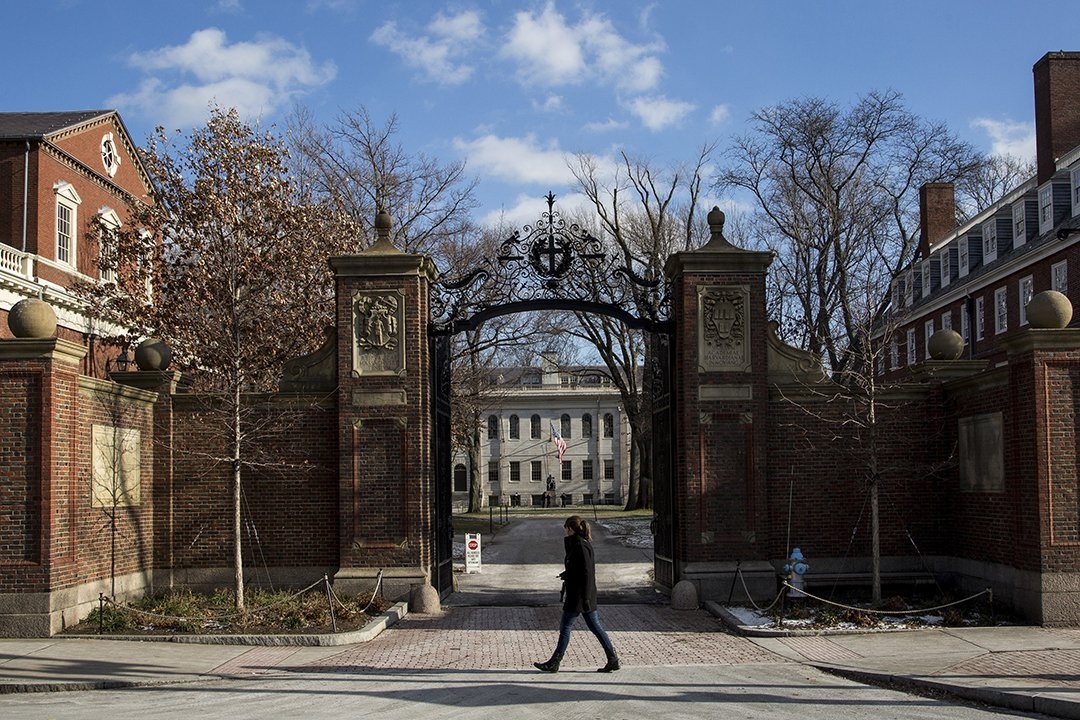
Harvard University fielded just such a demand late last month when a federal judge in Boston ordered it to provide testimony and documents showing how an alumnus and donor, Charles Spackman, sent the institution money.
The request for bank-account and routing numbers and other private financial data, according to The New York Times and other news outlets, came as part of an attempt by an investor, Sang Cheol Woo, to collect on a judgment against Mr. Spackman in a South Korea court six years ago, in the wake of a business deal gone sour. The Boston court also ordered Mr. Spackman’s daughter, a Harvard undergraduate, to testify in the case. (Through a spokesman, Harvard declined The Chronicle’s request to comment for this article.)
Mr. Woo, a minority shareholder in Littauer Technologies Company, charged that major investors in Littauer, like Mr. Spackman, benefited when the company’s stock collapsed in 2001. The Seoul High Court agreed, saying Mr. Spackman and others profited from a timely stock sell-off; in 2011, it ordered Mr. Spackman to pay Mr. Woo $4.5 million — now $12 million, due to accumulated interest.
As news of the case makes it way through fundraising circles, some experts say it underscores the need to carefully vet potential donors and be prepared to decline gifts when a donor’s financial history could pose problems for a charity.
“Everyone has to be more savvy than they were 10 years ago,” says Doug White, a philanthropic adviser and author of Abusing Donor Intent. And turning away an eager supporter, he acknowledges, can be tough for development officials. “We fundraisers are welcoming, open. Saying yes is in our nature.”
The Harvard-Spackman case, Mr. White says, illuminates how much the fundraising world has changed in response to donors’ global business interests. Sticky situations are “going to be more of a possibility” for charities, he says, “as more money moves around the world.”
The Limits of Research
Jill Meister, board president of Apra, an association of prospect researchers, has worked in the field for 25 years and says she’s never heard of anything like the Harvard case. Her board has been discussing the issues at play, with special concern about how it might reflect on prospect researchers.
Prospect researchers, she says, adhere to ethical guidelines set down by her organization and other trade groups, such as the Council for the Advancement and Support of Education, and rules established by their employers.
The people who dig for financial and other information on potential donors have access only to public records, she says, not the sort of privileged data the Boston court is requesting of Harvard.
Researchers can see that a lawsuit was filed or that a person filed for bankruptcy, and they can alert colleagues if a potential donor’s history raises questions.
The information gap can be even bigger when the donor lives or has businesses in other countries. Such supporters are ardently courted these days by higher-education and other big institutions.
“One of the things we struggle with as researchers in the United States is that information that happens in courts in other countries is very hard to see or find,” Ms. Meister says. “Unless there’s a particular reason, I’m not sure that anyone would have seen that particular lawsuit” in the Spackman case.
Doing Due Diligence
Nonprofits are likely to run into more cases in which their most generous donors either live abroad or do a lot of business there, Mr. White says.
“And fundraisers might say, ‘Well, how am I supposed to know what everyone is doing in the entire world?’ You’re not going to,” he says. “But give a good effort at trying.”
Establishing strict protocols for accepting gifts over a certain dollar amount can alleviate some risk, say Mr. White and Ms. Meister.
An organization’s gift-acceptance committee or board can also bolster due-diligence efforts, Ms. Meister adds, voting on whether to take a gift from a donor whose background is not well known.
Some nonprofits, Ms. Meister says, refuse gifts from donors who wish to remain anonymous even to the charity. “That’s one way an organization can shield themselves from someone whose gift could cause problems down the road.”
A few times at the National Philanthropic Trust, which sets up and manages donor-advised funds, financial advisers have insisted on keeping a donor’s identity anonymous, says Eileen Heisman, president. In such cases, she says, the anonymous donor’s advisers have been asked to sign affidavits declaring that the donor’s money was not acquired illegally.
None of those gifts closed, she notes: “I’m not sure if that was the deterrent or not.”
Vetting Help From Donors
The Harvard case, Ms. Meister says, may also cause donors to worry that they could subject themselves to invasive financial scrutiny through their philanthropy. “You could say that donors with nothing to hide have nothing to worry about, but that’s how real life works,” she says.
In the future, she speculates, more wealthy supporters might give through a trust rather than directly to protect their privacy.
Donors should be included in vetting efforts, Mr. White suggests. Gift officers should tell major donors that a megagift could invite increased attention to their finances and inquire if the supporter has any legal or other issues that could cause problems for themselves or the charity. Such a step, he says, should be part of all big gift agreements.
The National Philanthropic Trust, like many other nonprofits, subscribes to a service that produces “know your client” — known as KYC — reports on potential donors’ finances and reputation, Ms. Heisman says. The service requires two types of identification from the person being investigated.
But it’s rare for charities to find themselves in situations like Harvard’s, says Ms. Heisman. She can count on one hand the number of times in her 20 years there that the government has requested her organization share information about a donor. And, she says, “whenever the government calls, we cooperate.”
And yet, even if the case is an outlier, she says, it does underscore the need for nonprofits to learn as much as they can about their most generous donors.
She urges fundraisers to heed their intuition and alert their supervisors or board quickly if something seems unusual about a donor’s background.
“I always say to my staff three things: What do we know? When did we know it? What do we do?” Ms. Heisman says. “The goal is never to put your head in the sand.”





