Environmental Leader Is an Outsider With Expertise in Policy and Nature

By Debra E. Blum
Contributor
February 8, 2015 | Read Time: 5 minutes
The U.S. Senate couldn’t agree on Rhea Suh, but the Natural Resources Defense Council could, naming her its new president not long after Congress stalled on offering her a top government post dealing with the environment.
The hitch, she says: the expertise she gained working at two of the nation’s biggest private foundations.
Ms. Suh was an assistant secretary at the U.S. Department of the Interior when, at the end of 2013, she was nominated for an even bigger job, overseeing and coordinating policy decisions for the National Park Service and the U.S. Fish and Wildlife Service.
But last fall, after three failed confirmation hearings in the Senate, she withdrew her nomination.
Ms. Suh calls it “searingly ironic” that the apparent sticking point for some legislators was her background working on environmental issues, like clean energy and conservation, at the William and Flora Hewlett Foundation and the David and Lucile Packard Foundation.
“It’s one of the most important conservation jobs in the country,” she says, “but they didn’t want someone with environmental credentials.”
Ms. Suh believes she could have made a difference in the government role, but she is thrilled to be back at a nonprofit, where, she says, “advocacy, research, and passion can influence politics and policies from the outside.”
An Outsider
Ms. Suh, in fact, has often seen herself as an outsider. The daughter of Korean immigrants, she was born and raised in Boulder, Colo., where few other Asian-Americans lived at the time. But her family shared their neighbors’ passion for the outdoors. She grew up fishing, skiing, and taking family trips to nearby national parks.
“My perspectives have definitely been shaped by being different from the majority of people in my community,” Ms. Suh says. “But I was also shaped by my passion. You can’t grow up in Boulder and not have a real connection to the great outdoors.”
Ms. Suh brings that connection—and her status as perhaps the first person of color to lead one of America’s biggest green organizations—to the council at a time when the environmental movement faces criticism for lacking racial and ethnic diversity. It’s also come under fire for not paying enough attention to issues of environmental justice, like how low-income neighborhoods are disproportionately affected by toxic pollution.
“We picked Rhea based on three key attributes she exemplified in her past careers: leadership, vision, and values. The lifetime of skills and knowledge she brings to bear will help us create a cleaner, safer, more sustainable world,” Dan Tishman, chairman of the Natural Resources Defense Council, wrote in an email to The Chronicle. “She joins us at a pivotal moment in time. The country is changing, the environmental movement is changing with it, and Rhea embodies that change.”
Choosing Priorities
New for the council, too, is picking a leader from outside its ranks. Only two other presidents preceded Ms. Suh: John Adams, who co-founded the group in 1970 and served as its head until 2006, and Frances Beinecke, who took over after being on the staff for decades.
Ms. Suh had worked as an earth-science teacher and a legislative assistant for a U.S. senator before 2009, when she became an assistant secretary at Interior. She handled financial and management matters for the $12-billion agency, including reorganizing oversight of offshore oil and gas in the midst of the Deepwater Horizon oil spill.
Last month, Ms. Suh took over at the Natural Resources Defense Council, which has more than 1.4 million members and what it calls “online activists.” Last year, the organization raised about $120-million, much of it from individuals.
Climate change is her number-one priority in her new post. She plans to accelerate and broaden the organization’s work to curb fossil-fuel pollution by promoting clean-energy and public-health efforts. Also on her docket: expanding the council’s diversity efforts. Her goal is for the organization’s “membership and own employee base to reflect the diversity of America and what hopefully will be the future of the environmental movement,” she says. (About two-thirds of the council’s roughly 470 employees are white, according to a spokesman, noting that the group does not collect data on the ethnicity of its members.)
More important, Ms. Suh says, she plans to focus the Natural Resources Defense Council’s work on helping minorities and poor people. Among other efforts, the organization has a Spanish-language project and urban-focused programs that are being carried out in collaboration with local environmental-justice groups.
“I want to deepen that work,” Ms. Suh says. “I want to build common cause with folks living in those communities where environmental issues are not esoterica—they are real issues about the quality of their lives—and figure a way to truly connect and advocate along with them for everyone’s basic rights to clean air, water, and a healthy landscape.”
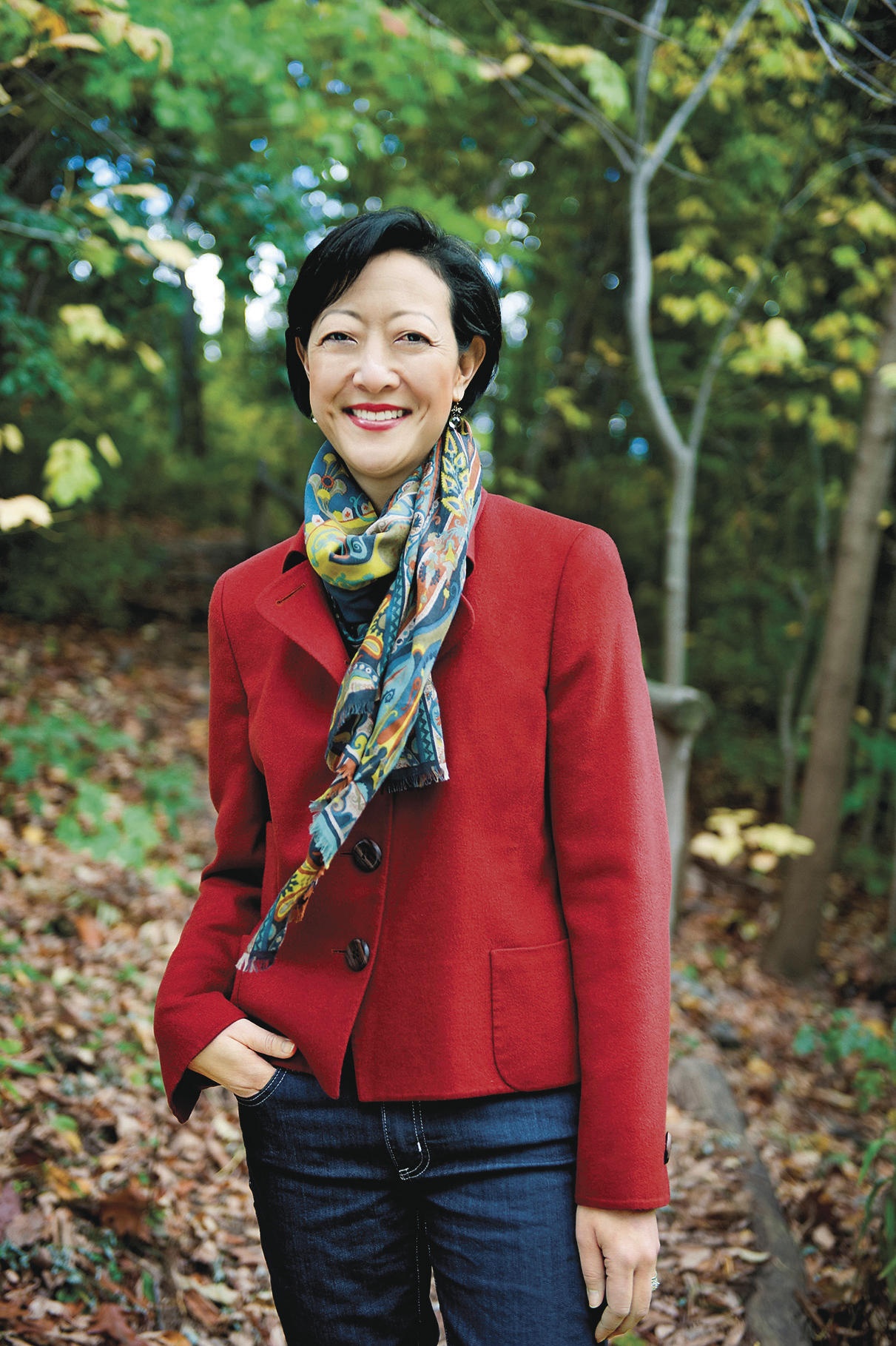
Rhea Suh, president, Natural Resources Defense Council
Education: B.A., environmental science and education, Barnard College; M.A., education, administration, planning, and social policy, Harvard University
Career highlights: Assistant secretary for policy, management, and budget at the U.S. Department of the Interior; program officer, the David and Lucile Packard and the William and Flora Hewlett foundations; legislative assistant to Sen. Ben Nighthorse Campbell
Salary: She declined to reveal it. Her predecessor, Frances Beinecke, received $435,732 in salary and benefits for the year ending June 2013, according to the organization’s most recent informational tax filing
Favorite outdoor activities: Skiing and fly fishing
Books recently read: A Force for Nature: The Story of NRDC and the Fight to Save Our Planet, by John Adams and Patricia Adams, and The World We Create: A Message of Hope for a Planet in Peril, by Frances Beinecke