
‘Poverty Lab’ Connects Nonprofit Groups With Academic Experts Who Measure Results and Design Programs

By SUZANNE PERRY
Contributor
December 8, 2014 | Read Time: 3 minutes
William Evans, an economics professor at the University of Notre Dame, has spent most of his career researching labor, education, public finance, and health. But for the last several years, he has been applying his expertise to the vexing question of how to break the cycle of poverty.
Rule number one for an economist, he says: “To move people out of poverty, you need to know what works.”
With prompting from the Rev. Larry Snyder, the outgoing president of Catholic Charities USA, Mr. Evans in 2012 co-founded the Wilson Sheehan Lab for Economic Opportunities (LEO), a research center at Notre Dame that aims to identify effective anti-poverty programs by conducting rigorous tests to evaluate their impact.
The “poverty lab” connects Catholic Charities affiliates and other nonprofits with a national network of academic researchers who can help measure results and design programs. Findings are shared with policy makers.
Father Snyder says Catholic Charities proposed LEO as part of a broader effort to rethink the way it delivers services so it can do more than just help people survive. “A number of services Catholic Charities offers are a strategic part of the safety net,” he says. “We’re not ever going to walk away from that. We’re also very much aware we can do this better.”
LEO, with help from a $15-million grant to its endowment from the Wilson Sheehan Foundation, is now evaluating six programs across the country in areas including homelessness, juvenile justice, and early-childhood education. One of the most advanced projects involves a randomized, controlled trial to evaluate Stay the Course, a program operated by Catholic Charities Forth Worth, in Texas, to keep low-income students from dropping out of community college.
Marketable Skills
Stay the Course offers comprehensive services and emergency financial aid to students attending Tarrant County College, where only 9 percent of students graduate after four years. The goal: to get them marketable skills. “Clients have told us again and again they need to get into jobs that allow them to provide for their families,” says Heather Reynolds, chief executive of the Forth Worth charity.
But many students get derailed by problems that “have nothing to do with academics but have to do with life,” says Mr. Evans.
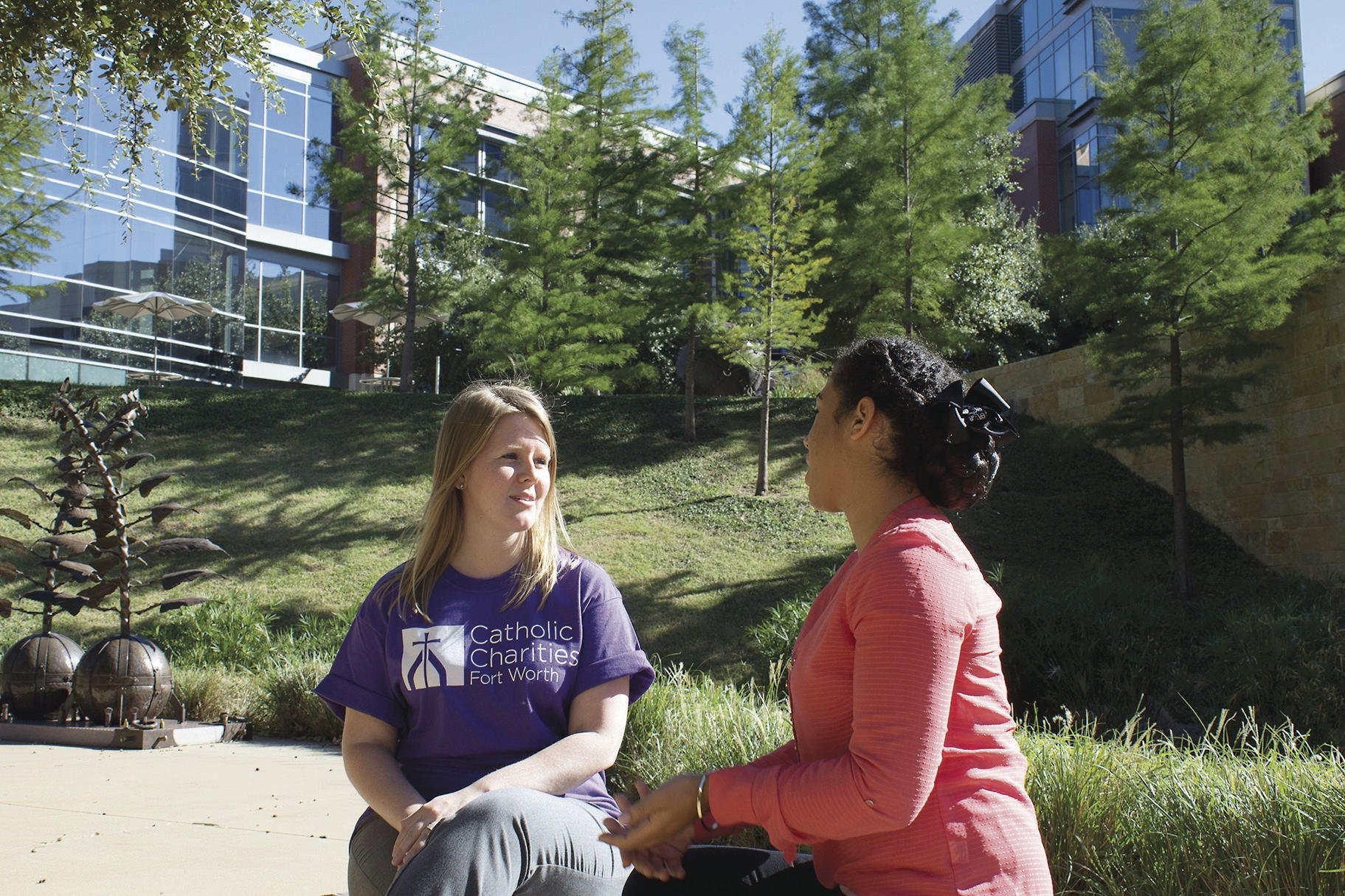
On-campus counselors help students set academic goals and remove logistical barriers to achieving them—for example, helping with transportation, medical emergencies, housing, child care, or job problems.
To test whether the program makes a difference, the project is monitoring two groups of randomly selected low-income students who are enrolled full-time and on track to graduate in three years. One group is receiving the Catholic Charities services and the other is not.
Researchers receive reports on the students’ enrollment status, credit hours, and grades. In the past, Catholic Charities was able to measure how many students they helped and how their lives benefited, says Amy Willard, director of executive operations. “The piece that was missing is, What would have happened if they had received a different service or no service at all?”
Encouraging Results
The three-year project is now in its second year. No formal results are yet available, but, Mr. Evans says, “we’re very encouraged by the numbers we’ve seen so far. It seems to be doing what’s intended: keeping kids in school.”
LEO has been working with Catholic Charities Forth Worth for about a year to design another randomized, controlled trial to evaluate a pilot program that will start next January. Dubbed Padua Pilot, it will offer intensive, long-term services tailored to help individual families build assets that can keep them out of poverty. The charity has a “four-pronged” definition of what that means, says Ms. Willard: They have living-wage jobs, have three months of wages from such jobs in savings, do not rely on government welfare, and have no debt or only “appropriate” debt, like mortgages.
The evaluation will test whether the results are positive enough to justify the high costs of achieving a goal that Ms. Willard describes as ensuring families “are not one crisis away from sliding back into poverty.”




