A Master of Planned Giving Shares His Secrets of Building Relationships

By Eric Frazier
Contributor
August 11, 2014 | Read Time: 10 minutes
Before he found his calling, Jeff Comfort suffered a few false starts. In his 20s, he taught science at a private school. Then he sold stocks. Then he was recruited to serve as business manager of a construction company. Then he directed sales for a homebuilder.
When he found himself near 30 and still searching for his life’s work, he sought advice from a career counselor. The counselor’s battery of tests pointed him toward two jobs: lawyer or development officer.
Law school, with its steep tuition and years of classes, didn’t seem like the right fit. But he had no idea what a development officer did.
“Well,” Mr. Comfort recalls the counselor saying, “you’d better go find out.”
Today he is a respected fundraiser whose counsel peers nationwide routinely seek. Through years of conference speeches and professional-development courses, he has helped mold the thinking of university fundraisers across the country, particularly on his specialty, planned giving.
A Careful Listener
Over a three-decade career, Mr. Comfort has visited, cultivated, and solicited thousands of donors, some of whom have committed six-, seven-, and eight-figure planned gifts.
When he accepted a new job, in 2013, as vice president for principal gifts and gift planning at Oregon State University, the head of the university’s foundation, Mike Goodwin, called him “an accomplished and dynamic leader” whose proficiency in landing big gifts would be a key asset in the institution’s push to complete a $1-billion fundraising campaign.
His friend Cynthia Krause, vice president of the Baylor Health Care System Foundation, says Mr. Comfort’s insights on planned giving are so sharp that she routinely interviews him before her own public presentations and quotes him liberally to her audiences.
“He’s so smart—he’s brilliant,” she says. “He’ll laugh when he hears that I said that. He’s one of the finest gift planners I’ve ever seen.”
Mr. Comfort deflects such praise. He suggests his most important skill is simply the ability to listen carefully to prospective donors, to make an honest effort to understand who they are and what drives their urge to give. He believes that that skill unlocks big gifts more than does skillful salesmanship or fluency in financial matters.
It is exactly the kind of work he dreamed it would be back when he committed to life as a fundraiser. He recalls that, after his late-20s consultation with the career counselor, he embarked on a series of fact-finding interviews to find out just what a development officer did. The process took him to meet a top fundraiser for a big community foundation in his native Denver.
He recalls sitting on the fundraiser’s back porch, drinking iced tea with him, and watching the sun go down over the Rocky Mountains. They talked about life and about the man’s professional and personal journey. The fundraiser told him he saw the job as helping make the world a better place.
“He changed my life. I felt so pumped up. It gives me chills even to think about it today,” Mr. Comfort recalls. “I left thinking, This guy’s values are my values.”
Turning Points
He broke into the field after landing an entry-level job at the National Jewish Medical and Research Center, in Denver, precursor to today’s National Jewish Health. He worked half time securing big donations and half time supporting the director of planned giving. Mr. Comfort recalls that when the planned-giving director left after scarcely a year on the job, he “literally begged” for a chance at the post.
Mr. Comfort won it and set about proving the organization’s trust in him hadn’t been misplaced. He developed a marketing program powered by about one million direct mailings annually. It helped increase annuities and charitable remainder trusts from 11 worth $197,000 in 1986 to about 230 valued at more than $7-million in 1994. His one-man planned-giving operation grew to five fundraisers.
It wasn’t without setbacks, though. The 1987 stock-market crash happened just as he was preparing to send out a print marketing campaign aimed at 150,000 prospects and centered on gifts of appreciated stock, of all things.
“I remember panicking,” he says. “I ended up calling the printer and trying to pull it back and being told it’s too late.”
He adds, “It was embarrassing, expensive, and I’ll never forget it. I learned to think ahead about possible contingencies and try to keep my marketing plans broad so that I’m not taken under” by one event.
But he also remembers one of his most significant early gifts. It came when he went to see a man in Phoenix whose father had left an estate with instructions to give $50,000 to the Jewish medical center. But the man had made it clear he had no intention of donating any more than that to the center.
So while in Phoenix, Mr. Comfort squeezed in a visit to another man who’d been giving small gifts, usually around $50, for some 30 years. Dividends from stocks formed a big part of the man’s income, and he didn’t realize he could give more. Mr. Comfort recalls putting him into a charitable gift annuity that would have been worth about $25,000 at the time.
“I was ecstatic,” the fundraiser says. “It was my first life-income gift. My first planned gift.”
Adding Zeroes
Such early successes solidified his belief in the power of planned giving. Bringing the topic into discussions with a potential donor can “add a zero or two or three” to the eventual gift, he says.
Many affluent donors today know about such donations. But back then, he says, people marveled at the way such annuities could be structured, allowing donors to set up a fund in a spouse’s memory, for instance, and be paid income for life while receiving tax benefits as well.
Says Mr. Comfort: “It wasn’t uncommon to hear a donor say, ‘Are you sure that’s legal?’ ”
Fundraisers, too, were still figuring out how planned giving fit within the broader array of gift options. Early in Mr. Comfort’s career, many fundraisers thought of planned gifts and major gifts as separate entities. Now, he says, they’re realizing it’s not either/or.
“Every planned gift is a major gift and vice versa,” he says. “From the donor’s side, the separation is artificial. They don’t think about it. It’s all on our side.”
‘Jeff Just Let Him Talk’
After about a decade at the Jewish medical center, he moved on, in 1995, to become director of planned giving at Georgetown University. He built the university’s planned-giving department virtually from scratch, taking it from about $3-million to $30-million a year. He played a lead role in luring three of the institution’s largest contributions, $87-million, $75-million, and $40-million.
All were planned gifts. And while the structuring of such donations can involve financial maneuvers complex enough to keep a squadron of accountants busy, Mr. Comfort believes technical fluency isn’t everything.
“Gift planning is both an art and a science,” he says. “And while it’s important to master the science, the masters in our field have learned the art of gift planning, being an active listener, trying to put ourselves into the minds and brains of our clients.”
His friend Scott Lumpkin, vice chancellor for university advancement at the University of Denver, says he excels at that process.
“Many times in planned giving, because the field is so technical, the temptation is to lead with the techniques,” Mr. Lumpkin says. “Jeff flips that around. He is an extremely good listener.”
Says Mr. Comfort: “It’s about the relationship. It’s about [the donors] and their passion and not about us and our technical knowledge.”
Bart Moore, vice president for advancement at Georgetown, recalls marveling at Mr. Comfort’s ability to draw donors out, often speaking as little as 10 percent of the time while getting donors to talk at length about their ambitions as philanthropists and their convictions about being stewards of wealth.
He recalled one meeting that began with the prospective donor launching into a half-hour lecture about what the university should be doing differently. Mr. Comfort, he recalled, didn’t react defensively or try to shift the subject from the potential donor’s grievances.
“He openly addressed it and invited a conversation about it,” Mr. Moore recalls. “I had to keep myself from responding to everything he was saying. Jeff just let him talk.”
At the end of the lecture, the prospective donor acknowledged that that wasn’t what the fundraisers had come to talk about but expressed appreciation for being allowed to say it. Then he asked what he could do to help the university.
Although that meeting didn’t lead to a big contribution, “it felt like we had succeeded in exorcising some of the issues,” Mr. Moore says, adding that the encounter left the university in perhaps a better position with the donor for the future. Letting the prospect detail grievances “ran against all of my instincts as an employee and as an alumnus of the institution,” Mr. Moore says. “But I witnessed Jeff’s professional maturity. Jeff is the most natural listener I’ve ever worked with in any capacity.”
Close Ties to Donors
When Mr. Comfort came to tell Mr. Moore that he was leaving Georgetown to take a job in Oregon, he did so with tears in his eyes, his former boss says. The fundraiser had built extensive relationships with Georgetown donors: People had opened their homes and lives to him. He had shared Christmas and birthday greetings and family news with them. He would miss them.
“There’s nothing transactional about Jeff,” Mr. Moore says. “You have to love people, and you have to find the relationships worthwhile in and of themselves. The work is deeply personal to him.”
Despite his successes, Mr. Comfort says he has no ambitions to lead an organization’s entire fundraising operation. Early in his career, he acknowledges, he did aspire to the chief-development role. But when he sat down about 15 years ago and talked with a mentor about his career path, he found himself frustrated. Instead of telling him what to do, the mentor was helping him find the right questions to ask himself.
And the question he settled on was a simple one: What do I enjoy doing?
The answer was easy:
“What I enjoy doing is working one-on-one with donors and helping them make gifts that are going to change the world.”
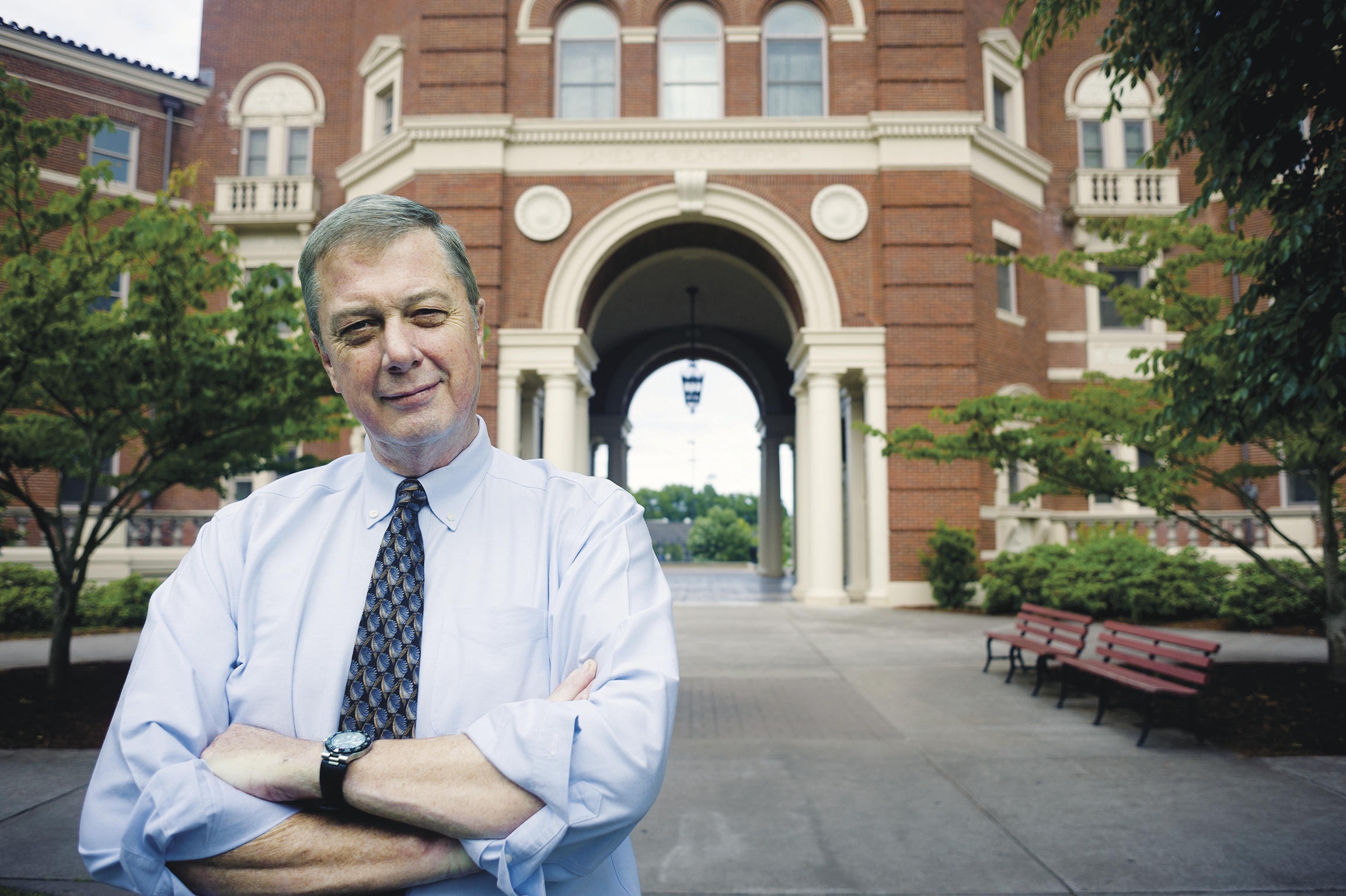
Jeff Comfort
vice president for principal gifts and gift planning, Oregon State University Foundation
Age: 60
Education:
- B.S., nonprofit-development administration, Metropolitan State University of Denver
A fundraising dynasty: One of his two children—his son, Michael, 25—is associate director of gift planning at Georgetown University.
A seminal book: Wealth in Families, by Charles Collier, former senior philanthropic adviser at Harvard University. “All of Charlie’s teaching was about the art of fundraising and the art of gift planning. I learned more from him than anyone in the field.”
Favorite professional websites or productivity apps: Internal Revenue Service, Planned Giving Design Center
Success secrets:
- Lets donors talk: Gives supporters a chance to speak their minds, even to vent, to deepen the relationship with the organization.
- Educates donors: Explains to potential supporters how charitable gift annuities work, for instance. Conversations like that can “add a zero or two or three” to a donation.
- Plans ahead: Learned a valuable lesson in keeping flexible when the stock market crashed just as he was preparing a marketing campaign on giving appreciated stock.
- Has priorities right: Believes that understanding what donors are looking for is more important than salesmanship or technical fluency.
What he wishes he’d known as a fundraising rookie: “It’s about the donors, not us.”