August 7, 2014 | Read Time: 3 minutes
When the United States Holocaust Memorial Museum turned to people on the Internet for help tracking down the youngest survivors of the genocide, the crowd came through in a way that far exceeded the museum’s most hopeful expectations.
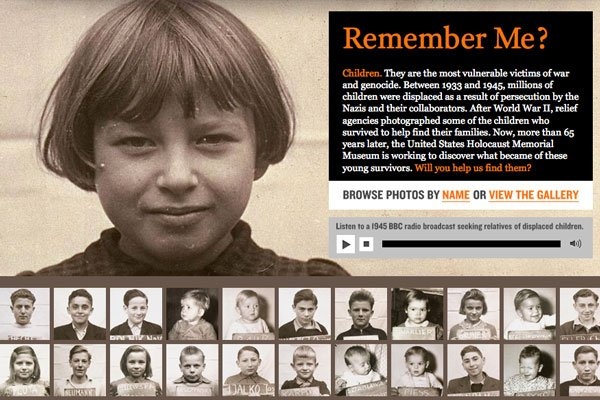
Three years ago the museum’s Remember Me? project posted 1,175 photographs of displaced children taken by relief agencies from 1945 to 1947. The goal was to find out what happened to them after World War II and record their experiences for future generations.
When the museum posted the photographs, organizers hoped they’d be able to locate 30 to 50 people or their relatives. But with the help of social media, the project has so far found more than 380.
The success is welcome, because time is running out to collect the stories, says Jude Richter, social-media community manager and historian at the museum.
“Even these people who are the youngest survivors are in their 70s and 80s,” he says. “We want to be able to document as many of their stories as we can before it’s too late.”
Ripple Effect
Facebook has played an important role in spreading the word about the project.
The collection includes photographs of roughly 180 displaced children from Italy. For a long time, five siblings who emigrated to Montreal were the only people from that group the project was able to locate.
Then someone posted a comment, in Italian, on the project’s site that he thought one of the photographs was of his aunt. The comments and the image were shared with the people in his Facebook network, triggering a ripple effect. Within three weeks, the project had identified 60 more children.
When project organizers contact survivors, they are often able to share documents from the museum’s archives that detail their or their relatives’ experiences during the war. In a few cases, says Mr. Richter, the survivors hadn’t known exactly when their parents had died, and project organizers were able to provide records with the information.
Opening Up
For some survivors, telling their stories through the project has helped them open up about their experiences with family members. Mr. Richter remembers one man telling him at the end of an interview that he had shared more in the previous 45 minutes than he had ever told his children and that he would have to have a talk with them.
“Survivors often didn’t speak of their experiences while they were raising their families because it was painful for them and because they didn’t want to burden their children,” says Mr. Richter.
Holocaust survivors are the most important teachers about that dark period in history, says Mr. Richter. Many of them, he says, have spent years talking to schoolchildren, church groups, and others to make sure the genocide isn’t forgotten.
“When they’re gone, it’s going to be up to us to make sure that we’re still imparting those lessons,” says Mr. Richter. “So anything we can do to preserve their wisdom, to preserve their memories, to preserve their experiences is incredibly important.”