July 14, 2014 | Read Time: 2 minutes
In Afghanistan, men with military weapons and children working in the streets are commonplace, drawing little attention from the war-weary residents.
A man on a skateboard, however, stands out.
Oliver Percovich, an Australian who first rolled through Kabul in 2007, found children watching for him from rooftops, then running to join him as he performed tricks in an abandoned fountain. It was a respite from their work or their improvised games amid piles of dirt and wreckage.
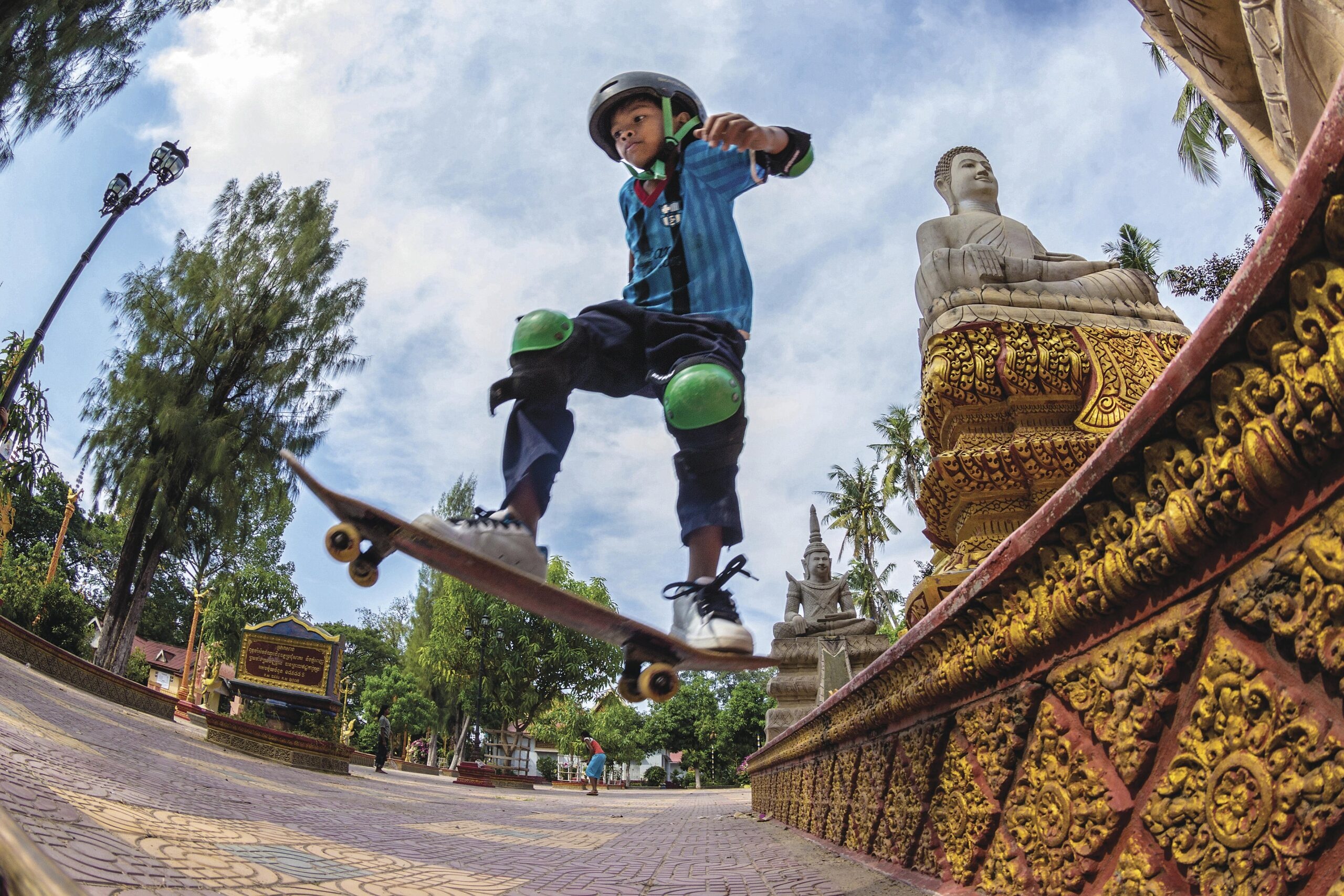
From the dust of that abandoned fountain, Mr. Percovich created Skateistan, a nonprofit that uses skateboarding to draw thousands of children in Afghanistan and Cambodia to sports activities, health care, and life-changing education each year.
Backed by the Afghan National Olympic Committee and several embassy offices, Mr. Percovich opened an indoor skateboarding park in Kabul in 2009. Similar parks opened in Mazar-e-Sharif in 2013 and in Phnom Penh in 2011.
The sport is so new in Afghanistan and Cambodia that it transcends many existing customs and helps break down social barriers. Girls who are prohibited from riding bicycles in Afghanistan are allowed to jump on a board, for example. And although women traditionally have not been allowed to participate in sports in Cambodia, they make up nearly half the participants in Phnom Penh.
“We’re trying to empower kids who don’t have much opportunity to be empowered, to play games and to be children,” says Alixandra Buck, Skateistan’s development manager.
“The situation in Afghanistan is, of course, uncertain,” Ms. Buck says. “That’s why these kids need opportunities so they can be at the forefront of rebuilding their country, thinking critically, and making positive change.”
Mr. Percovich and the 50-member Skateistan team reaches out to street kids, offering them an opportunity to make up lost ground. A one-year Back to School program covers three years of elementary school and prepares kids to re-enroll in the third or fourth grade.
Each hour of skateboarding time at the indoor park requires an hour of classroom work. As they progress, the students then become teachers.
“We’ve got the ability to be a beacon of hope for people and are going to push through whatever happens,” Mr. Percovich says in a documentary on Skateistan. “I want to have one million kids skateboarding in Afghanistan.”