Millennials Are Drawn to Companies That Offer Chances to Volunteer

By Megan O’Neil
Contributor
July 14, 2014 | Read Time: 4 minutes
New hires at ExactTarget Marketing Cloud, an online marketing company purchased by Salesforce in 2013, can expect a twist on the traditional employee orientation—a visit to Gleaners Food Bank of Indiana. They also start with six paid days off for volunteer work and a pledge that once they log 48 hours, ExactTarget donates $1,000 to a charity of their choice.
The benefits are part of an intensive push at the company to institutionalize a culture of volunteerism and giving, says Karen Jung, who was named the company’s first vice president for community programs 18 months ago.
ExactTarget’s multipronged approach aligns with the findings of new research on the intersection of millennials, their employers, and employer-driven volunteer work, including how such work can help attract and retain talent.
The 2014 Millennial Impact Report published last month by Achieve, a consulting firm, surveyed 1,500 employed millennials—people age 20 to 34. About a third of respondents said their companies’ volunteer policies affected their decision to apply for a job, 39 percent said that it influenced their decision to interview, and 55 percent said it played into their decision to accept an offer.
“We are seeing much more of this work-life blending model where millennials are blending who they are, what they do, what they stand for, and the causes and things they care about into the workplace,” says Derrick Feldmann, president of Achieve.
With millennials set to make up half the U.S. work force by 2020, employers and nonprofits say they are trying to harness new attitudes about company-led volunteer and giving programs. The habits and preferences of young employees will soon be the rule, not the exception, they note.
Effort at ExactTarget have involved extensive matchmaking between the interests and skills of employees and the needs of local nonprofits, Ms. Jung says. For example, to accommodate employees’ busy work schedules, the company brought local high-school students into the ExactTarget offices for computer training.
The benefits of such efforts are hard to quantify, acknowledges Ms. Jung, who also serves as executive director of the ExactTarget Foundation. Still, she says, she sees the work ripple across the organization in a number of ways. Several prospective employees have asked about company’s philanthropic efforts, she says.
“I get an email probably once every two weeks from an employee just saying, ‘It is so fantastic to be part of an organization that is committed to giving back,’ ” Ms. Jung says. “That is all the evidence we need that we are doing the right thing.”
More Options
When it comes to building an office culture of engagement, companywide volunteer days may not be enough. Sixty-two percent of the Millennial Impact Report survey respondents said they prefer to do volunteer work with people in their departments.
“The role of the individual department, that small unit, has a lot of influence and it has a lot of interest by the millennial, more than the company as a whole,” Mr. Feldmann says.
Employers need to look to a three-pronged approach, focusing on opportunities across the company, within departments, and at an individual level, the report concludes.
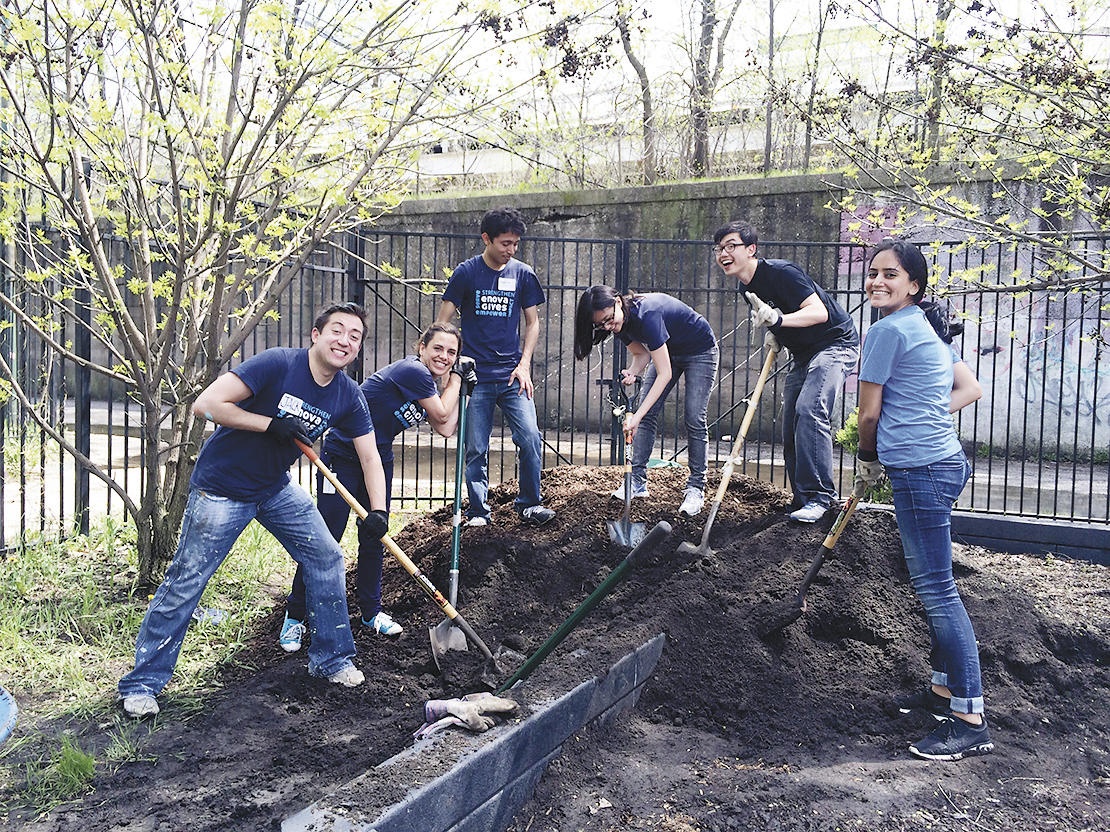
At Enova, a Chicago-based online payday lender founded by millennials, the workplace-giving culture has evolved organically to provide some of those options, says public-relations specialist Kaitlin Arntz.
Last month, the company introduced one paid day of leave for volunteer work. In the spring, it began working with an organization called Chicago Cares to coordinate volunteer opportunities for its employees. The company is now matching its volunteers’ charitable giving up to $250 a year, Ms. Arntz says.
“Most of our organization are millennials,” Ms. Arntz says. “We as millennials want to work for an organization that recognizes our need and want to give back, and that is also committed as a company to giving back.”
Hope for the Future
David Moore, chief advancement officer at Gleaners Food Bank, says that it depends on its relationships with more than 100 Indianapolis employers to keep its 10,000-square-foot facility staffed and humming.
He points to ExactTarget as an example. Since July 2013, the company has sent 17 departments or other groups of employees to volunteer on 14 dates. During 827 hours, they sorted and packed 93,000 pounds of food. The work was the equivalent of about $20,000, he says. The organization already has 13 more volunteer dates scheduled, he says.
“I can tell you that as someone who has been at a nonprofit organization for over 25 years that I see a very strong commitment from the millennial generation to giving back to the community,” Mr. Moore says. “They enjoy our mission. They enjoy the environment we provide them. I am very encouraged by what I am seeing.”