
Supreme Court Decision to Ease Campaign-Finance Rules Reinvigorates Foes

By Michael Anft
Contributor
May 18, 2014 | Read Time: 5 minutes
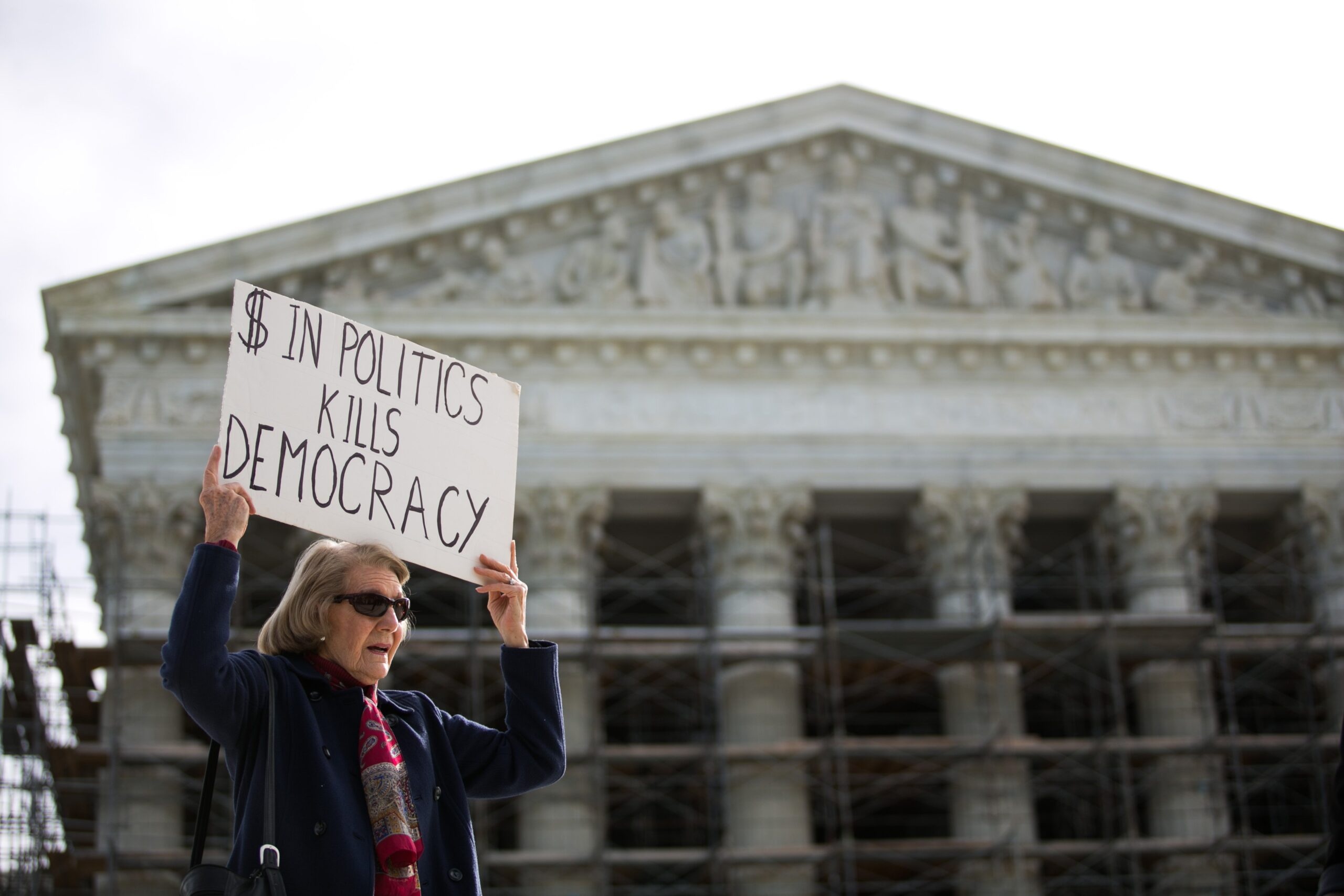
In the aftermath of the McCutcheon v. the Federal Election Commission decision, the April ruling in which the U.S. Supreme Court further lifted limits on large donations to political candidates, grant makers are ready to work harder to change how political campaigns are financed.
Some grant-making officials estimate that foundations have spent around a quarter-billion dollars over the last 20 years on efforts to decrease the role of money in campaigns.
In 2010, when the court loosened restrictions on contributions in the Citizens United case, grant makers recalibrated their efforts in that area. The McCutcheon case, say some foundation officials, just increases their commitment to the cause.
“We had been planning and preparing a strategy to respond to such a decision for close to a year,” says Thomas Hilbink, senior program officer at the Open Society Foundations.
Open Society, which gave $5-million last year to support campaign-finance overhaul, will maintain its giving in that area, Mr. Hilbink says, but will boost its grant making to grass-roots groups and seek to draw more donors into the field.
But foundations overall will need to do more, Mr. Hilbink adds. They will need to step up support to help battle McCutcheon in federal and state courts.
“We need to mount fresh legal challenges to the rulings the Roberts court has handed down and chip away at these undemocratic precedents,” he says. “We need to nominate and confirm judges whose interpretation of the First Amendment better reflects the way most Americans feel about money in politics.”
Lifting Limits
By a 5-4 vote, the Supreme Court maintained in the McCutcheon decision limits on the amounts a donor can give to a single candidate, political-action committee, or national party committee but eliminated restrictions on how many candidates, PACs, or party committees an individual donor could support.
Previously, individuals were limited to a total of $123,200 in contributions to candidates, PACs, and parties. Now, an individual can legally back as many candidates as he or she wants with large amounts of cash.
Advocates for stronger campaign-finance laws worry that candidates can now, in the wake of McCutcheon, easily reap large donations from the same individuals by forming joint fundraising committees. Those committees will be allowed to receive $97,200 from a donor each year. There is no limit on how many committees an individual can give to.
Because of the potential for injecting more money into campaigns, critics fear that well-connected party members and wealthy individuals will have increased influence over how political business is conducted, threatening the integrity of representative democracy.
Advocates say the decision could make a bad situation much worse. An analysis of campaign contributions in 2012 by the Sunlight Foundation, a nonpartisan group that works to increase accountability in government, found that of $6-billion in disclosed donations, 28 percent came from the wealthiest one-tenth of 1 percent of the nation’s population.
“The incentive system is so skewed toward big money that it’s hard to see how that doesn’t affect how the country is run,” says Robert Gallucci, president of the John D. and Catherine T. MacArthur Foundation, which makes $10-million in grants each year to projects to strengthen American democracy, including campaign-finance overhaul.
Many grant makers who work in that program area, he says, “think we’d be better off if we had public financing of elections. We think we can say that without partisanship.”
(Mr. Gallucci has said MacArthur will continue it work on changing how campaigns are financed, but the grant maker’s board decided last month not to renew his contract.)
A ‘Silver Lining’
Even though advocates say the Supreme Court has gutted the nation’s campaign laws, some see a chance for improvement or possibilities for change. Because more campaign money will now likely flow through political parties—and relatively less from outside groups—it will get more public disclosure.
“It brings more money under the lamppost,” says Daniel Stid, a senior fellow at the William and Flora Hewlett Foundation. “That’s the silver lining in McCutcheon.”
Otherwise, he says, foundations’ longtime approaches to supporting campaign overhaul, such as by working to limit the amount of donations and increasing the accountability of those who gather the money, are pretty much over with.
“There’s a long road ahead for that school of thought,” he says.
But officials at the Center for Public Integrity, a nonpartisan research group, and the Rockefeller Brothers Fund say the court’s decision left room for new rules that limit contributions. Legislators and regulators can pass and enforce laws that limit the size of political fundraising committees, for example, or ones that restrict how money is passed from candidate to candidate or committee to committee.
“There’s certainly room to advocate for more disclosure of contributions at both the federal and state level,” says Keesha Gaskins, program director at the Rockefeller Brothers Fund, which has made more than $5-million in grants during the past decade to support changes in campaign finance laws.
But the hope of some foundation officials is tempered by today’s political realities. Grant makers wonder whether Congress and the Federal Election Commission are too dysfunctional to change campaign-finance laws, says Ms. Gaskins. For that reason, some advocacy groups and foundations are turning to a dozen states that have campaign-finance restrictions that could be endangered by McCutcheon, she adds.
Healthier Parties
At least one other grant maker has decided to use the court case to ramp up its work to strengthen democracy by openly advocating for the invigoration of the nation’s two major political parties—an idea that has engendered some controversy.
Hewlett’s new democracy program, which will make $15-million in grants this year, will include some grants on disclosure and transparency in campaign finance but will also seek to move policy forward by getting mainstream Democrats and Republicans working together.
“We need healthy political parties,” Mr. Stid says. “A healthier party system leads to better leaders who are accountable to broad groups of people. Groups on the edge that make large political contributions are a detriment to that.”
Others, such as Lee Drutman, a senior fellow at the Sunlight Foundation, say grant makers should find ways to foster more balance in policy lobbying. For every $1 that labor unions and nonprofit interest groups spend to influence policy, business groups and corporations spend $34, Mr. Drutman says.
“We’ve already had really strong political parties for 20 years,” he adds. “They don’t need anybody’s money at this point.”






