
Urban Renewal Leaves Out Some of City’s Needy, Say Nonprofit Activists

By SUZANNE PERRY
Contributor
October 20, 2013 | Read Time: 6 minutes
Detroit
Foundations that are pouring money into projects to revitalize downtown Detroit face the challenge of explaining how such efforts will benefit the vast majority of the city’s residents who live in far less privileged neighborhoods.
Along with private investors, grant makers including the W.K. Kellogg Foundation, the Kresge Foundation, and the Ford Foundation have spent tens of millions of dollars on efforts to develop the riverfront area, the Woodward Corridor business district, and a planned $140-million light-rail system. Longtime Detroiters say they barely recognize the bustling city center.
Some urban-planning experts endorse the development strategy, saying the city, which filed for bankruptcy protection in July, cannot recover without a thriving downtown and a strong middle class.
But it can be a tough sell to residents of neighborhoods that are plagued by poverty, blight, and a lack of good transit and other public services.
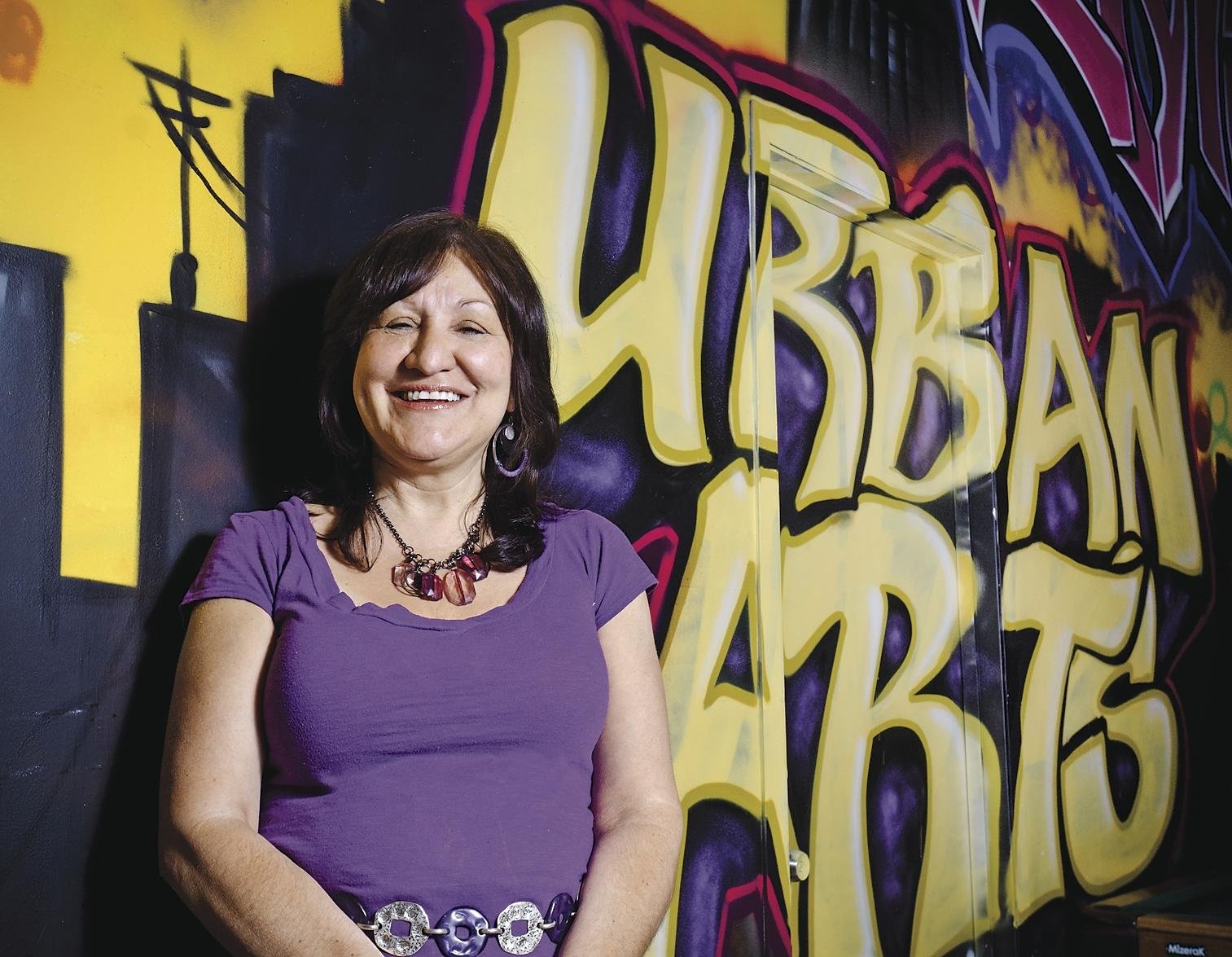
“As a lifelong Detroiter, I’m not going to lie and say I don’t enjoy being downtown,” says Angela Reyes, executive director of the Detroit Hispanic Development Corporation. “I was down there for a jazz festival and going there on a weekday night and seeing people walking around with their dogs and their strollers and going out to eat was an amazing thing.”
But, she adds, “it feels like somebody took a piece of another city and plopped it into the middle of a doughnut hole. And you walk through a glitch in the matrix and you go into this different reality because when you go out into the neighborhoods, it’s very, very different.”
She says many of her neighbors are suffering from violence-related post-traumatic stress disorder and are worried they will have to move to the suburbs if the city becomes so gentrified they won’t be able to afford to live there.
Toni McIlwaine, who operates a small community center in the Ravendale neighborhood, says she is starting to think the redevelopment efforts are designed to penalize the “have-nots.” “They selected a couple of neighborhoods they could highlight, but just a couple,” she says. “To me, it’s not fair.”
Business Corridors
George McCarthy, who oversees grants to revive urban areas for the Ford Foundation, says the decision to concentrate resources on business corridors is “a tough call.” But he says commercial investment, which a city needs to function, works only in high-density areas. ”Stores can’t function unless there’s people to do the shopping in them.”
The foundations also can’t spend money on the entire city at once, given how much it would take to cover Detroit’s 139 square miles.
“We have to invest in areas of strength so we can begin to stabilize them and move out from them—and then understand that we have every intention of trying to find ways to cover the whole city,” he says. “But you have to be able to do it strategically or your money will be dissipated and you’ll get no impact at all.”
He adds that some of the areas now being redeveloped include many low-income residents.
Detroit now gets the biggest share, 16 to 20 percent, of the Ford Foundation’s budget for urban development, or about $30-million over the last five years, foundation officials say.
Foundation Friction
The downtown-neighborhood divide has even caused some friction among Detroit’s foundations.
Tonya Allen, chief executive of the Skillman Foundation, a local grant maker that in 2006 started a 10-year, $100-million program to improve the lives of children in six Detroit neighborhoods, says she was annoyed by the tone of a letter that Rip Rapson, president of the Kresge Foundation, wrote after the governor appointed an emergency manager to run Detroit in March.
The letter, sent to 400 philanthropic, academic, political, and community-development leaders in March, noted that Kresge had invested $500-million in the Detroit region over the last 20 years and believed Detroit now had an “unprecedented potential for renewed stability, health, and vitality.”
He pointed to the downtown revival, an explosion of arts and entrepreneurship, transformation of the Eastern Market urban food market, and the light-rail line.
“I was taken aback by the positioning of Kresge as the leader of the city in philanthropy,” says Ms. Allen.
“One of the things we’ve seen about the national philanthropic presence is that national philanthropy relates to national philanthropy,” she says. “It doesn’t know how to relate to local philanthropy, [highlighting] the things that most Detroiters actually don’t get to enjoy: Is that going to attract additional resources to the things of a very select few?”
Laura Trudeau, head of Kresge’s Detroit program, defends the letter.
“We wanted to quickly get something out to the world that Detroit was not dead, we didn’t believe Detroit was dead, that we were going to continue to invest,” she says. “We were trying to make a statement that there was one national foundation in Detroit that believed in the future of the city.”
She says Kresge has spent as much money trying to revitalize Detroit’s neighborhoods as it has on the business district but that it is harder to point to successes because the problems were too great in the absence of an overall strategy for developing the city.
Kresge, Ford, and Kellogg all helped pay for an effort that produced such a strategy in December—known as the Detroit Future City plan. The document, which sets out a framework for improving Detroit’s economy and tailoring its land use to a smaller population, resulted from a two-year process that involved the mayor’s office, business and philanthropic leaders, and tens of thousands of residents who were consulted about what should happen to their neighborhoods.
That has been a sensitive subject since Mayor Dave Bing started talking several years ago about shrinking the city, suggesting it would be impossible to continue providing services everywhere. A previous effort that he led to consult residents about the city’s future—the Detroit Works Project, which the Kresge Foundation helped pay for—often deteriorated into shouting matches, participants say.
They say the consultation process worked better this time around, thanks partly to money that the foundations channeled to community groups that could help develop constructive formats for engaging residents, including hundreds of meetings. But some say philanthropic leaders still have not gotten it quite right.
For example, many Detroiters resent the number of consultants that foundations have brought in from out of state to advise them on how to redevelop the city.
“The underlying feeling is that Detroit doesn’t have the capacity to figure it out,” says one community leader, who asked not to be named. “As a resident of the city, that feels really bad.”
Ponsella Hardaway, executive director of the Metropolitan Organizing Strategy Enabling Strength (Moses), an interfaith social-justice advocacy group, says it is not entirely clear who will now make the decisions about the city’s fate and she worries that not everyone will have a say.
“Let’s not talk about the indigent, returning citizens from prison, homeless. They’re not even in the dialogue,” she says. “They’re left out completely, yet they are residents in Detroit. Are we looking at holistically who’s impacted by the decisions being made?”
But Detroit’s bankruptcy gives her some reason for hope. “I always felt the city had to crash in order to shake things up,” she says. “It’s here now; we have a window to make sure the average citizen is as much a player as anyone else in the process.”




