August 11, 2013 | Read Time: 3 minutes
As the University of Wisconsin Foundation prepared for its annual-fund campaign last year, it sought a marketing company’s help in designing the drive.
One important campaign goal: to woo millennial donors.
All three finalists that vied for the plum assignment included an online game in their proposals. The foundation ultimately chose Lipman Hearne, which tried to drive young alumni to the foundation’s Web site through a game featuring Bucky Badger, the UW-Madison mascot.
The game was a hit; the fundraising component, not so much. To get their score in the game posted to a “leader board,” the 40,000 people who visited the site had to make donations of $5. Only 4 percent of the visitors made the donation.
The university has an online-game expert on its faculty, and this fall it plans to try a new game as it takes another shot at connecting with its “very elusive” young alumni, says Alisa Robertson, the foundation’s chief development officer.
“We’re still trying to reach that audience that everybody is having trouble reaching and that everyone knows is really important,” Ms. Robertson says.
Payoff Comes Later
The most successful charities at engaging young people may be those that don’t focus on money at all.
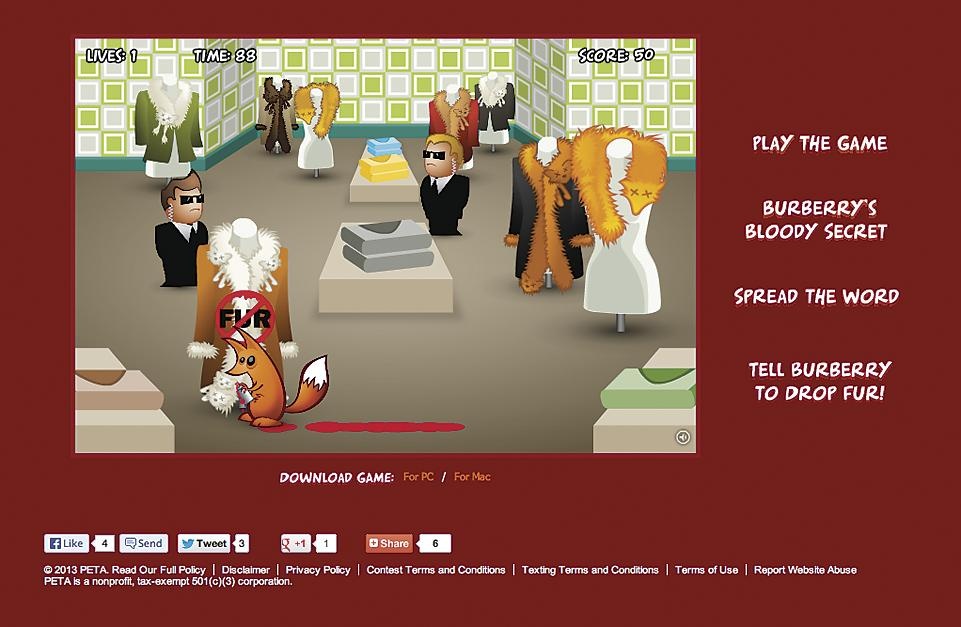
People for the Ethical Treatment of Animals started peta2 11 years ago as a way to attract more high-school and college students to the charity’s cause of not using animals for food, clothing, experiments, or entertainment. Peta2 is primarily marketed at music festivals that are popular among young people, like the Vans Warped Tour, which has dates in 40 cities this year.
PETA spends less than $1-million a year on peta2 out of a budget of roughly $30-million.
The spending has attracted 70,000 “street team” members—students who are 22 or younger and receive free items like T-shirts and stickers in exchange for spreading the PETA message by leafleting, organizing demonstrations, and talking to their peers.
The payoff will come later, in the form of financial support and activism, says Ryan Huling, PETA’s senior manager of college campaigns and outreach.
“These young people won’t be young for long,” Mr. Huling says. “Within a handful of years, the college graduates will be on their way to becoming CEOs, nonprofit leaders, and politicians and helping to make the world a better place for animals.”
Peer Influences
Millennials are far more likely than earlier generations to be influenced by peers in deciding which charities to support, according to a study of generational giving that Edge Research, Sea Change Strategies, and Target Analytics released last week.
Moriah Bauman, a junior at Boston College from Maplewood, N.J., was encouraged to give and volunteer by her parents while growing up, and she did both at charities like the Community FoodBank of New Jersey.
But now that she’s at college, her friends have more influence on the nonprofit organizations she supports, she says.
Ms. Bauman is one of 450 Boston College students who volunteer four days a week at more than 30 local charities through a campus program called 4 Boston.
Rather than give presents to her friends on their birthdays or at Christmas, she makes gifts to the charities where they volunteer, including two day shelters in Boston: St. Francis House and Women’s Lunch Place.
She also learned about Do Something, a national nonprofit that tries to get teenagers excited about social causes, from a friend in the 4 Boston program. That tip led to her internship at Do Something this summer.
“What my friends are doing definitely impacts my decisions,” Ms. Bauman says.
‘Social Proof’
Fundraisers can tap into this desire for peer approval, says Alia McKee, a fundraising consultant in Austin, Tex.
“Social proof” is a psychological term referring to the tendency of people to look to others when they’re unsure how to act.
Savvy charities exploit this phenomenon through campaigns that include messages like: “One hundred other people in Austin gave to this campaign. You should, too.”
“When you are asking millennials to give,” Ms. McKee says, “you should harness the power of social proof at every opportunity.”