Prizes and Games of Chance Bring an Element of Excitement to Saving

By NICOLE WALLACE
Features Editor
March 24, 2013 | Read Time: 3 minutes
Some charities are turning to an unlikely source—gambling and games of chance—for inspiration on how to encourage low-income people to save and to make it more exciting.
“While most of us feel some sense that saving is a good thing to do, a virtuous thing to do, we also feel like it’s the very definition of un-fun,” says Tim Flacke, executive director of the D2D Fund, a nonprofit that develops new approaches to help low-income workers achieve their financial goals. “That’s a really hard product to sell.”
He says incorporating prizes into programs to promote saving creates the “tension, uncertainty, and excitement” that people experience when they buy a lottery ticket and is a more cost-effective incentive than matching the dollars participants save on their own.
Save to Win
The D2D Fund tested the concept with Save to Win, a program started in 2009 with eight credit unions in Michigan.
Participants could open a one-year certificate of deposit with as little as $25, and for every $25 saved, they received an entry in a raffle for an annual grand prize of $100,000 and small monthly prizes.
In the first 11 months of the program, more than 11,500 people opened accounts and saved $8.5-million. Save to Win has since expanded to 58 credit unions across the state, more than 25,000 accounts, and more than $40-million saved from 2009 to 2011. Nearly half of participants are financially vulnerable—either they have low or moderate incomes, have $5,000 or less in assets, are single parents, or were not regular savers before joining the program.
D2D Fund’s research has found that they keep their accounts from year to year at roughly the same rate as their more affluent counterparts, 64 percent from 2010 to 2011.
Scratch-Off Ticket
But nonprofits don’t need to put up an eye-popping award to use prizes to boost saving.
For many low-wage workers, tax refunds represent the largest chunk of money they receive all year. Maryland CASH Campaign, a statewide network of organizations that provide free tax-preparation services and financial coaching, has long tried to encourage clients to save a portion of their refunds.
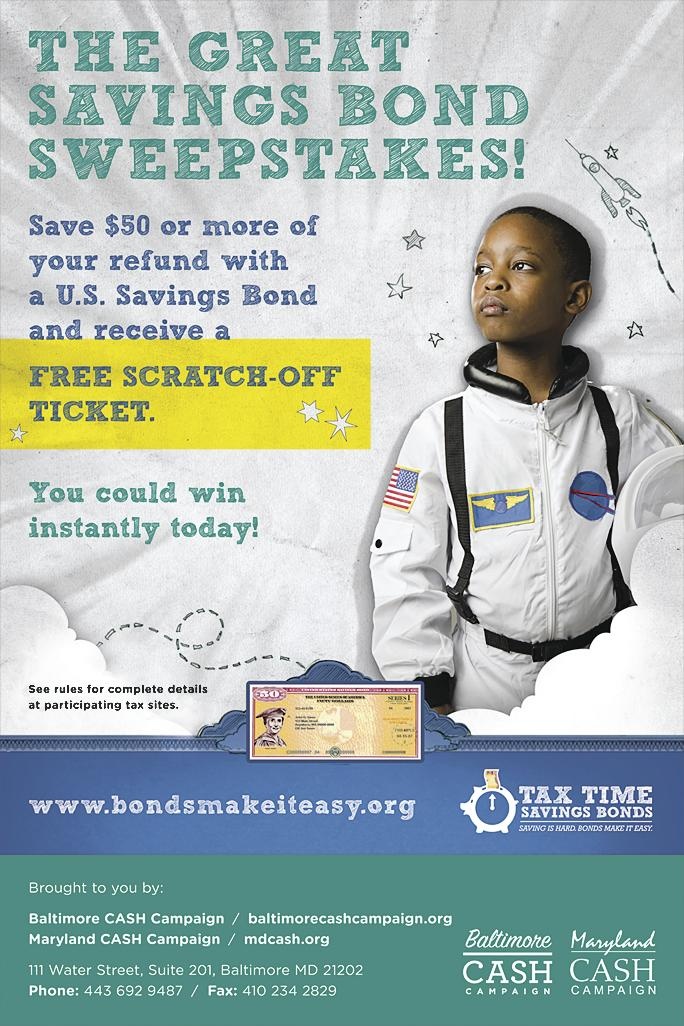
In 2011 clients who chose to receive part of their refund as a U.S. savings bond received a chance at a $1,000 raffle.
Clients bought 228 savings bonds, totaling $12,450. Last year the Maryland CASH Campaign restructured the program to offer more chances to win.
There were two $500 grand prizes, and everyone who purchased a savings bond received a scratch-off ticket for a chance to win either $5 or $10. The result: 240 people purchased 319 bonds worth nearly $50,000.
The Baltimore CASH Campaign, one of the participating groups, worked hard to make the program aspirational and fun.
People who bought a savings bond wrote their reason for saving on colorful posters, which the group used to create a Wall of Savers in its office. The organization’s tax-preparation volunteers rang bells whenever someone bought a savings bond, setting off a round of cheers.
The applause made people who bought savings bonds feel like they had made a good choice, and it created a sense of excitement that got other clients thinking about savings, says Robin McKinney, director of the Maryland CASH Campaign.
“Other people in the room would say, ‘Why are the bells going off? What did they do?’” she says. “Once the bell started going off, you knew it was going to go off a lot more.”