How Target Chooses Schools to Help, Then Gives Money, Expertise, and Volunteers

By nicole lewis
Contributor
December 2, 2012 | Read Time: 3 minutes
Washington
As part of its goal to spend $1-billion on education causes by 2015, the retail giant Target is revamping elementary-school libraries nationwide. The changes, say officials at schools that have benefited, are impressive.
In the redesigned school libraries—150 so far—a colorful mural and oversize inspirational quotations adorn the walls. Among the quotes at a library renovated in 2011 at Orr Elementary School, in Washington, is one by Henry David Thoreau: “It takes two to speak the truth: one to speak and another to hear.”
In many cases the renovations have had an immediate impact.
“Inevitably there is a child that says, ‘I want to live here,’” says Angela Halamandaris, president of the Heart of America Foundation, the charity that pitched the library project to Target in 2007. “To have a beautiful, safe place to come and curl up with a book is a pretty powerful thing.”
But the company gives more than money: Besides paying for things like tables, chairs, new carpeting, paint, lighting, bookshelves, a technology upgrade, and new computers, Target lends its design and construction employees to provide expertise in renovating a space.
That effort demonstrates a hands-on approach that Target sometimes takes in its philanthropy, one balanced by other giving in which local schools are given freer rein to use the company’s money as they wish.
Target helps select the schools using several criteria, including the percentage of students receiving free or reduced-price lunches and whether the school is scheduled to be permanently closed or renovated soon. The company must have a store in the neighborhood as well.
In 2012, the company spent $10.5-million upgrading 32 school libraries, and another $1.5-million in grants to 118 other school libraries for programs to improve kids’ reading skills. Target spends an average of $200,000 per library project.
Long-Term Volunteers
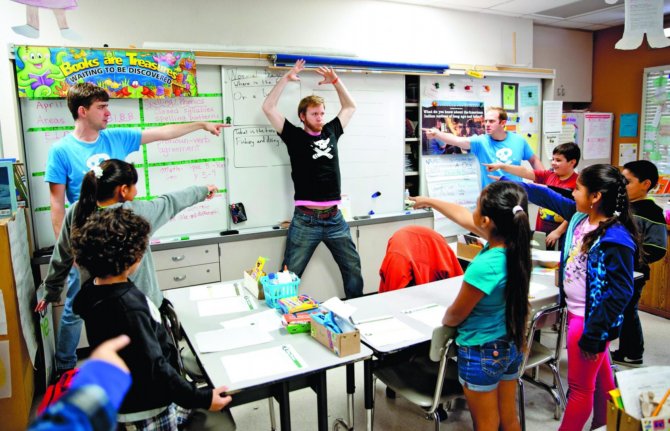
On a library’s opening day, a swarm of volunteers wearing red shirts that match the company’s logo color arrive to set up furniture, help shelve the 2,000 books the company is donating, and perform last-minute touch-ups.
The volunteers might hang pictures for the Heroes of the Heart wall, present in each library, which pairs images of famous faces such as Thomas Jefferson or J.K. Rowling with those of the school’s most civic-minded students.
Volunteers also might help distribute the seven books that each child and his or her siblings receive to take home. And they might hand out groceries to students’ families from an in-school pantry, available monthly, that Target sponsors to complement some of the libraries as part of its Meals for Minds program.
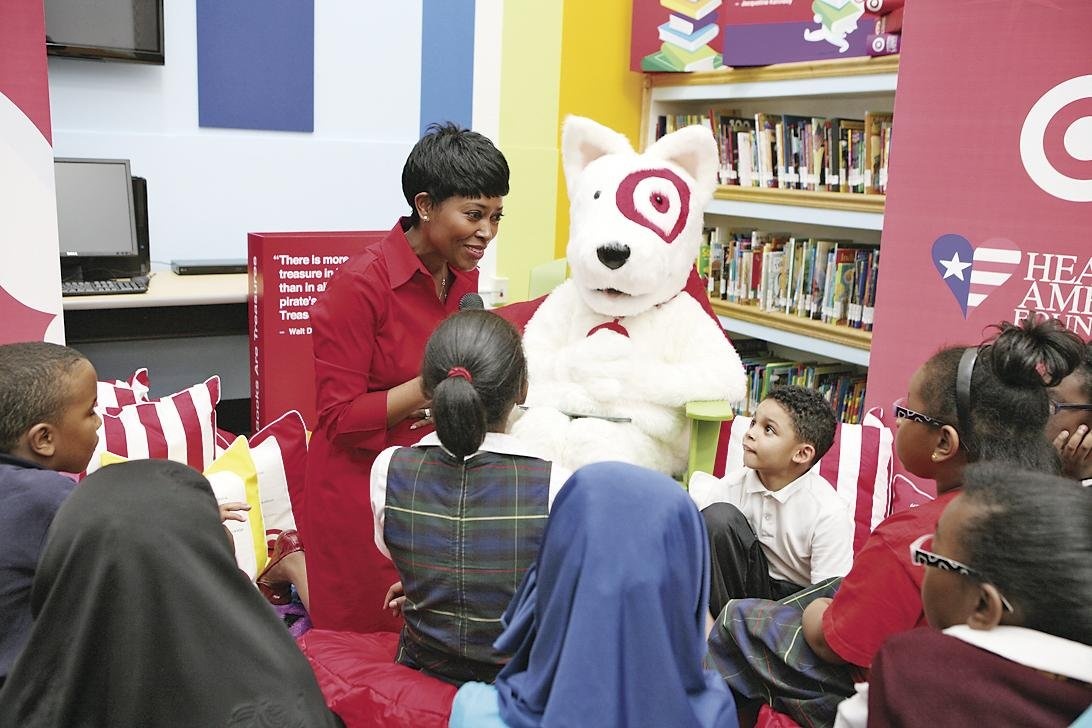
After ribbon-cutting ceremonies, Target employees are encouraged to continue volunteering, perhaps reading to students or helping with school events.
The volunteer efforts, coupled with an attractive new library, “show the whole school community that people care about them,” says Ms. Halamandaris. “A lot of these kids just need people to believe in them.”
Target’s giving “is more than just writing a check,” says Laysha Ward, president of community relations and the Target Foundation. “It’s getting our team members involved where they live.”
A Subtle Approach
The company may be hands-on, but it maintains a light touch. For instance, from the beginning of the makeover process at Orr Elementary, says Michelle Edwards, the school’s principal, Target officials asked Orr’s leaders what they wanted from the new library and what kinds of books they needed.
The company’s brand is barely visible in the refurbished space: There’s no image of Target’s mascot (the white bull terrier) or of its logo, the red bull’s-eye. A modest plaque on the Heart of Heroes wall is the only sign naming the library’s sponsors.
“They want to support the school. They are not doing it in a way that is about them,” says Ms. Edwards. “It’s about the kids and the mission to support literacy.”