
Donors From All Walks of Life Made Mo. Arts Center Possible
The 2012 Philanthropy 400

By Holly Hall
Contributor
October 14, 2012 | Read Time: 6 minutes
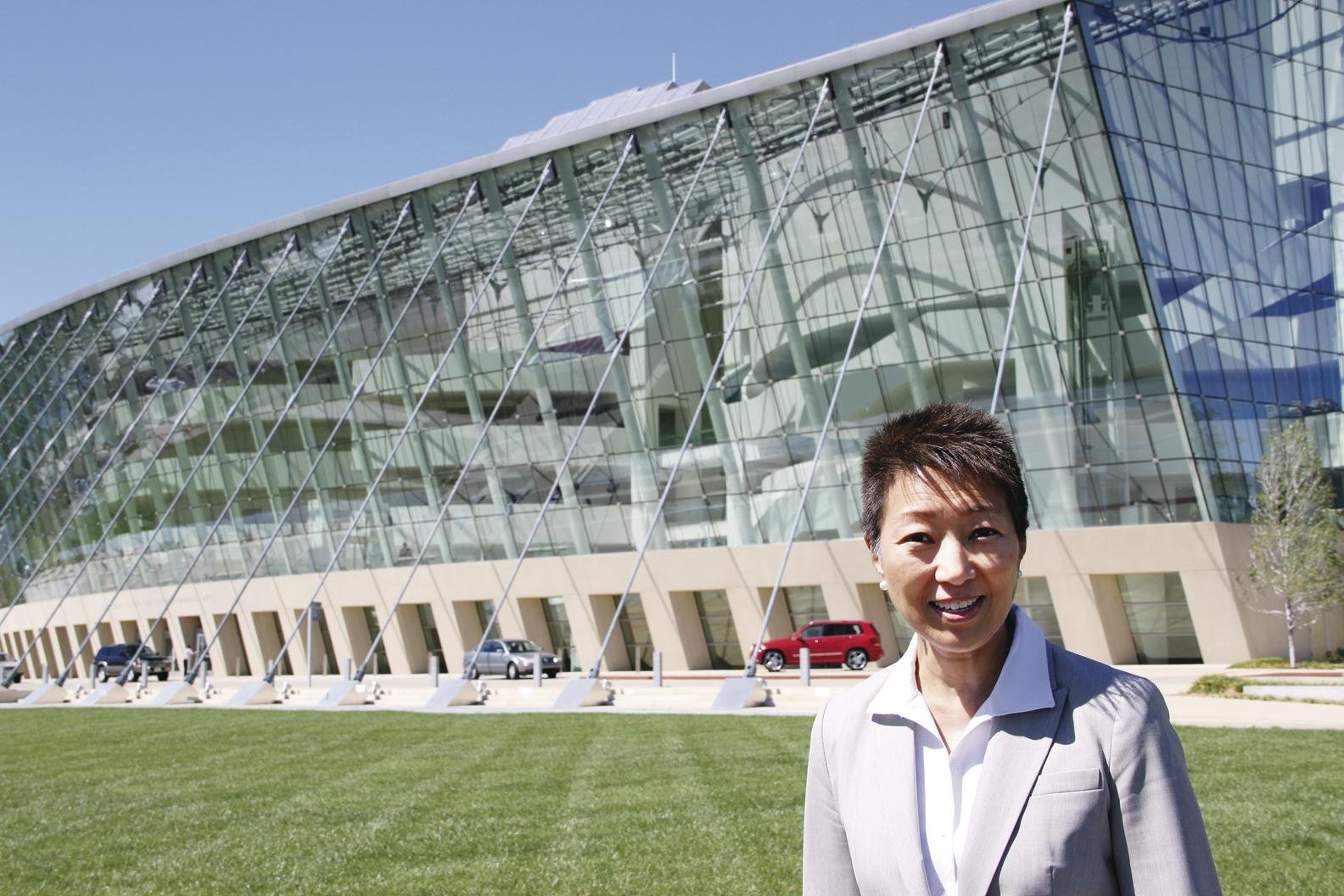
The shimmering glass face on the Kauffman Center for the Performing Arts is designed to send a clear message to Kansas City’s residents that it’s not an institution only for the city’s movers and shakers.
“The board wanted people to be able to look inside and see what is going on,” says Jane Chu, the Kauffman Center’s chief executive. “We didn’t want to be elitist and closed.”
That same communitywide approach was a key to the institution’s fundraising success, which was helped along by a bigger share of modest gifts than many cultural campaigns attract. The Kauffman Center raised $49-million last year, putting it on the Philanthropy 400 for the first time, at No. 398.
Raising the money for Kauffman’s $416-million drive, which lasted more than a decade and wraps up in December, was not easy, especially in the beginning, says Betsey Solberg, an executive consultant at Fleishman-Hillard, an international public relations company, who with her husband donated $353,000.
Early solicitations for the arts center “had elements of a hard sell,” says Ms. Solberg.
The city, she says, “had just funded an addition to the Nelson Museum and a new stadium. You really had to ask, Do we need this?”
But last fall, five years after the arts center broke ground on its new building for the city’s symphony, opera, and ballet, Ms. Solberg recalls, 55,000 people showed up, more than double the number expected, on a rainy Sunday when the doors first opened to the public.
“It went from being this screwball idea to a very popular thing in the community,” Ms. Solberg says.
Modest Gifts
To make many Kansas City residents feel they could afford to play a part in building the arts center, fundraisers asked donors for relatively modest gifts that could be paid over five years.
More than a thousand donors have each given $1,000 so they could add a child’s handprint, age, and name to a commemorative wall. The hand appeal was designed to signal the importance of exposing children to the arts at an early age, says Ms. Chu, and also demonstrate that the new center will be there for generations to come.
“We were getting letters from hairdressers and others who didn’t have the income to give $1,000 all at once,” Ms. Chu says. “It was nice that the money came from people of all walks of life.”
Ms. Solberg, who has three grandchildren, gave enough money to add handprints for each one.
“It is my hope that the grandchildren will see this and support the center” as adult donors, Ms. Solberg says. “It will be familiar to them, not sitting high on a hill somewhere.”
Ms. Solberg says that Ms. Chu’s focus on treating all donors well, no matter how small their gifts, is one reason she and her husband stay involved with the center.
“We have made significant contributions to another facility, and the new director practically knocks me over to speak to someone more important, so we have stopped contributing there,” she says. “Jane treats the lowest contributor in the same manner as the biggest.”
Cultural Cooperation
Under Ms. Chu’s leadership, the arts center has made a point to collaborate with other Kansas City arts groups.
Ms. Chu didn’t want to take a competitive approach because, as she notes, cities have more economic and social vitality when they have multiple cultural organizations.
Ms. Chu has reason to know that: She has been studying the topic for her dissertation as she seeks a Ph.D. in philanthropic studies at Indiana University. Last month she reached the last step in getting the degree by defending her research before other scholars.
She put her academic studies into practice by working with an executive at the Sprint Center, a nearby commercially run sports and entertainment arena, to start a new youth program this year called the Grammy Museum Music Revolution Project.
The entertainment company that operates the arena helped start a program to recruit Grammy-winning artists to teach 25 high-school students in a four-week summer program in music composition at the Kauffman Center. The program will be repeated every year.
Paying Attention
Perhaps the most challenging part of the campaign for Ms. Chu was “being able to switch hats, depending on who I am talking to, and bringing people together from very different perspectives.”
Appealing to a lover of the arts, says Ms. Chu, is very different from convincing corporate executives that the new arts center will help recruit employees to move to Kansas City, which is different still from lobbying government officials for aid. (The new arts center has received substantial state and city support.)
“You have to listen really carefully to donors and pay acute attention,” she says, “not just to their words but to their whole manner of being.”
Ms. Chu also impressed board members like Jan Kreamer, a seasoned fundraiser who chairs the development committee, by staying on top of how much it cost to raise a dollar during the campaign.
Ms. Chu tracked the costs and returns of hiring six fundraisers to pursue $2,500, $5,000, and $10,000 gifts that allowed patrons to put their names on seats in the center’s two performance halls.
For every dollar spent on the fundraisers’ salaries, Ms. Chu determined that they were raising $4. When that figure declined to $2, she started the more popular effort to secure donations for children’s handprints and directed the six fundraisers to focus on that task.
“You could see the point of diminishing returns,” says Ms. Kreamer, who is former president of the Greater Kansas City Foundation.
Based on her experience at the foundation making grants to local nonprofit groups, she says that most charities do not track their campaign fundraising costs as closely as Ms. Chu did.
Family Legacy
In addition to Ms. Chu and Ms. Kreamer, the Kauffman Center benefited from the philanthropic leadership of Julia Kauffman, whose mother asked, before she died in 1995, for her help in building an arts center.
Two foundations created by Ms. Kauffman’s parents, the Ewing Marion Kauffman Foundation and the Muriel McBrien Kauffman Foundation, together gave more than $100-million to the campaign, enough to name the center for the family. Mr. Kauffman, who made his fortune in pharmaceuticals, was one of the city’s most prominent boosters both through his philanthropy and his ownership of the Kansas City Royals.
The gifts, made before the financial crisis struck in 2008, allowed construction to start. Because people could see the building progressing, even though the economy was in a rut, Ms. Chu says, it was easier to motivate gifts because it seemed clear the project would ultimately succeed.
The center also benefited from buying all of the steel needed for the project before the economy soured.
“We could have had huge cost overruns,” says Ms. Chu.
That’s one reason the new center is in the black and will end its campaign on schedule in December.
The organization lost only a single pledge from the bad economy, from a donor whose business collapsed. Says Ms. Chu: “We were pleasantly surprised to lose only one pledge.”




