Continued Federal Support for Social Innovation Fund Looks Shaky

By Doug Donovan
Contributor
October 14, 2012 | Read Time: 8 minutes
Five years ago, at age 18, Charmane Bellard knew she was heading down a dead-end path. Ms. Bellard was a single mom and high-school dropout with no career prospects.
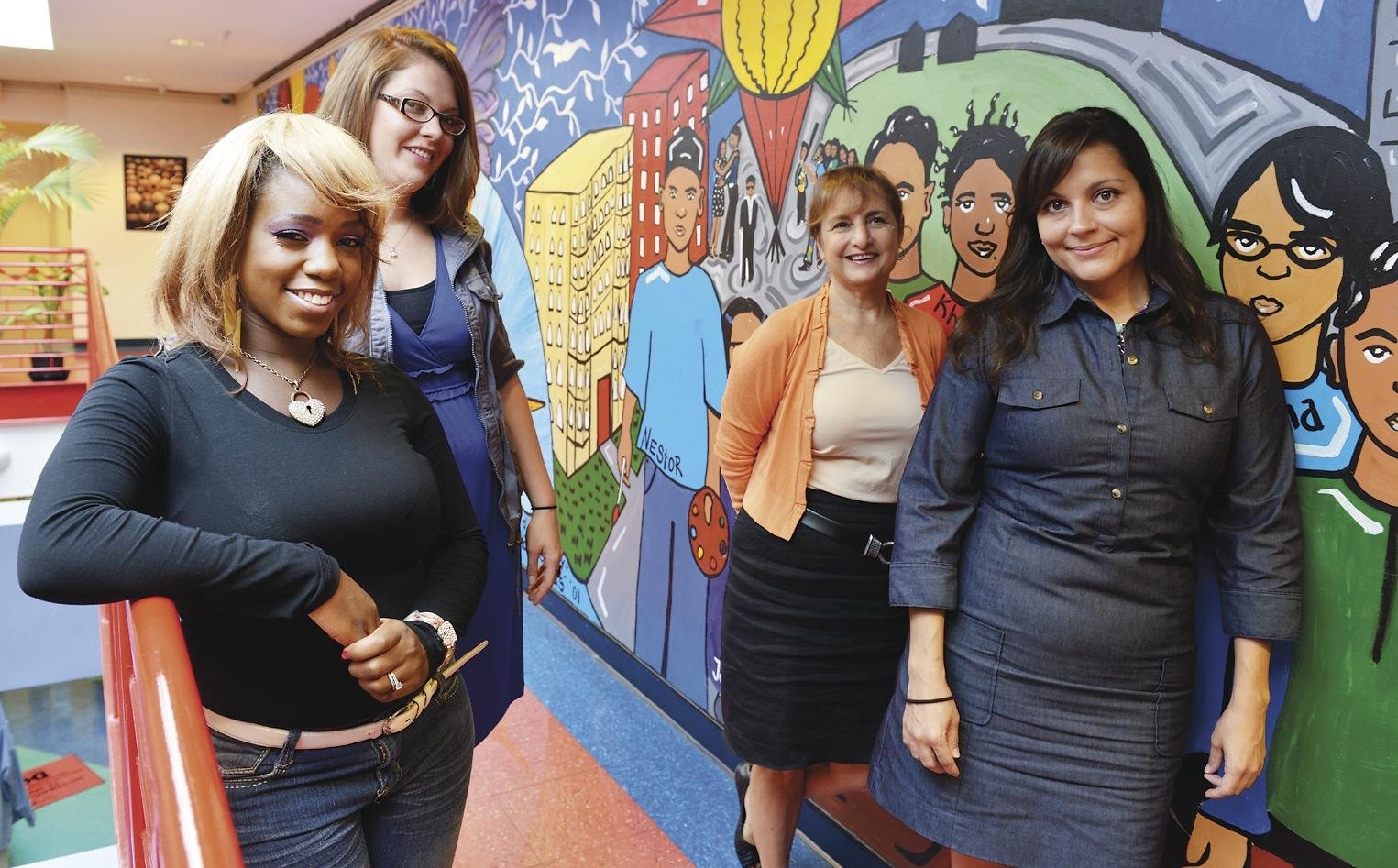
But then she walked into the Latin American Youth Center in Washington’s Columbia Heights neighborhood and asked for help. Today, at 23, Ms. Bellard is a married high-school graduate working on attaining a cosmetology license from the Montgomery Beauty School.
Ms. Bellard attributes her turnaround to the center’s “Promotor Pathway” program, an intensive mentoring approach that is being expanded with support from the federal Social Innovation Fund, one of a handful of nonprofit efforts President Obama put in place soon after he took office.
Today, 200 nonprofit projects that serve nearly 134,000 individuals have received $140-million from the fund.
“I came into this program as a statistic,” says Ms. Bellard, her face framed by silver earrings shaped like lightning bolts, “and I really believe they’re helping me to become a success story.”
Ms. Bellard may not want to be labeled a statistic, but that’s exactly what the Social Innovation Fund needs her—and those 134,000 others—to become if the program is to survive a tough federal budget fight, no matter who wins the presidential election.
Rigorous Requirements
The Social Innovation Fund was designed to expand the reach of nonprofit projects that have proven successful. Because of that, the application process for the grants requires strong evidence of results. The rigorous statistical requirements have left some participating nonprofits slightly “bruised” and “bludgeoned,” acknowledges Paul Carttar, who recently left the fund as President Obama’s first term comes to an end.
Moreover, nonprofits must clear another hurdle: Every federal dollar must be matched one from private sources.
In the tight budget climate in Washington, the fund will need to better promote its achievements if it hopes to survive, especially if President Obama loses the election. Among its successes so far:
• The fund, known as “the SIF,” has helped 200 local nonprofits learn to measure their results for programs that focus on youth development, job training, and promoting healthy behavior like getting exercise.
• The fund has made grants to a network of 20 well-regarded regional philanthropic organizations that, because they have better skills than the government in managing community programs and attracting matching private money, have decided how to allocate the $140-million in federal support.
• The networks of regional and local groups have secured from 130 foundations, corporations, and other groups a commitment of $350-million in matching funds, which will make it possible for local projects to become self-sustaining even without federal aid.
Nevertheless, critics say challenges remain before the fund’s success can be fully—and scientifically—evaluated.
• Some grant recipients have complained of costly bureaucratic demands for data tracking, which have required hiring consultants to craft measurement plans.
• The average amount of each grant awarded has shrunk from an average of $3.3-million in 2010 to $2-million this year as total federal funds have fallen steadily—from $49.2-million in 2010 to $42-million this year.
• The fund’s process for spreading ideas that work has yet to be copied by other federal agencies or private foundations.
Mr. Carttar says that he and other charity leaders are concerned about the dwindling resources, but that the fund is helpless when it comes to determining federal allocations. He says the fund’s new director, Idara Nickelson, chief investment officer for the Corporation for National and Community Service, has the kind of experience that should help in appealing for continued bipartisan support for the fund’s authorizing legislation, the Serve America Act of 2009. To ensure support, the fund must continue to demonstrate how it has been a catalyst for expanding the use of results-driven approaches to solve social problems and for leveraging taxpayer money to spur private investment.
“We’re not about spending more money for nonprofits,” he says. “We’re about spending money better.”
Building Networks
Some nonprofit experts have questioned whether the fund is truly spreading innovative programs or just steering more money to established charities.
Lester Salamon, director of the Johns Hopkins Center for Civil Society Studies, says that requiring small community nonprofits to find matching grants favors more established—and possibly less risky—groups. The 20 regional intermediaries and the 200 community groups have secured 40 percent of the $350-million in required matching commitments.
“Known operators were likely to get into this,” Mr. Salamon said. “That’s not a terrible thing, but you’d like to have an opening for newcomers that have new ideas. The steep matching requirements would be hard to achieve for them.”
He and others, however, praise the fund for building national networks that could endure for years using approaches that have been proven to work. “That’s pretty significant,” he says.
Those networks have come at a price.
Marc Schindler, a partner at Venture Philanthropy Partners, in Washington, says that to handle the $6-million his group got to distribute to six nonprofits, it had to hire an evaluation director. Some of its grantees hired contractors to design their evaluation plans.
The mere mention of the evaluation plans—with instructions that run more than 80 pages—evoked groans from participants, Mr. Schindler says.
“That may have been more than what people signed up for,” he says. But, he adds, “we’re measuring the right things in the right way.”
Adjustment Pains
In Colorado, the Marsico Institute at the University of Denver helps participants in the innovation fund with management issues and other “problems that people are struggling with,” said Katie Tiernan, executive director of The Jefferson Foundation. The foundation manages a summer literacy program through an annual $121,000 grant administered by Mile High United Way.
“People have been surprised with the level of rigor that is being asked of them,” Ms. Tiernan says.
Peggy Zink, head of Cincinnati Works, which received money from the innovation fund, says there was a “huge learning curve on the compliance side” because it was her group’s first federal grant. Adding systems to track time and billing specifically for the federal dollars and separately for the matching dollars is “redundant” and “wasted.”
“We are incurring some additional ‘costs’ that we didn’t anticipate going into it,” Ms. Zink wrote in an e-mail. “We do have added reporting requirements, additional meetings, conference calls and training events, and requests to provide content/stories for marketing purposes.”
The nonprofit, which provides workforce-development programs and got a $100,000 grant for two years, hired an extra data-entry person. But those extra demands on staff “detracts from other priorities and often results in overtime work for staff, which has an impact on morale.”
On the other hand, she notes, the federal money lured a matching grant from JPMorgan Chase. “We would not have gotten that money from them if they hadn’t been matching the SIF,” she says.
Still, she adds, “after this grant goes away I don’t think government money is the way we’re going to go.”
Carla Javits, executive director of REDF, a San Francisco economic-development group, says managing federal and private systems side by side was an adjustment. “You’re more constrained then you are with private dollars,” Ms. Javits says. But, she says, it has been worth it to use a $6-million grant to spur job growth.
Perhaps the biggest unmet goal for the Social Innovation Fund can be seen in the lack of influence it has had on grant makers and other federal agencies.
Mr. Carttar says that although the U.S. Departments of Housing and Urban Development and Health and Human Services both expressed interest in the innovation fund, neither has started a similar program.
And the fund may not be rubbing off on foundations. The Center for Effective Philanthropy found in a survey of foundation leaders that 38 percent were not familiar enough with the Social Innovation Fund to say whether it has “the potential to have an important positive influence on foundation practices.”
“If one of the objectives of the Social Innovation Fund was to influence philanthropy more broadly, we don’t see evidence of that, at least not among foundations that make $5-million in grants or more,” says the center’s president, Phil Buchanan.
Uncertain Support
Whether Congressional leaders are feeling that influence remains to be seen. Continued support is likely under President Obama, but not certain.
Mitt Romney’s running mate, Rep. Paul Ryan, has already proposed eliminating the entire Corporation for National and Community Service, which would include the Social Innovation Fund.
The Serve America Act of 2009 that established the Social Innovation Fund called for annual allocations of $180-million in the first three years. Instead, the program got $145-million.
Ms. Nickelson, Mr. Carttar’s successor, says that as programs financed by the Social Innovation Fund expand, Congressional leaders are learning about their impact.
“Now that the work on the ground is starting to click, we’re hearing more favorable response,” Ms. Nickelson says.
Some of the endorsements are coming from people like Ms. Bellard in Washington’s “Promotor” program. “They asked me, what are your dreams and we’re here to help you achieve them,” she says of her mentors. “With the help of my Promoters, I will meet my goals.”