
National Charities Find They Need Flexibility to Keep Affiliates Happy

By MAUREEN WEST
Contributor
April 15, 2012 | Read Time: 8 minutes
The notion of a charity’s national headquarters handing down commands to its affiliates, like an all-powerful Big Brother, no longer holds sway at many of the nation’s biggest nonprofits—including Big Brothers Big Sisters of America.
Last summer, the youth charity set a goal: By 2014, all of its local affiliates will have to collect data on the results of programs following a particular approach or risk losing their affiliate status. Clear, uniform data are becoming essential in making the case to donors for support, say officials, yet affiliates often resist collecting it because of the extra work involved.
But Big Brothers Big Sisters seems to have avoided alienating its local groups with the new rule, says Mack Koonce, co-chief executive of the organization.
“If our national office had simply announced that requirement from on high, it would have been met with a big thud,” he says. “It would have been seen as a ‘there goes national again’ moment.”
Instead, the new policy was put to a vote in an open meeting of the group’s National Leadership Council, which includes two representatives from headquarters and 20 from affiliates.
Says Mr. Koonce: “The main way we have cut old tensions is by changing the power structure of the organization.”
More Pressure
While many national organizations are making strides in giving more power to their affiliates, and healing rifts that have broken out publicly over issues like how best to achieve fundraising goals and manage basic operations, the shaky economy is making the stakes higher and the challenge of working together tougher.
Kathy Cloninger, who stepped down in December as chief executive of the Girl Scouts of the USA, says affiliates have been asked to do more with less and as a result are putting more pressure on the national organizations.
“They are holding the national office accountable for using its resources wisely, and they want to be involved in big decisions,” says Ms. Cloninger.
What’s more, she says, improvements in communications technology mean that now there are “so many ways to get people around the table without having to fly them in” that headquarters has little excuse to leave people out.
Greater Autonomy
Technology is a crucial reason that the relationship has changed between affiliates and headquarters, says Jamie Notter, co-author of Humanize, a book on organizational management.
Social media and other technology have made it easier for local groups to distribute messages about their causes, raise money, or rally advocates.
“Even as recently as 10 or 15 years ago, chapters had a harder time existing without nationals, but that isn’t necessarily true now,” says Mr. Notter, a management consultant in Rockville, Md., who works with nonprofit clients.
Generational tensions are also causing a lack of harmony at the nation’s big organizations. Baby boomers (people now mainly in their 50s to mid-60s) and Generation Xers (30s and 40s) are the ones most likely to be leading nonprofit affiliates around the country, and they are not known for their unquestioning allegiance to authority.
Nonprofit leaders who respond to those frictions by simply imposing stricter rules can find themselves in trouble, Mr. Notter suggests.
“National organizations may find themselves renegotiating relationships with affiliates or risk losing them,” he says.
Embarrassing Feuds
Miscommunication between affiliates and their headquarters can sometimes erupt into a nasty public fight—or reveal an embarrassing degree of estrangement.
That was clear when Susan G. Komen for the Cure said it was cutting off aid to Planned Parenthood for cancer-screening programs. Within hours, some Komen affiliates were announcing plans to break with the headquarters. Their anger was one reason Komen was forced a few days later to resume aid to Planned Parenthood. However, even that reversal was not enough for some affiliates. This year, several local Komen leaders have resigned, citing the uproar as a factor.
Such turmoil has broad implications, says Erik Daubert, a nonprofit-management consultant in Durham, N.C.
“Communities expect national organizations to understand what is going on at the local level and vice versa,” he says. “When it doesn’t happen, it creates tension not only between local and national but between the nonprofit and the community.”
A case in point: In late February, the YWCA of the Greater Triangle, in Raleigh, N.C., closed suddenly due to financial woes, leaving its employees without pay and hundreds of clients without services. The move caused outrage in the region, and local news media covered the closure for weeks.
But officials at the YWCA USA, the charity’s headquarters in Washington, didn’t know about the affiliate’s troubles until a Raleigh reporter sought a comment.
Learning about it that way “was not ideal,” says Robin Scullin, director of communications at the national office.
Well before the Raleigh chapter closed, the YWCA was working on a plan to improve communications throughout the organization. Next month, at the group’s national conference, leaders will be talking about communications, the YWCA image, and how the national office can work better with local offices.
Rebuilding Ties
Even after a bitter and public battle over who has control, national organizations can rebuild ties to their affiliates that strengthen the entire charity.
Habitat for Humanity International faced a bitter revolt four years ago after it told affiliates they had to sign a new agreement that spelled out their roles and responsibilities.
Some chapters left the group in anger, saying the agreement gave the national unit too much control over their assets and operations, while the San Antonio chapter took the national organization to court.
San Antonio agreed to stay with the charity, and today Sue Henderson, Habitat International’s vice president for operations for the U.S. and Canada, says she still thinks the national group had to take the action it did to ensure “every Habitat affiliate is high performing and well respected.”
Still, it learned from the experience. Habitat International now polls its affiliates each year asking them how headquarters can help them achieve their goals and taking other steps to open up communications.
It also now makes a deliberate effort to act on the ideas from affiliates and promote smart innovations by local groups to the whole organization.
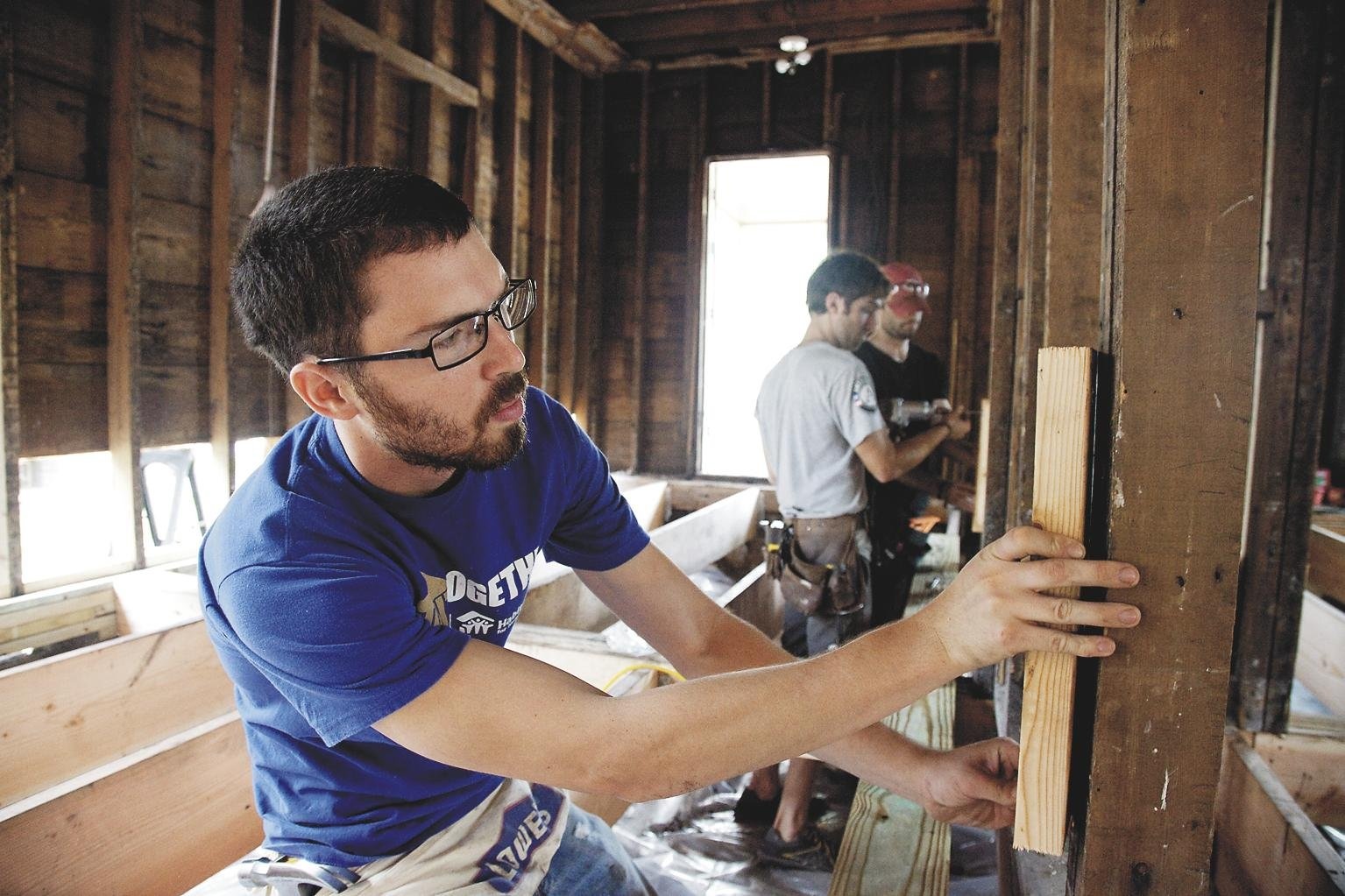
For example, Twin Cities Habitat for Humanity has put 900 families into homes by renovating houses rather than building from scratch, taking advantage of the stock of cheaply available foreclosed homes. The national group is now spreading the word about the Minnesota approach.
Affiliate staff members praise national officials for listening more. “We feel more connected as a result,” says Matt Haugen, communications director at the Twin Cities Habitat chapter. “We have a lot of back and forth now, “ he says, noting that some former Twin Cities affiliate leaders now work for the headquarters.
Meeting in Person
Even in an era of Facebook and Twitter, good relations between local chapters and headquarters depend on face-to-face communication, say charity officials.
Dan Cardinali, president of Communities in Schools, says his organization, which supports public schools, would not have been able to make the important changes it has over the past decade if its national leaders hadn’t made the effort to engage its affiliates.
He now spends up to 30 percent of his time traveling to meet with chapters all over the country and, for the most part, listening.
The 35-year-old Communities in Schools, Mr. Cardinali says, now has a proven reputation for reducing dropout rates and increasing graduation rates—one it earned by collecting comprehensive data over five years from its affiliates.
But convincing local units that the time-consuming work was worthwhile took an 18-month campaign of nonstop travel to visit nearly every affiliate in 25 states.
“It was worth it,” Mr. Cardinali says, remembering that an earlier effort simply to demand the data by edict had fallen flat. (“We rolled it out hard, with timelines and deadlines, and got organ failure,” he recalls of the first attempt.)
The growing pressure from donors for data that measure the impact programs have is a growing source of tension for many charities, says Alan Tuck, who specializes in nonprofit networks as a partner at the Bridgespan Group, a management consultancy.
“People in the networks hate all the reporting,” he says. “You have to explain that you aren’t asking for data just because you are nosy, but in this world where all government and private donors want proof of outcomes, the data is necessary.”
If local staff members are persuaded that the information could improve their organization’s reputation and revenue, they’ll be more willing to pitch in, Mr. Tuck says.
At Communities in Schools, the new data, which finally started to flow after face-to-face meetings, allowed the national and local groups to stop relying on anecdotal stories to make their case for support. They now have the hard numbers to prove that the programs make a difference.
“It became a powerful tool for their fundraisers,” Mr. Cardinali says.
And Communities in School has seen its revenue increase from $200-million to $220-million from 2010 to 2011, while many other education programs were facing cutbacks.
But the relationships with local chapters still need constant maintenance, Mr. Cardinali adds: “Anytime you are trying for systemic changes—and we are still making them—there are tensions. You have to stay engaged during those times.”





