
Emulating St. Jude’s Fundraising Prowess: Lessons for Charities of All Sizes

By Holly Hall
Contributor
February 19, 2012 | Read Time: 5 minutes
In more than 30 years as a leading fundraiser at St. Jude Children’s Research Hospital, David McKee says he’s never had to report a drop in donations. Among the lessons from his career for charities of all sizes:
Pick the right person to solicit donors. When St. Jude first decided to start an annual radio fundraising drive 23 years ago, it relied on a single disc jockey from Atlanta who taped its initial three-hour program for 800 stations. But that was a big flop. “What was missing was a local DJ who people knew in their own market who could get people to call in and give,” says Mr. McKee.
With help from Randy Owen, a country-music performer and the radiothon’s volunteer chairman, Mr. McKee persuaded about 20 big stations to hold a two-day radiothon and invited disc jockeys from those stations to the hospital for a weekend seminar before the radio drive. The seminars, which still take place today, teach disc jockeys about the hospital, but they also help them advance their careers. Disc jockeys get to meet and tape interviews with up-and-coming country-music performers who also attend the seminars.
With local broadcasters who can motivate their audiences, radiothons now raise some $50-million annually for St. Jude, and the hospital is expanding them to Hispanic and African-American stations.
Adjust fundraising events to the times. While certain elements of the radiothon have endured, others have needed updates, Mr. McKee says. To get ideas, the hospital recruited a group of advisers, mostly broadcasters from country-music radio stations, who meet annually in Nashville. “We have to because things are changing with satellite radio and so on,” he says. “Radio is not the same, and neither are we.”
At the advisory group’s suggestion, St. Jude is carrying out a large survey of radiothon listeners. Mr. McKee hopes it will prove the St. Jude broadcasts help stations build a better relationship with their audience. That way, he says, “if they have a new owner come in, they’ll have stats to show this radiothon is a win-win.”
Another event that’s evolved with the times: a telethon started decades ago by St. Jude’s founder, Danny Thomas, a comedian who was also the telethon’s host. The telethon was once five hours long, but that length became difficult for television networks to broadcast, so it now runs just one hour.
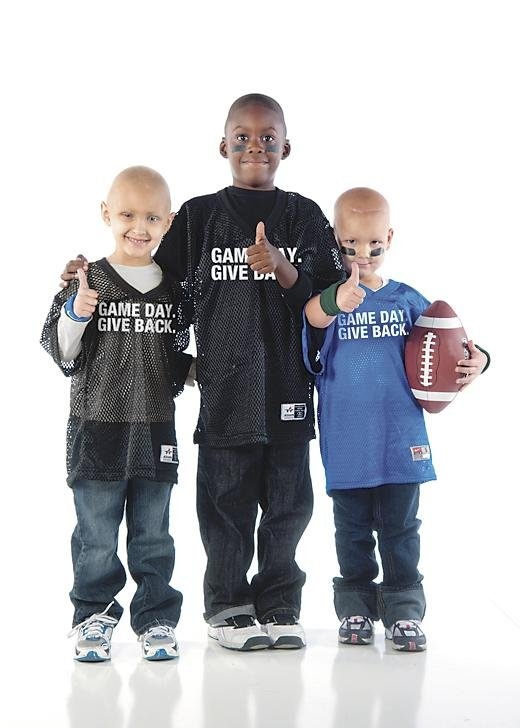
St. Jude started looking for a new televised fundraising event, partly because people have started fast forwarding through parts of the telethon that ask viewers to donate to the hospital. The hospital’s new Game Day Give Back with the Fox Sports channel broadcasts appeals during football games—when viewers are far less likely to skip through commercial breaks. The hospital urges donors to have football parties in their homes, invite friends to watch the game, and give to St. Jude. The first Game Day event in 2010 raised more than $1.4-million.
Know when to centralize. Like many charities with local chapters, St. Jude has 33 offices across the country that raise money. But to keep contributions flowing, Mr. McKee had to move some of their fundraising responsibilities to the hospital’s national headquarters. For example, when St. Jude stepped up efforts to seek bequests from older people in the 1980s, Mr. McKee thought it made sense for the local units to hire fundraisers to visit donors and promote estate gifts. But the local offices, where employees organize fundraising events, were not the best supervisors of colleagues who solicit bequests, says Mr. McKee. Plus, St. Jude had no offices in parts of the country with large numbers of retirees, like Arizona. So the hospital began hiring fundraisers around the country who work out of their homes but report to national headquarters.
Mr. McKee also decided to hire other fundraisers at national headquarters who contact older donors who have given $2,000 or more to the hospital. Those relationships matter. One out of every seven donors who leaves a bequest to the hospital has been contacted by a St. Jude fundraiser, and those donors’ bequests are three times larger, on average, than estate gifts from people with no such contact, Mr. McKee says.
In two decades, bequests to St. Jude have grown from less than $3-million to more than $100-million annually. According to Robert F. Sharpe, a Memphis fundraising consultant who tracks estate gifts to large charities and advises St. Jude, the only charity now raising more every year from bequests than St. Jude is the Salvation Army.
Improve communication among fundraisers. Mr. McKee says he works to foster communications between fundraising divisions that don’t normally interact.
Building connections between fundraisers who drum up corporate support and those who plan events helped St. Jude raise more money from Kmart. The retailer already donated a portion of year-end sales to the hospital, but when corporate fundraisers learned about a store that wanted to hold an event for kids, they reached out to colleagues who run the hospital’s tricycle races. Now other Kmart stores around the country hold such events, which appeal to store workers with young children.
St. Jude also reduced some direct-mail solicitations after employees in the hospital’s telemarketing center told Mr. McKee that some donors complained about the hospital contacting them too often. “The most challenging thing is making sure we always improve how we treat donors,” says Mr. McKee. “This is our most valuable resource, but everyone wants a piece of them, whether it’s direct mail or planned giving or a golf tournament.”
Seek new fundraising opportunities. Mr. McKee says he’s learned to look at on-the-job problems in terms of how he can transform them into new ways to raise money. When Hurricane Katrina disrupted postal service on the Gulf Coast, making it impossible for St. Jude to reach tens of thousands of donors by mail, that gave Mr. McKee an idea. St. Jude was treating cancer patients from other hospitals that shut down because of the hurricane, so he got colleagues to create a new appeal highlighting those services and mailed it to donors outside the Gulf Coast.
“Whenever I see a problem,” he says, “I look for the fundraising angle. You have to look at the world that way.”




