At FailFaire, Speakers Muster Their Courage to Offer Candor About Mistakes

By NICOLE WALLACE
Features Editor
January 15, 2012 | Read Time: 6 minutes
New York
The drinks were flowing at FailFaire, as more than 110 people who work in international development gathered here to talk about a subject that’s often taboo in the nonprofit world: failure.
“We do serve wine, and that’s a critical component to make everyone a little more comfortable,” says Katrin Verclas, co-founder of MobileActive.org and one of the event’s organizers. Ms. Verclas laughs as she says this, but you get the sense that she’s not entirely joking.
The event consists of eight speakers who give rapid-fire and remarkably frank 10-minute presentations about unsuccessful technology projects. It is held in the evening, well outside normal business hours—another nod toward helping participants loosen up. The goal is to identify common problems and help other organizations avoid making the same mistakes.
Slowly the idea seems to be catching on. This FailFaire marks the third public event MobileActive, a nonprofit that promotes the use of cellphones for social change, has organized, and it will be putting together a similar session for the International Conference on Information and Communication Technologies and Development in March. Meanwhile, other institutions, such as the World Bank and Unicef, have held private gatherings to talk about unsuccessful projects.
“This field is hobbled by a lack of resources—time, money, competent staff, et cetera,” says Ms. Verclas. “Given that, shouldn’t we maximize our chance of success?”
Crucial Lessons
While the events have so far focused on failed technology efforts, the FailFaire style of talking openly about misfires in the hope of preventing future failures could be valuable in other fields, say organizers.
The most important lessons that have come out of the early events—such as the critical need to start with ideas from the people an organization hopes to serve and to plan for a project’s growth from the beginning—are relevant to many nonprofit projects, says Rajesh Anandan, a senior vice president at the U.S. Fund for Unicef, in New York, which co-hosted the recent gathering.
Says Mr. Anandan: “The same ideas could apply to work to improve teacher capacity in urban communities in the U.S.”
When Allison Stone stands up to talk about the mobile-health project that she manages for Columbia University’s Mailman School of Public Health, she candidly rattles off a list of significant problems the cellphone effort has encountered.
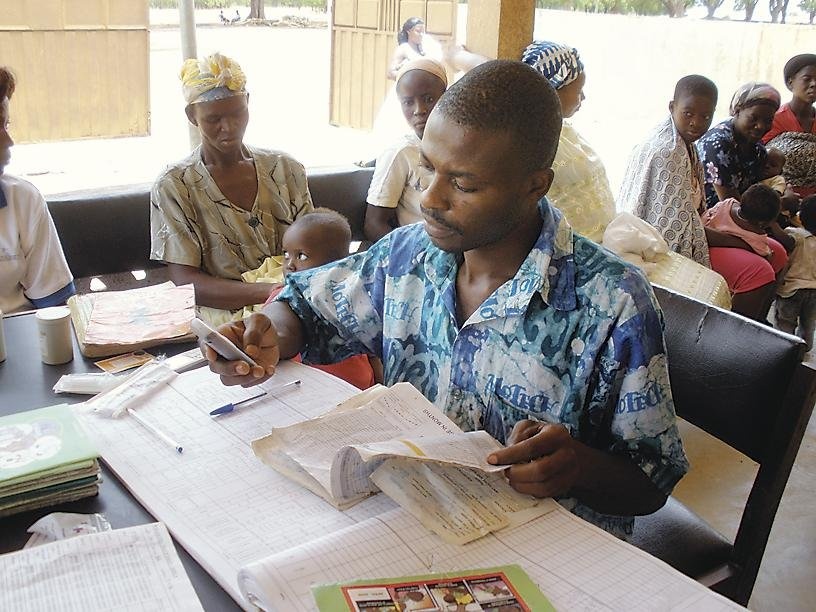
Mobile Technology for Community Health, also known as Motech, seeks to use text-message alerts to improve health care for pregnant women and their children in northern Ghana. But busy community health workers complain that it is difficult and time-consuming to enter patient information via cellphone into the system that generates the reminders, Ms. Stone tells the audience. When incomplete data is entered, the system sometimes sends erroneous text-message alerts to patients telling them it’s time for another checkup, which can result in patients walking long distances to a clinic unnecessarily.
And in reality, she says, women’s access to cellphones isn’t as high in the region as the project’s initial research suggested.
“Sure, a woman might have a phone, but it broke last year and she hasn’t been able to buy a new one,” says Ms. Stone. “Or maybe her uncle, who she lives with, has a phone, but he has to ride a bike 10 kilometers to have it charged, so he’s not really thrilled to have his battery drained for whatever this Motech thing is.”
The most successful part of the program has been the introduction of standardized paper ledgers, designed to get all the community health workers collecting the same data and originally envisioned as an interim step to the mobile-phone system.
“The nurses absolutely rave about the registers,” Ms. Stone tells the crowd. They say the new ledgers cut down the time it takes to compile reports and makes it easier to identify patients who need follow up, such as a child who is late getting an immunization—both of which were among the goals the organization established for the mobile-phone project.
Summing up the lessons she’s learned, Ms. Stone cautions her international-development colleagues not to let technology drive program design.
“Look at the problem you’re trying to solve,” she says. “Think really hard. Does a mobile-phone intervention really target that problem, or am I just trying to twist this problem into something that can be solved with a mobile phone?”
‘It’s Super-Terrifying’
Ms. Verclas says that finding speakers who are willing to publicly broach the delicate issue of failure hasn’t been as difficult as she expected. FailFaire guidelines give speakers the option of giving their speech off-the-record, meaning that event participants are asked not to talk about the presentation outside that room—or blog and tweet about it later. Two speakers at the first FailFaire took advantage of the offer, but everyone else has been on the record.
That’s not to say that sharing professional disappointment with a roomful of peers is easy.
“It’s super-terrifying,” says Christopher Fabian, co-leader of Unicef’s technology-for-development group. “Because it’s a new discourse, the rules for talking about failure haven’t been established yet.”
Mr. Fabian’s experience taught him how tricky it can be to explain the nuances of an organization to outsiders.
In his presentation, Mr. Fabian talked about working with design students at New York University who had developed a low-cost device to test water quality. He explained that while Unicef’s water experts rebuffed his efforts to get them excited about using the device, he later realized that its ability to provide real-time information about water quality would have been a better fit with the organization’s logistics and disaster-response teams.
The point he was trying to convey was that his preconceived notions about the technology project kept him from connecting it to the right people within Unicef.
But, Mr. Fabian says, while reading the Twitter messages after the event, he feared that what people took away was that the device, which the students are continuing to develop, was a failure. He was so concerned that he wrote a blog post, “My Fail at Failing at FailFaire,” to clarify any misunderstanding.
Two days after the public event, Mr. Fabian gave his presentation again, but this time at Unicef’s internal FailFaire, a brown-bag event that drew more than 20 staff members. He says the response from his colleagues was very different, reflecting a more sophisticated understanding of how he presented his idea to the wrong department and how he could have been more effective.
Mr. Fabian doesn’t hesitate when he says he would “absolutely” be willing to speak again at a public FailFaire. But he would make sure the project he was presenting “was all mine.”
Whenever a project stumbles, it’s painful—for the people running the effort and, more importantly, for beneficiaries, says Ms. Stone, of Motech. With so much excitement about the potential of technology in international development, and a tendency for reports to talk only about “glowing success,” she says people in the field have a responsibility to share what they’ve learned from their mistakes.
Says Ms. Stone: “To minimize failure in the future, we have to talk about failure in the present.”