Philanthropy Expert’s New Book Spotlights Ordinary Donors’ Stories

By Ben Gose
Senior Editor
November 13, 2011 | Read Time: 8 minutes
Palo Alto, Calif.
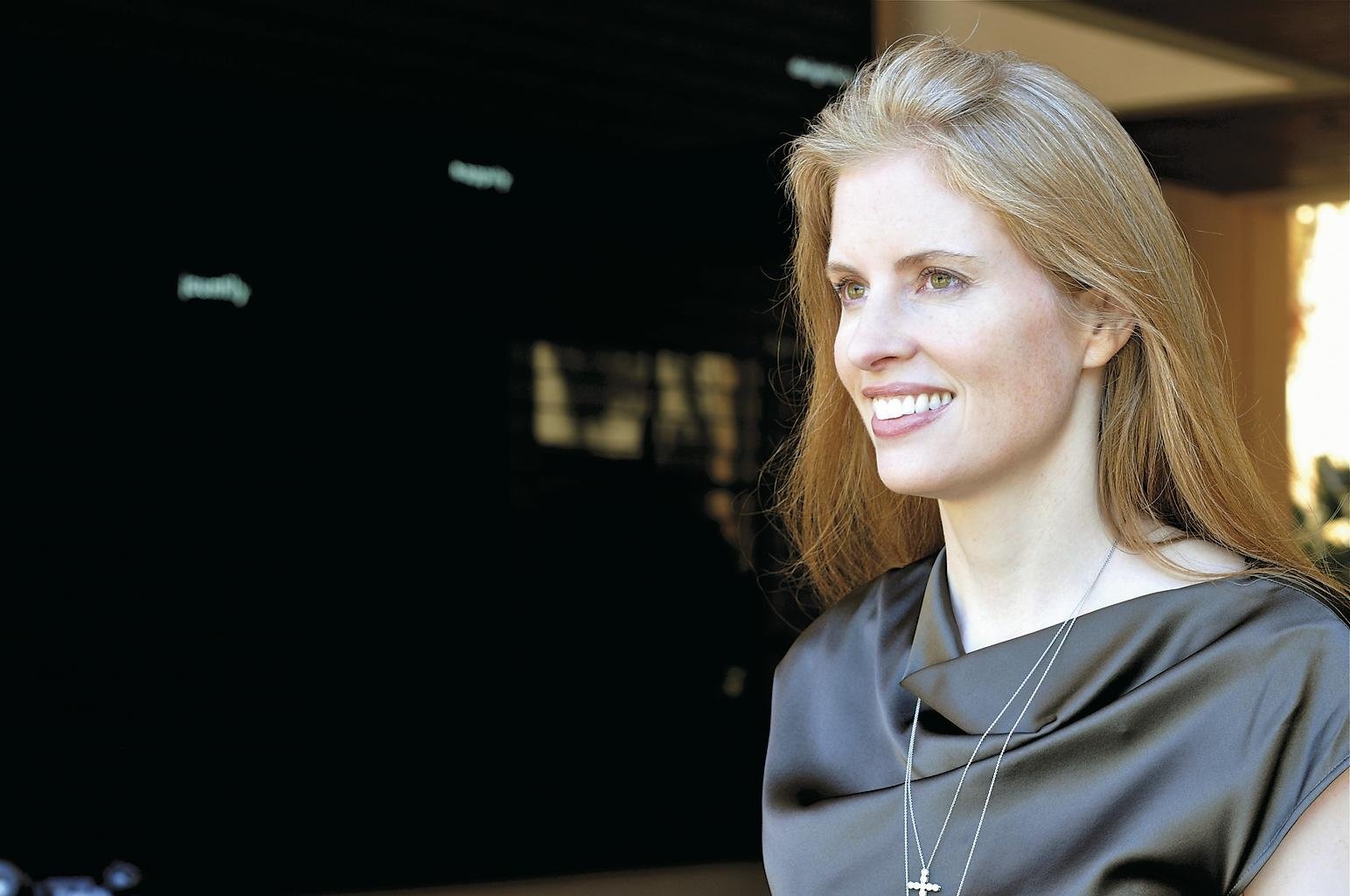
Laura Arrillaga-Andreessen is the daughter of a billionaire, and she is married to Marc Andreessen, best known as a developer of early browsers like Netscape, who is fast on his way to joining the same elite club.
Mrs. Arrillaga-Andreessen is the family’s “chief philanthropic officer”—as her husband puts it—who helps to give some of the wealth away.
In the past 13 years, she has become one of the nation’s most prodigious philanthropic entrepreneurs. She created the Silicon Valley Social Venture Fund, an early example of “venture philanthropy”; pioneered a how-to course on philanthropy at the Stanford Graduate School of Business; and founded a fast-growing research center at Stanford that brings together academic researchers with executives of nonprofits and foundations.
“Someone with her background could be really complacent,” says Paul Brest, president of the William and Flora Hewlett Foundation, who regularly speaks to Mrs. Arrillaga-Andreessen’s Stanford classes. “That’s not Laura. She challenges herself all the time.”
When she was just 25, she lost her mother, Frances, to cancer.
Mrs. Arrillaga-Andreessen emerged from the experience with a desire to match or exceed the community-minded spirit of her mother, who ran the family’s foundation, sat on multiple charity boards, and cofounded two nonprofit groups.
“In her living, she inspired me, and in her dying, she showed me a new life path,” Mrs. Arrillaga-Andreessen writes in Giving 2.0: Transform Your Giving and Our World, a new book that seeks to help donors be more strategic. “I took the tragedy of losing her and transformed it into my life’s greatest blessing—my giving.”
Broad Legacy
Several years ago, Mrs. Arrillaga-Andreessen began working on her first book, an attempt to combine her academic research on foundation grant making with advice for individuals. But two years ago, she decided the manuscript she had finished was not the book she wanted to write. She scrapped it, took a few months off, and then picked up anew.
Her husband, now a venture capitalist, says that she worked seven days a week over two years on Giving 2.0.
Giving 2.0 is notable for its lack of star power. It does not include extensive looks at what well-known philanthropists or foundations are doing with their money. Instead, Mrs. Arrillaga-Andreessen offers profiles of several “ordinary people with extraordinary generosity.” She met the donors, who range in age from 10 to the mid-70s, through her academic research and her contacts in the world of philanthropy. Among them:
- Hector Chau, an immigrant from Mexico who lives on a pension, volunteers with a program called Tax-Aide, where he uses his accounting skills to help low-income older adults complete their tax returns.
- Linda Shoemaker, a school-board member in Boulder, Colo., taps a windfall from the sale of her husband’s company to become an “advocacy philanthropist” seeking to promote better state policies.
- Makeba and Damond Boatwright, a couple in Missouri, settle on a version of tithing in which they give 10 percent of their income, but split it between their church and their favorite charities.
“A primary objective in the book was redefining what philanthropy is, and making it as accessible and inclusive as possible, because giving is a universal opportunity,” Mrs. Arrillaga-Andreessen said in an interview here last month.
Giving 2.0 covers more ground than many books of its kind. It has long sections on volunteering, advocacy, and how and whether to create your own nonprofit organization.
Mrs. Arrillaga-Andreessen’s multifaceted experience in the nonprofit world, as both donor and scholar, lends authority to her writing.
“Laura’s odyssey in philanthropy has been both an intellectual journey and an experiential journey,” says Sally Osberg, president of the Skoll Foundation, based in Silicon Valley. “That’s what really makes this book so powerful.”
All of the royalties from the book will go to a new grants program for innovative charities. Mrs. Arrillaga-Andreessen has promised to provide information about the grants program on the book’s Web site, Giving2.com.
New Foundation
The book also offers a teaser on another significant development: creation of the Marc and Laura Andreessen Foundation. In both the book and an interview, Mrs. Arrillaga-Andreessen provided few details about the foundation.
The couple doesn’t expect to immediately hire a foundation staff—given Mrs. Arrillaga-Andreessen’s own expertise—and they aren’t saying how much money they will contribute to start the foundation. Mrs. Arrillaga-Andreessen intends to spend the next 12 to 18 months figuring out what the foundation will look like.
“Part of the reason that I’m not rushing into creating a fast and furious foundation strategy and grant-making program is that I aspire to walk the talk of Giving 2.0 in all of our philanthropy to come,” she says. “That requires thoughtfulness and research and work.”
It’s hard to overstate the impact that Frances Arrillaga’s illness and death has had on her daughter’s career. Mrs. Arrillaga-Andreessen, who describes her late mother as her “best friend and soul mate,” was the primary family member caring for her mother in the 20 months between the diagnosis of cancer and death.
“Devoting myself to her care taught me how to live outside myself,” writes Mrs. Arrillaga-Andreessen, whose father, John Arrillaga Sr., is one of the largest landowners in Silicon Valley. (In September, Forbes estimated his net worth at $1.8-billion.)
Her mother had always been the “public face” of the family’s philanthropy, and after her death, Mrs. Arrillaga-Andreessen knew she would be stepping into that role. She had deferred enrollment at Stanford’s business school to care for her mother, and when she finally made it back to school, she did so with the conviction that she would put the business skills she acquired to use in the field of philanthropy.
Mrs. Arrillaga-Andreessen began drawing up the plans for the Silicon Valley Social Venture Fund, better known as SV2, while she was still in business school, and she ran the organization for the first decade of its existence.
In 2000, Mrs. Arrillaga-Andreessen was invited to become a lecturer at Stanford’s business school, to teach a course on strategic philanthropy. But she quickly realized there were few case studies on the topic, at Stanford or anywhere else. She would have to design the curriculum herself.
She developed the kind of course she herself had wanted when she was in business school. The class proved popular, and she now teaches an undergraduate version of it too.
Academic Center
By 2005, Mrs. Arrillaga-Andreessen sensed a “disconnect” between her academic colleagues who wrote about philanthropy and social action, and the nonprofit leaders she had met through her work at the social-venture fund and in overseeing some community grant making at her father’s fund, the John Arrillaga Foundation.
That year, she founded the Stanford Center on Philanthropy and Civil Society to foster collaboration among scholars in 20 academic departments and greater interaction with nonprofit groups. The Stanford center has been raising its profile under Kim Meredith, a former head of development at Planned Parenthood, who became the unit’s executive director in 2009.
It now has a budget of $3.2-million and a full-time staff of nine. In 2010 it acquired the Stanford Social Innovation Review from Stanford’s business school.
In December, the center will kick off a yearlong collaborative research project on philanthropy and public policy, featuring three workshops at which nonprofit leaders will mix it up with scholars.
“We’re trying to make that our sweet spot,” Ms. Meredith says. “If everything stays in an academic silo and never gets out, what good does that do?”
Even as Mrs. Arrillaga-Andreessen prepares to increase the time she spends on her own giving, she remains committed to her academic work.
Next up, she plans to write a series of case studies about foundations.
She may eventually write a textbook on giving—a “philanthropy class in a box,” she says, which might help create more such courses at colleges and business schools.
Her own giving, she says, is not as significant as the indirect impact she can have through her teaching and writing, which could inspire hundreds or thousands more people to give generously.
“There’s a ripple effect I can have,” Mrs. Arrillaga-Andreessen says, “because of my expertise in the sector and my personal experiences as a philanthropist.”
Questions Volunteers and Donors Should Ask: Advice From a Giving Expert
Volunteerism
Do you want to provide care (say, by reading stories to sick children) or put your mind to work (helping a nonprofit develop a marketing plan, for example)?
Board service
Does the board you’re thinking about joining take advantage of the expertise of its members, or is it primarily a “reporting board” that plays little role in strategic planning?
Giving
What are the annual and longer-term goals for the charity you’re considering donating to, and how does the charity measure whether it is achieving them?
Will you tolerate the failure of some programs you are supporting if lessons are learned along the way?
Advocacy philanthropy
Are you prepared for the controversy that may result when you take a stand on an issue?
—From “Giving 2.0,” by Laura Arrillaga-Andreessen