
Occupy Wall Street’s Beef With Big Business Should Concern Big Philanthropy

By Vincent Stehle
Contributor
October 16, 2011 | Read Time: 4 minutes
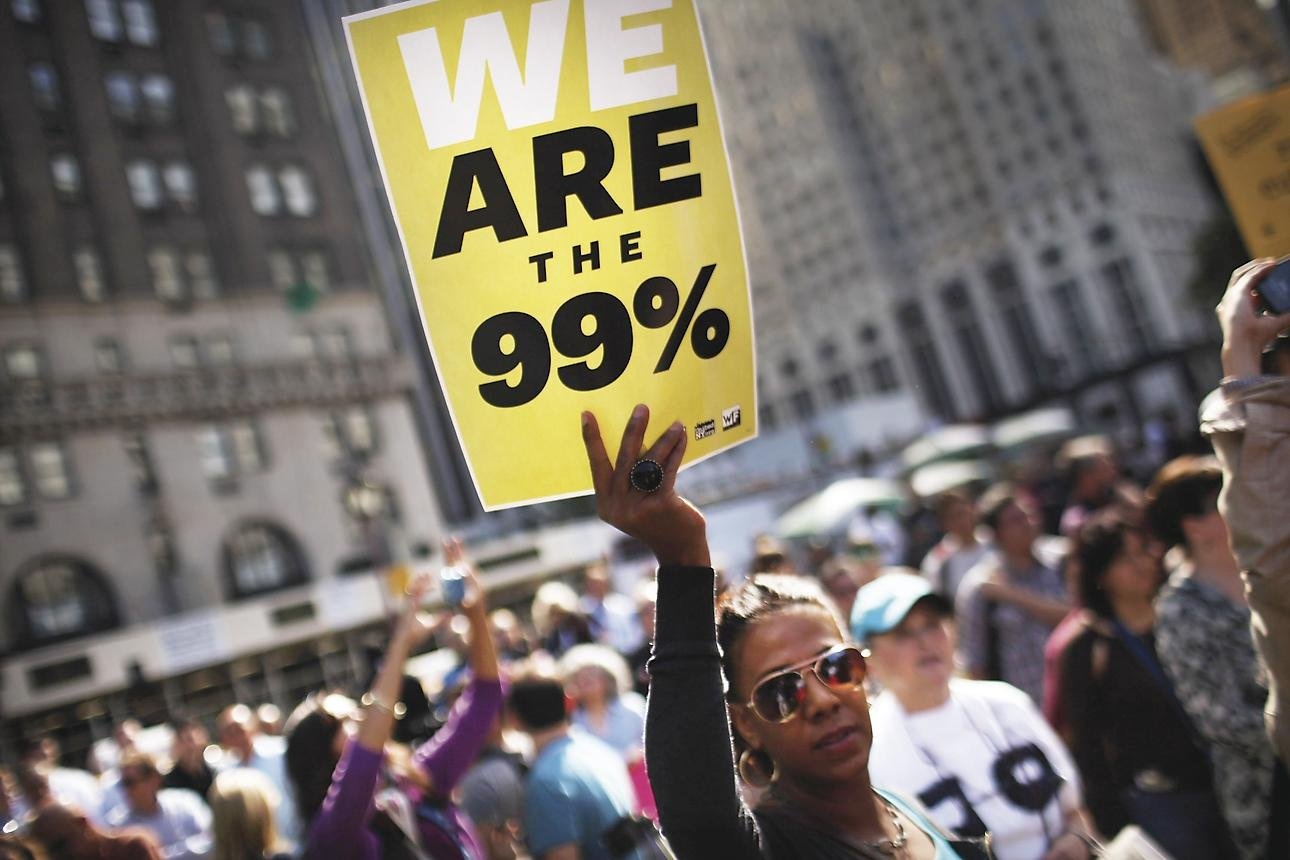
As the Occupy Wall Street protest spreads from New York to dozens of other cities, what began a few weeks ago as a small, ragtag group is fast becoming a movement.
And it’s time that philanthropy started paying attention to the questions that stem from this diverse and sometimes amorphous uprising, with participants ranging from left-leaning anarchists to right-leaning Tea Party proponents.
As investors with more than $620-billion in assets, foundations have a direct stake in the issues that have spurred protesters across the country, but more important, their commitment to serve society should compel action
At its core, the Occupy Wall Street movement challenges income inequality and political corruption; it attacks the collusion between the masters of Wall Street and their pawns in Washington.
The message emanating from the protests is a growing howl of popular resentment, as the economy continues to sputter with massive unemployment and declining wages for millions in the lower and middle classes.
But what went wrong? And what can philanthropy do to turn our financial and political system around?
First, foundation executives and others probably need a good primer on the financial meltdown. One of the most compelling and concise versions is Charles Ferguson’s Inside Job, this year’s Academy Award-winning documentary.
In the film, Mr. Ferguson details how large financial institutions engaged in reckless behavior that politicians and regulators aided and abetted by lowering the bar on rules that were intended to safeguard the financial system.
And even when many financial institutions clearly broke the rules that remained, there was scant accountability for their actions. As Mr. Ferguson pointed out when receiving his Oscar Award last spring, “Three years after our horrific financial crisis caused by financial fraud, not a single financial executive has gone to jail, and that’s wrong.”
This is the sentiment that echoes in the caverns of Wall Street today.
In the philanthropy world, many are of two minds on the subject.
On the one hand, we look upon these miscreants as criminals and frauds. On the other hand, today’s shameless white- collar criminal is quickly rehabilitated into tomorrow’s visionary philanthropist. So we try to be broad-minded.
But accountability is what really matters before anyone is rehabilitated, and Mr. Ferguson offers a few key lessons in accountability. The film shows how often academics sold their services to banks and other financial institutions, giving intellectual cover to shady practices without disclosing their conflicts of interest.
The film crackles with tension as Mr. Ferguson skewers several leading figures in the field of academic economics at some of the nation’s top schools.
Almost immediately, the film caused a stir on college campuses, which have now taken up the question of disclosure in academic reports.
But there is also a role for philanthropy here. For every endowed professorship, there is a foundation or individual who can set criteria for these positions. Philanthropy has the responsibility to insist that the recipients of this largess operate with the highest ethics.
On a broader level, America’s foundations have an enormous stake in the safe and equitable operation of the broader economy. Perhaps they should use their influence as investors to demand that financial institutions operate transparently and with high ethical principles.
In the aftermath of the financial collapse of 2008, new rules were introduced that were intended to regulate risky financial practices at major financial institutions and to provide modest consumer protections. Given the disastrous results from reckless and unethical practices of many major financial institutions leading up to the economic collapse, one might have expected the industry to welcome the sensible regulations included in the federal consumer-protection law passed last year.
But the financial industry, which only months before had been bailed out with trillions of dollars of federal aid, spent millions on lobbying and political expenditures designed to blunt the force of the new rules.
One way to rein in excessive corporate influence over politics would be to require large companies to report their political expenditures publicly.
The Center for Political Accountability is a nonpartisan, nonprofit organization that is leading a campaign to demand that corporations provide public disclosure of political spending. Since 2007 the center has developed numerous proxy statements and other shareholder actions to promote disclosure by major corporations.
Foundations have the capacity, as shareholders, not only to demand public disclosure by these companies but also to provide grant support for the organizations leading the charge in transparency, accountability, and changing the campaign-finance system.
Foundations—society’s institutional investors in the public interest—have an unusual opportunity. They can make their demands heard on Wall Street. But unlike the protesters, they can do it in the board rooms of the big banks. They don’t have to stand out on the street in New York’s Zuccotti Park.





