
October 2, 2011 | Read Time: 6 minutes
Even before the recession, arts and culture organizations grappled with shifting tides: changing audience demographics, a struggle to appeal to younger patrons, and the competition posed by new technology. Then the economy crashed, drying up donations and plunging many arts groups into sink-or-swim situations.
“We’re entering a new chapter of fundamental redefinition and realignment,” says Ben Cameron, who oversees arts grants at the Doris Duke Charitable Foundation, in New York. “More and more, people recognize that change is a necessity if we’re going to thrive.”
In 2007 the foundation started several programs to help arts groups rethink how they operate, including the Innovation Lab for the Performing Arts.
Organizations that participate in the lab receive a year of consulting to help them develop and refine what Mr. Cameron calls “a half-baked idea.” Midway through the year, they receive a grant of up to $40,000 to start putting the idea into action. EmcArts, a nonprofit that helps arts groups manage change, designed the program and has run it six times with a total of 23 arts organizations.
The program emphasizes the importance of marshalling diverse perspectives, which starts with putting together a different kind of brain trust than most nonprofits are used to, says Richard Evans, president of EmcArts, in New York.
“You usually find that when something has to get done, the senior management team will come together, talk it through, and then it will delegate things and off they go,” he says. “Business-as-usual things happen very efficiently that way, but what it doesn’t do is disturb the culture and question assumptions.”
Each organization forms a group of about 10 people, including employees from different departments and with varying levels of seniority, as well as board members, artists, and people from outside the organization.
Springboard for the Arts, a charity in St. Paul that helps individual artists make a living and connect to their communities, entered the Innovation Lab program seeking a way to expand its reach in a sustainable way.
“The team we put together was the number-one reason that this process was really successful for us,” says Laura Zabel, executive director of Springboard.
Voices From Outside
Ms. Zabel says the group took a community-organizing approach to composing its innovation team, including only two staff members and two board members and then filling it out with the city’s director of arts and culture and several leaders from other arts organizations in the region.
The group came out of the program with two ways to expand the organization’s reach, which it’s now testing.
For the past two years, Springboard has run a Community Supported Art program in which people buy shares and in return receive artwork from nine artists over the course of the summer. (The idea is based on the community-supported agriculture model, in which people buy shares of produce from a local farm.) With a grant from the John S. and James L. Knight Foundation, the organization is working with arts groups in eight cities to help them build similar programs.
Springboard has also opened a satellite office in Fergus Falls, Minn., which is being led by a community organizer who served on the innovation team. Rather than just copying the services Springboard already offers, she is getting to know the town and developing programs that make sense there. The idea is that, in time, the office will be able to strike out on its own as a separate organization.
“It’s about building local capacity,” says Ms. Zabel. “That’s really our role, as opposed to a huge national organization with satellite chapters in 20 cities.”
Springboard’s staff is highly collaborative, so going through such an important process without the entire staff was hard, says Ms. Zabel. But at the same time, she says, “having that group of people who were primarily outside of the daily work of the organization helped us bring that conversation to a higher level about the future of the organization and allowed it to really be strategic.”
‘A Caldron for Ideas’
After the innovation teams have been meeting and working with their consultants for four months, they go on a retreat in rural Virginia designed to compress several months’ worth of meetings into five days.
The retreat idea grew out of what EmcArts learned running an earlier program to help orchestras rethink their financial approaches.
“There was no lack of creative ideas about change,” says Mr. Evans. “It’s just after four or five months—even with a strong team and a real champion for innovation—the new ideas tended to dribble away into the sand and lost momentum.”
Getting together for a concentrated period of time built a high level of trust among group members and “served as a caldron for ideas,” says Kenneth Foster, executive director of the Yerba Buena Center for the Arts, in San Francisco, which took part in the Innovation Lab program.
Yerba Buena presents the work of contemporary visual and performing artists who are little known to the public. As a result, says Mr. Foster, the traditional business model for an arts venue that focuses on selling tickets—he describes it as “buy, look, leave”—wasn’t working.
The organization’s goal was to figure out how to draw visitors to the organization, where they could then discover the art.
During the retreat, Yerba Buena’s innovation team worked on ideas to promote more interaction between staff and visitors and spur conversation among patrons.
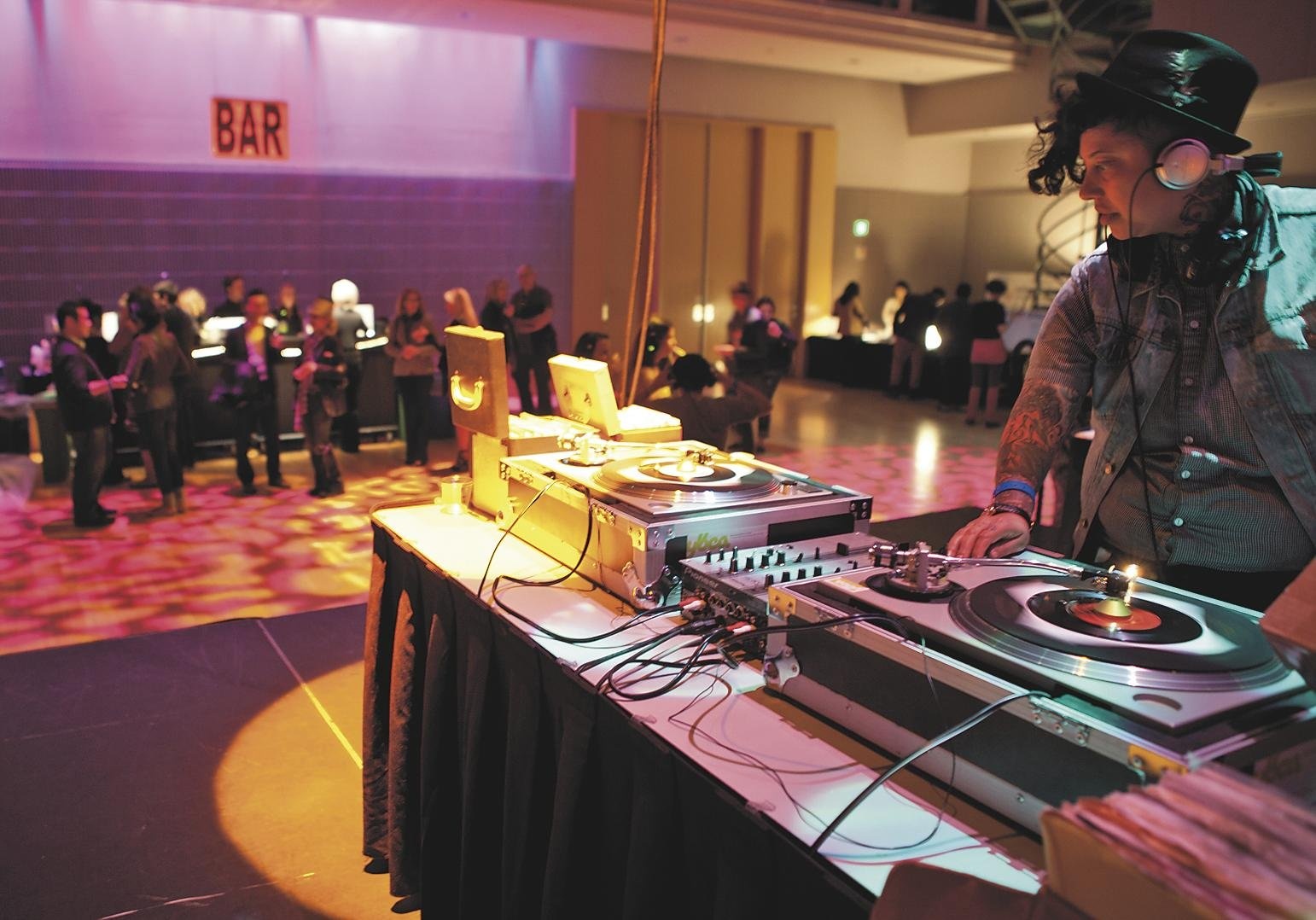
One project focused on how to make the lobby more welcoming. The organization has added a bar and is having new furniture built. “We want it to be more of a space where people hang out, chat, do whatever,” says Mr. Foster.
Ideas From Employees
Participating in the program was such a powerful experience for Yerba Buena that the organization started its own innovation process that encourages employees to submit new ideas. For example, a graphic designer proposed a culinary-arts festival, which the organization held last year.
Mr. Foster thinks there’s still room for improvement. On the one hand, he says, having a formal way for new ideas to be considered has been great for employee morale and has increased the amount of experimentation at Yerba Buena. But he says it tends to become very project-based, a criticism he thinks also applies to the Innovation Lab.
“What I’m striving for here is to use that process to take the work that you’re so busy with and find a better, more interesting, more creative, more effective way to do it, to apply those innovation principles to your ongoing work” says Mr. Foster. “Not always, ‘Oh, I have to come up with some wacky, new idea that’s going to catch attention.’”