

April 3, 2011 | Read Time: 3 minutes
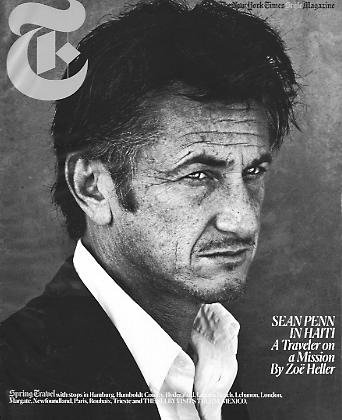
A trip inside the Pétionville Internally Displaced Person camp, in Port-au-Prince, via The New York Times Style Magazine (March 25), offers a glimpse at how the actor Sean Penn and hisJ/P Haitian Relief Organization, which runs the camp, have been serving victims of the 2010 earthquake.
The J/P Haitian Relief Organization, which for a year has overseen the 50,000-resident camp, draws praise from an array of observers for its efficient management and its leader’s willingness to listen and to navigate relationships with partners. Its rubble-removal program, the magazine says, has become a model for other nonprofit groups working in the disaster zone. Mr. Penn’s “newness to this work has actually helped him in some ways,” says Louise Ivers, chief of mission for the Haiti operations of Partners in Health, a Boston charity. “He doesn’t have misconceptions about what works and what doesn’t. He sees a problem, he talks to people, and he figures out solutions.”
Mr. Penn, however, reports feeling less than charitable toward what he describes as the bureaucracy of some other organizations working in Haiti. He criticizes groups like Doctors Without Borders for refusing to work with the military, “even though the military is the single most effective organization that’s been here to date.” And he mocks charities that he says have dropped out of managing camps for disaster victims on the grounds that the camps aren’t environmentally “sustainable”: “Sustainability! It’s the ultimate cliché—and the ultimate excuse for NGO’s that just want to move on to the next trendy, fundable job.”
The actor’s “combination of hostility and principled fraternal feeling makes for a very odd, angry sort of philanthropy,” one in contrast to that of more diplomatic celebrity do-gooders such as George Clooney, the magazine concludes. “Still,” The Times writes, “it would be a pity if the spikiness of Penn’s manners were allowed to obscure the worth of his deeds.”
To read the article, go to: http://www.nytimes.com.
‘Fast Company’: China’s ‘Philanthropist-in-Chief’
China’s self-proclaimed “philanthropist-in-chief,” Chen Guangbiao, is the subject of a profile in Fast Company (April). The farmer’s son, who became rich via his recycling business, is the first Chinese signer of the Giving Pledge, an effort by Warren Buffett and Bill and Melinda Gates to persuade wealthy people to give away at least half of their fortunes. His style of giving, Fast Company says, may be flamboyant, but beneath it lies a serious effort to boost charitable giving in the rapidly growing Communist nation.
Mr. Chen’s philanthropy, writes the magazine, “is the philanthropic equivalent of nouveau-riche ostentation: He’s fond of publicity stunts, cash giveaways, and media scrums. Every natural disaster—earthquake, typhoon, drought—looks like an opportunity” to him.
Fast Company also notes that his giving often takes place in public, with China’s news media in attendance—which are often paid by the mogul for their attention.
But Mr. Chen, reports the magazine, “says there’s a clear purpose to his spotlight-hogging ways”: He wants to encourage others to give. Though China lags only the United States in the number of billionaires, its philanthropy has not kept pace.
In 2009, for example, the total of all private giving in China was $5-billion; by contrast, private giving to U.S. charities is about $300-billion, said the magazine. Charity was long considered anti-Communist in China, the magazine notes, and still struggles to gain a foothold with the public. After the 1949 revolution, “philanthropy was seen as a tool for the exploitative classes to defraud the public,” says Deng Guosheng, of Tsinghua University’s Center for Innovation and Social Management.
Says Mr. Chen of his high-profile giving, “When you do a good deed, if you broadcast it to 10,000 people, you encourage 10,000 people to do the same.”
To read more, go to: http://www.fastcompany.com.





