
A Think Tank Seeks to Accelerate Medical Science’s Search for Cures

By Michael Anft
Contributor
March 20, 2011 | Read Time: 8 minutes
Five years ago when Josh Sommer was a freshman at Duke University, doctors discovered a troublesome growth in his skull. They diagnosed him with chordoma, a rare disease marked by incurable tumors of the spine and head that typically kill an affected person in seven years.
When he received the bad news, Mr. Sommer was forced to quit school, but he maintained his Duke ties, and for good reason: One of the country’s leading chordoma researchers works in a lab at Duke.
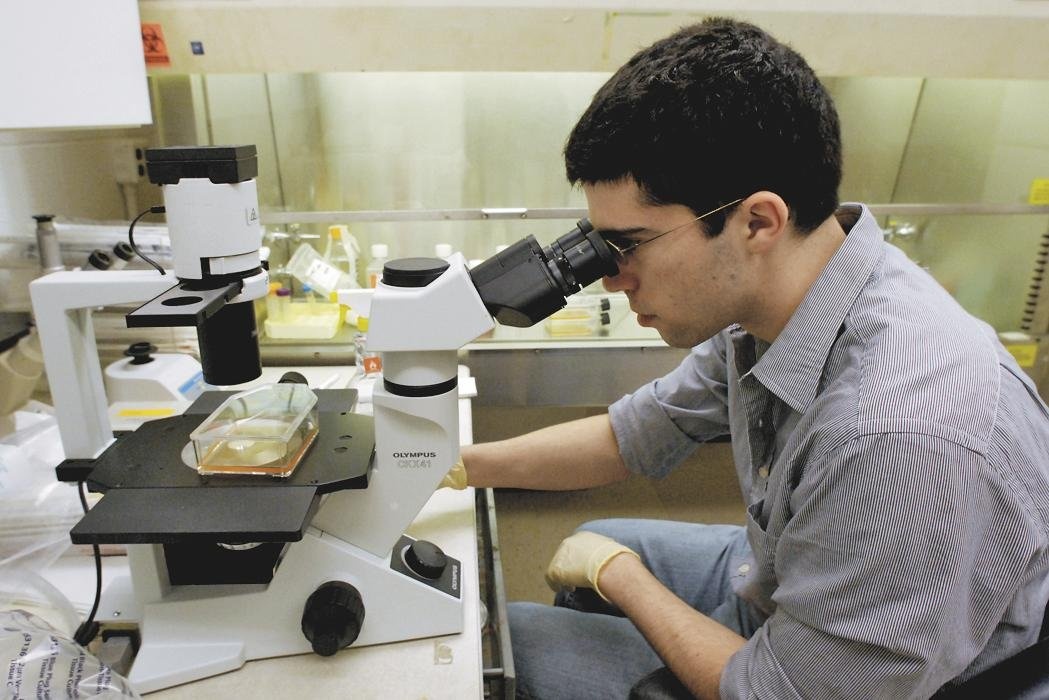
Mr. Sommer, an engineering major, eventually learned enough microbiology to help the researcher determine which chordoma cell lines might be used to find a cure. But the painstaking pace of the work made him realize that new treatments, if they were to be found at all, were many, many years away.
“I realized that one person working in the lab wasn’t going to cure the disease,” he says. “We needed to find a way to speed up and expand the research.”
Since 2007, when he founded the nonprofit Chordoma Foundation with his mother’s help, Mr. Sommer has raised $1.5-million to fight the disease. But he has needed some assistance, he says, getting other players to help devise new treatments.
He found it through FasterCures, a nonprofit think tank in Washington created to speed up the pace of medical research into deadly and debilitating diseases by strengthening connections between the people who can make it happen.
At annual meetings of FasterCures the past two years, Mr. Sommer has rubbed elbows with donors, drug-industry representatives, leaders of organizations with similar aims, patients, and venture-philanthropy groups.
He has also taken part in discussions about how drug companies and research groups investigating a range of diseases can pool their resources and stop duplicating their efforts, with the aim of accelerating the rate of medical discoveries and reducing the cost of achieving them.
And he got a chance to tell people about chordoma and the hurdles that he and others like him face in living with the disease.
“It’s been an enormously valuable experience to meet all these people I wouldn’t meet otherwise,” says Mr. Sommer. “FasterCures acts a bit like a Chamber of Commerce in that they do a lot of matchmaking and broadcasting of best practices. They’ve been a big help to us.”
Working Across Boundaries
Started in 2003 by Michael Milken as part of the Milken Institute, an economic think tank in Santa Monica, Calif., FasterCures encourages philanthropists to take bigger risks when supporting research in the name of people who, like Mr. Sommer, often don’t have the time to wait for new treatments to drip from the research pipeline.
Mr. Milken originally got involved in supporting medical research via philanthropy back in the 1970s. Later, not long after he was released from prison following his role in the 1980s “junk-bond” scandal, he was diagnosed with prostate cancer. When he started the Prostate Cancer Foundation in 1993, he streamlined the process for getting grants to top researchers.
In starting FasterCures, he expanded that approach to support research on a roster of diseases that affect more than 100 million Americans, including Alzheimer’s, cancer, and Parkinson’s, says Margaret A. Anderson, the group’s executive director.
With an annual budget of $3.5-million—raised with substantial support from the Sumner M. Redstone Charitable Foundation, in Norwood, Mass., along with money from other individuals and grant makers, including the Bill & Melinda Gates Foundation, in Seattle, and the Robert Wood Johnson Foundation, in Princeton, N.J.—FasterCures has devoted much of its effort to understanding the players on the medical-research scene and getting them together.
“Our original board’s idea was that we should work across disciplines and sectors to see how we can make organizations more efficient and better funded,” says Ms. Anderson. “Because we don’t represent one particular patient group, we can play a strong role in coming up with solutions across the sector without facing the pressures they’re facing. There are a lot of passionate, smart people who want to cut through what’s holding them back, and we try to help them.”
Broader Collaboration
FasterCures does not make grants to groups working to develop new therapies. Instead, according to those who have benefited, its main role is as a networker. By bringing together various groups involved in the search for new treatments—patient groups, pharmaceutical companies, prospective donors, research scientists, and venture philanthropists—FasterCures encourages them to take the financial and strategic risks involved in developing those treatments.
“For a long time, people who have had success financially have written checks to Nobel Prize winners and other scientists,” says Katie Hood, chief executive officer of the Michael J. Fox Foundation for Parkinson’s Research, in New York. “But there may be more to finding a cure than dealing with a scientist or two. FasterCures recognizes that broadening the spectrum means getting all the players involved in trying to find answers.”
The group also has worked to create ways to evaluate the effectiveness of medical charities, and to help connect funding to worthy projects. Its leaders travel to conferences run by venture capitalists to explain the state of research and how more money would help, Ms. Anderson says. So far, the group has worked with 150 donors, advisers, and wealth managers.
FasterCures also provides advocacy: Ms. Anderson frequently testifies on Capitol Hill in favor of increasing the budgets of the National Institutes of Health and the U.S. Food and Drug Administration. More money would speed up reviews of drugs and discoveries in basic research that can lead to treatments and cures, she says.
Model Methods
In promoting greater collaboration between nonprofit groups and companies, FasterCures has advised organizations, for example, about the best way to pool their resources to start “biobanks”—archives of patients’ DNA and other biological research material—and to support speedier clinical trials.
“They take effective models and spread the word, sharing information and helping other organizations understand how the model works, why it’s successful, and how they might be adapted for different purposes and goals,” says Robert Beall, president of the Cystic Fibrosis Foundation, in Bethesda, Md. By doing so, FasterCures amplifies the work of groups that have taken risks and been successful, he says.
By getting organizations and companies that are used to competing to instead work together, FasterCures hopes to break down walls that may slow the achievement of medical discoveries that could save lives. Matthias Bowman, a board member of the International Mental Health Research Organization, in Rutherford, Calif., touts FasterCures’ ability to quickly link groups with information from the 50 to 60 other organizations that it deals with regularly. Such groups, says Ms. Anderson, “are groups known for innovative research and funding approaches that we’d like to see adopted as best practices.” Leaders at some of them serve on investigatory committees that explore ways to get research projects moving more rapidly.
“You can download other organizations’ profiles using [FasterCures’] software and get in touch with them weeks in advance of a conference to set up meetings,” says Mr. Bowman. “It’s almost like an Internet dating service.”
Ms. Anderson points to the annual conferences as an indicator of FasterCures’ effective ness in forging connections. “When we bring people together, we see this kinetic energy,” she says. “It’s almost like a religious experience for some. They see that there are like-minded people who can help them get where they need to go.”
Risk and Safety
The way in which FasterCures has expanded the focus on donors—including people who may never have made donations to medical causes as well as others who tend to limit their giving to programs supporting one disease or one researcher—adds a new dimension to medical philanthropy, some observers says.
FasterCures’ work has yet to yield a new lifesaving drug or therapy. But its efforts might ultimately prove to be a boon for organizations fighting a variety of deadly diseases, says Ms. Anderson. She points to the successful nationwide mobilization of politicians and researchers, spurred on by activists, to find treatments for HIV/AIDS as an example of how far collaboration, energy, and passion can push science.
But others say that science can only be moved so far so fast. “It’s legitimate to say we can’t wait seven years for a potentially lifesaving drug to go from animal trials to the pharmacy,” says Arthur Caplan, director of the Center for Bioethics at the University of Pennsylvania, in Philadelphia. “On the other hand, we keep hearing about all these drugs, like Vioxx, being recalled because they’re harmful. These are drugs that were approved by regulators, but we end up needing to be protected from them. We want to speed up the pendulum of the pace of research—until someone in a study dies. As a society, we have a split personality on this.”
But FasterCures’ advocacy work may lead to more needed research money, he adds. Currently, the National Institutes of Health budget is $30-billion per year. “We spend trillions on health care in the meantime,” he says. “It seems out of whack.”
For organizations that represent the 25 million Americans with one of the 7,000 known diseases that are considered rare—each of which has fewer than 200,000 people who are diagnosed each year—FasterCures offers a glimmer of hope. Mr. Sommer, one of 2,000 people across the nation diagnosed with chordoma, says that the sharing of information among competitive companies is now being discussed—a strong sign that FasterCures’ methods are working.
“Getting people in a room and on the same page can have a tipping effect,” he says. “In a few years, we might see favorable outcomes, like development of new drugs, because those people were encouraged to meet.”






