

February 6, 2011 | Read Time: 5 minutes
A tiny Baltimore soup kitchen’s refusal to certify that it does not use charitable donations to support terrorism has drawn attention from across the country and left the United Way of Central Maryland wondering how to proceed.
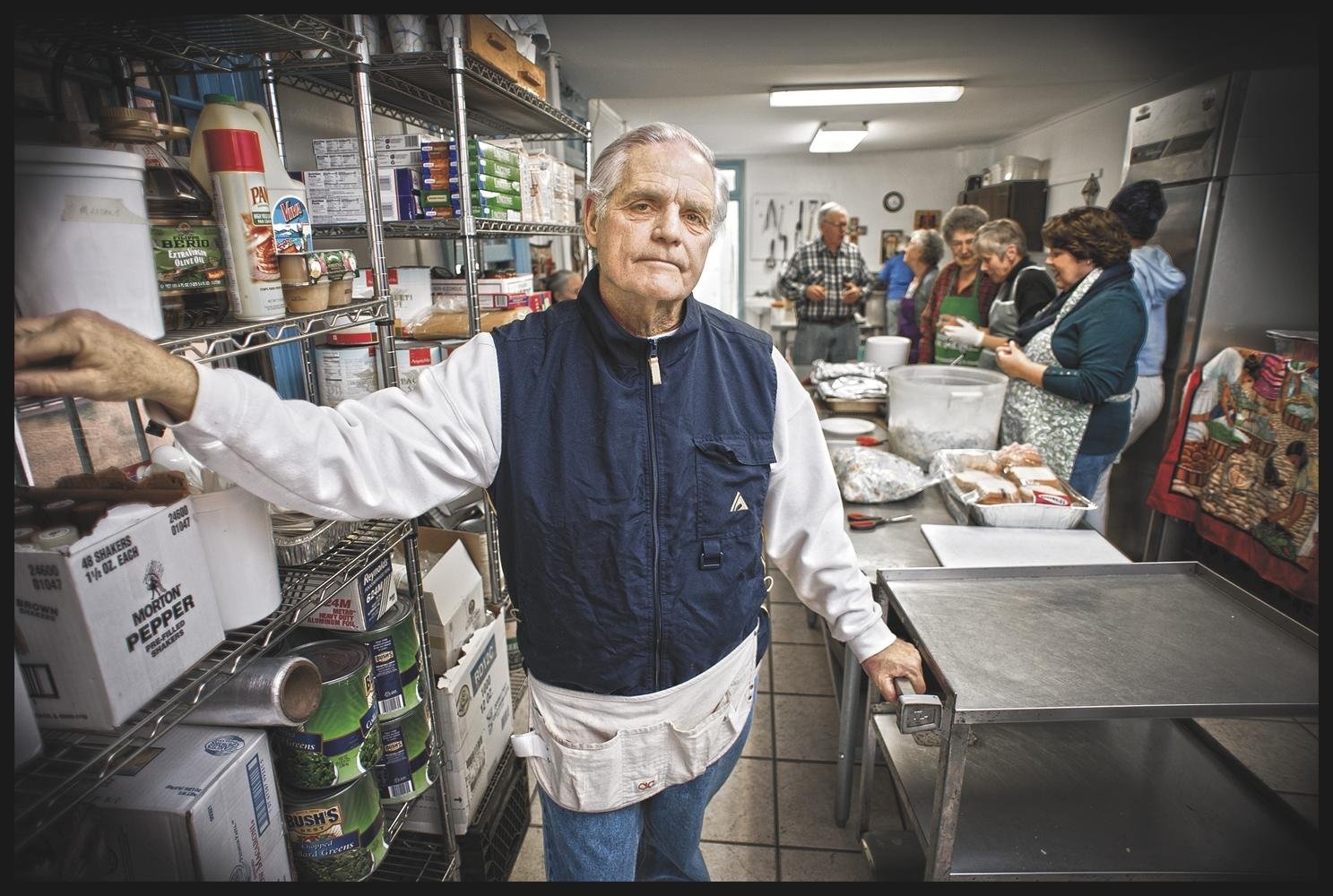
Brendan Walsh and his wife, Willa Bickham, who since 1968 have operated Viva House soup kitchen and food pantry on the city’s west side, say they were surprised to receive a letter in December from the United Way of Central Maryland asking them to sign and return an “antiterrorism compliance measures form” or risk losing money that was pledged to them.
“It’s tantamount to signing a loyalty oath,” says Mr. Walsh.
Part of the Catholic Worker network of shelters and service organizations for antiwar activists, Viva House feeds hundreds of people each week with an annual budget of about $100,000.
The Viva House leaders say they don’t understand why they would be questioned, particularly since they already disclose how the organization spends its money in its annual informational tax filing with the Internal Revenue Service.
“All the work we’ve been doing for 43 years has been completely transparent,” Mr. Walsh says. “Many of the people who give us money also come here and work with us.”
The case, say nonprofit observers, is the latest episode in the decade-long struggle of charities to comply with the demands of the USA Patriot Act. The law, passed in the immediate wake of the September 11, 2001 attacks, is intended to quell terrorist activity, including the use of philanthropy to support it.
Civil-Liberties Concern
United Way does not provide direct support to Viva House. Instead, it channels money that donors earmark in on-the-job drives for Viva House to the charity.
For many years, Viva House has gotten small amounts through United Way, the couple says. The most recent check, for $625, came in June.
But never before has the United Way sent any correspondence like it did in December, asking for a pledge that the charity will use all United Way donations “in compliance with all applicable antiterrorist financing and asset-control laws, statutes, and executive orders.”
Viva House should have been getting and returning the form annually for years, says Chuck Tildon, a spokesman for United Way of Central Maryland. “We may have had an issue before administratively with getting the form out to them,” he says.
Del Galloway, a spokesman for United Way Worldwide, says he has never before heard of any charity refusing to sign the form, “but our counsel—our advice—would be that if a grantee refuses to sign, to not pay the grant and return the money to the donor if it was a designation.”
In collaboration with the American Civil Liberties Union, which also raised concerns with the Ford and Rockefeller foundations and many other grant makers that asked grantees to fill out antiterrorist statements, United Way Worldwide shortened and simplified its form in 2005, said Patricia Turner, the United Way’s general counsel,
The ACLU was worried many grant makers were asking more questions than necessary and intruding too much on charity operations.
Ms. Turner says United Ways need to ask charities several basic questions to comply with the Patriot Act.
“Because United Way network processes roughly $4-[billion] per year to partner agencies,” she wrote in an e-mail to The Chronicle, measures were needed to protect against inadvertent funding of organizations providing terrorist support.”
‘Works of Mercy’
Ms. Bickham and Mr. Walsh made their formal refusal to sign United Way’s form in a letter last month that they sent to Gail James, director of donor services at the Central Maryland United Way.
“We continue to ‘do the works of mercy and resist the works of war,’” the couple wrote. “Loyalty oaths don’t bring about unity or good health. Instead they break us apart as a people.”
The letter urges the United Way to abandon its efforts to comply with the USA Patriot Act.
Mr. Tildon says United Way of Central Maryland executives plan to meet to discuss the Viva House matter soon.
Rigid Guidelines
Charities have had an uneasy relationship with Patriot Act provisions for most of the past decade.
In November, for instance, the Council on Foundations, in Arlington, Va., disbanded its Treasury Guidelines Working Group after seven years, saying that further negotiations with the U.S. Treasury Department over antiterrorist financing guidelines “would be unproductive.”
Grant makers and charities have long complained that the guidelines are too rigid and hamper giving to nonprofits that work internationally and that the threat of U.S. charities being exploited by terrorists is overstated.
“I respect the decision of Viva House to decline to sign the form, especially for such a small amount,” says Irv Katz, president of the National Human Services Assembly, in Washington, an umbrella group for social-service nonprofits. “However, many organizations cannot afford to forgo this procedure.”
For his part, Mr. Walsh finds it ironic that he was asked to sign a form pledging to follow the law. “What terrorist is not going to sign this?” he asks.
But the act of defiance has actually helped Viva House’s fund raising—albeit modestly—helping it raise a total so far of about $800 that Mr. Walsh can attribute directly to the controversy. After word of the charity’s stand was forwarded through the Catholic Worker’s e-mail network, “somebody came to the door and gave us some money. We didn’t have to sign for it,” Mr. Walsh says. “Somebody sent a check for $625—from Alabama.”




