Spur-of-the-Moment Decisions Highlight a Billionaire’s Giving

By nicole lewis
Contributor
February 6, 2011 | Read Time: 3 minutes
At the behest of a friend, David M. Rubenstein, the billionaire financier, agreed to underwrite $70,000 in awards to honor seven of Washington’s finest teachers. He wound up giving another $100,000 at the November event after discovering that an additional 20 teachers would have received awards if the group, the D.C. Public Education Fund, had had more money. “Sometimes I like to do it on the spur of the moment,” he says of his philanthropy.
Mr. Rubenstein, a co-founder of the Carlyle Group, a private-equity firm, donated a total of more than $25-million to three nonprofit groups last year. He has made plenty of smaller gifts as well, many of them in a heartbeat.
For instance, after he was honored by Baltimore City College, his high-school alma mater, back in 2004, Mr. Rubenstein noticed some band instruments onstage that looked as if they had been there since his student days, he says. He donated $100,000 for the public school to replace them.
Three years ago, Mr. Rubenstein started an annual essay contest for high-school students, worth $100,000 in scholarships, at Junior Achievement of the National Capital Area. In addition, one school each from the District of Columbia, Maryland, and Virginia that submits the most applications receives $6,000. Junior Achievement teaches financial literacy to high-school students through local volunteers—some of whom come from the Carlyle Group.
Surprise Announcement
Mr. Rubenstein announced the idea of a contest and its monetary awards as a surprise during a Junior Achievement gala. While the contest and its purse were welcome, Ed Grenier, the group’s president, says he also appreciates Mr. Rubenstein’s time.
Despite a job that requires him to be on the road 250 days a year and myriad commitments to other charities—including his chairmanship of John F. Kennedy Center for the Performing Arts—Mr. Rubenstein has made several trips to inner-city high schools to promote the contest, says Mr. Grenier.
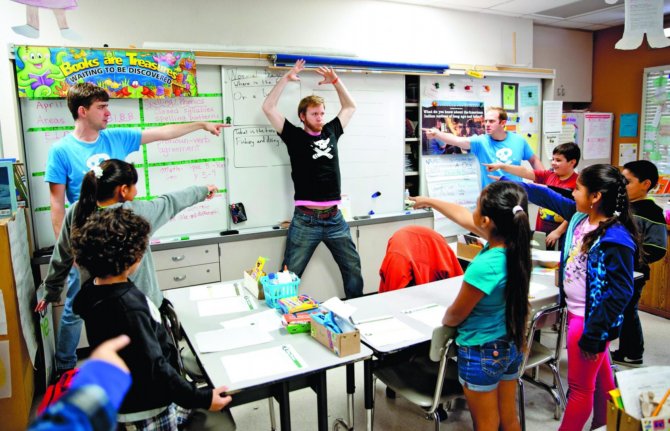
At Mr. Rubenstein’s first speaking engagement, at a Friendship Public Charter School, in Washington, Mr. Grenier admitted he was a bit nervous: Would the billionaire and the students connect? Mr. Rubenstein’s self-deprecating humor won them over, says Mr. Grenier.
“He let them know that somebody sitting in their same shoes has become a billionaire because of hard work, going to college, and focusing on school,” says the charity leader. “He really delivers that message better than most people.”
The number of essay-contest applicants has tripled since its first year. Last month Mr. Rubenstein, who grew up in modest circumstances, committed to sponsoring the contest for the fourth time.
Last year, he donated $350,000 toward scholarships through the Economic Club of Washington, of which he is president. A scholarship recipient himself at Duke University, in Durham, N.C., and the University of Chicago Law School, Mr. Rubenstein deeply believes in their value. One of his three big gifts last year, a $10-million donation, went to the University of Chicago Law School for scholarships.
The donations, large and small, all belong to his plan to give away more than half of his wealth before he dies. (Last year Forbes magazine estimated his personal assets at $2.5-billion.)
“In the end, all of us are temporary custodians of this thing called money,” says Mr. Rubenstein. “Giving away money now is a pleasurable thing to do to the person who does it right.”