Keep Aid for Developing Countries Off the Chopping Block, Bill Gates Urges

By Ben Gose
Senior Editor
January 31, 2011 | Read Time: 3 minutes
As governments around the globe look to cut spending, they should spare “hugely beneficial” foreign-aid programs in health and agricultural assistance, Bill Gates writes in his annual letter about his philanthropic work.
In the 23-page letter released Monday, Mr. Gates, the co-chair of the $38-billion Bill & Melinda Gates Foundation, also makes an economic case for investing in vaccines against polio and other diseases and touts online tools that can augment in-class teaching to help students learn.
Mr. Gates, who began writing the annual letter in 2009 after he began working full time at the foundation, argues that foreign-aid programs, which make up less than 1 percent of governments’ total budgets, not only save lives but also help make the world more stable. He praised the United Kingdom for recently increasing spending on foreign aid despite cutting its budget.
“Whether you believe it a moral imperative or in the rich world’s enlightened self-interest, securing the conditions that will lead to a healthy, prosperous future for everyone is a goal I believe we all share,” Mr. Gates writes.
$50-Billion in Savings
Mr. Gates spends most of the letter discussing progress worldwide against AIDS, malaria, polio, and other diseases. The foundation is a large donor in fighting those diseases through its Global Health grant-making program, and Mr. Gates makes an economic argument in addition to a humanitarian one in urging others to join the fight.
Polio, eliminated in the United States 30 years ago, has been challenging to eradicate worldwide, but Mr. Gates argues that the job can be completed with enough financial support. The Gates foundation puts $200-million per year toward polio eradication, but Mr. Gates says a $720-million gap in needed support still exists for the next two years.
He cites estimates that savings from eradication of polio could be worth up to $50-billion over 25 years, when one considers the savings on treatments that would not be necessary, plus the economic contributions of adults who wouldn’t get polio.
“The long-term benefits of the last couple of billion dollars spent on eradication will be truly phenomenal,” Mr. Gates writes.
Vaccinating the Poor
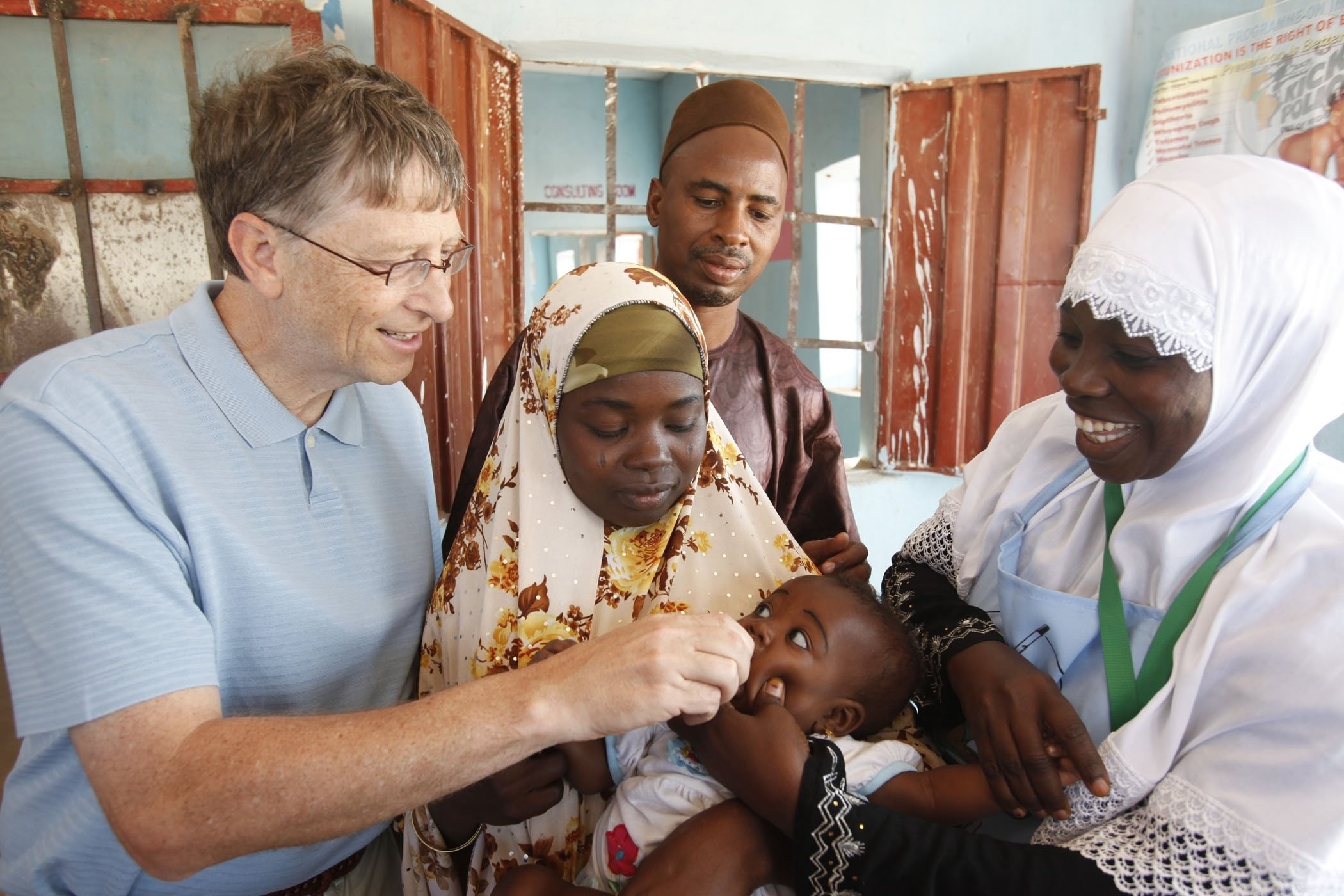
A year ago, the Gates foundation pledged to spend $10-billion over a decade to finance vaccines for impoverished people. In 2011, he writes, 1.4 million children will die from diseases for which there are already vaccines.
Vaccines reduce childhood death rates, which would seem to contribute to overpopulation, but in fact the opposite is true, Mr. Gates writes. Within 10 to 20 years, that reduction will lead families to choose to have fewer children.
“It is the reason why childhood health issues are key to so many other issues, including having resources for education, providing enough jobs, and not destroying the environment,” Mr. Gates writes. “Only when Melinda and I understood this connection did we make the full commitment to health issues, especially vaccination.”
Yet, he says, the Gates foundation’s $10-billion vaccination pledge “will fall well short of what is needed” to make vaccines more affordable and widely available in developing countries.
On education, Mr. Gates writes that the foundation is complementing its recent focus on improving in-class teaching by also investing in online tools to help students learn. Mr. Gates, the co-founder of Microsoft, cites the nonprofit Kahn Academy and its short, free educational videos as an online resource that teachers should consider using in the classroom at a time when states budgets are constrained.
“I believe technology will let us dramatically improve education despite the budget constraints,” Mr. Gates writes.
Mr. Gates also writes that he, Melinda Gates, and Warren E. Buffett, the investor who has donated the majority of his wealth to the Gates foundation, would travel to India in the first half of 2011 to discuss the Giving Pledge, their campaign to encourage wealthy people to give away the majority of their money to philanthropic causes. Mr. Gates and Mr. Buffett made a similar trip to China in November.
See the Gates Foundation’s video that explains the vaccine effort: