

November 10, 2010 | Read Time: 7 minutes
Five charity leaders who work on issues such as taking care of AIDS orphans in Africa, fighting industrial pollution, and weaving a more reliable safety net for homeless people have won $100,000 each in the fifth annual Purpose Prizes, which honor the good works of people older than 60.
The prizes, announced today, are given by Civic Ventures, a San Francisco think tank that seeks to involve older people in civic activities. Atlantic Philanthropies and the John Templeton Foundation sponsor the awards.
The five top winners—who have an average age of nearly 67—will each receive $100,000. A second tier of five winners will get $50,000 each. This year’s group was selected from 1,400 nominations by a panel of 27 judges, chaired by Sherry Lansing, the former movie-studio head who now runs her own foundation.
While every year Purpose Prize winners are selected based on the innovation they have shown on bringing their skills to bear on social problems, this year’s group may be especially notable for the number of people who “are tapping the strength of their neighborhoods,” says Alexandra Céspedes Kent, director of the Purpose Prizes.
At least half of the winners this year earned their prizes for work centered on children (compared with three out of 10 in 2009). That may be a reflection of the fact that education is always the most popular issue being tackled by the people in the ever-growing pool of nominees, she says.
“There’s a sense that people in encore careers want to make the world better for future generations,” she says.
In its fifth year, the Purpose Prizes—which will be awarded during a meeting this weekend in Philadelphia—are now finding they have built an informal network of older people who help one another with their causes. Ms. Kent says the winners in past years have joined one another’s boards.
And she notes a recent collaboration between two of last year’s winners: Judith Broder, whose group, the Soldiers Project, provides free mental-health therapy to military veterans and their families, and Connie Siskowski, whose Caregiving Youth Project sponsors support groups for children who take care of relatives.
The $100,000 Purpose Prize winners are:
Allan Barsema, 62. founder of Community Collaboration, in Rockford, Ill.
In late 2000, Mr. Barsema, a recovering alcoholic who wanted to help other people in distress, closed his construction business to devote his time to an outreach center for homeless individuals, Carpenter’s Place. Since then, he estimates that about 10,000 people have sought shelter and assistance at the charity.
To help coordinate the services provided by the more than two dozen local organizations that serve homeless people in the Rockford area, Mr. Barsema developed an online system to tie those loose ends together. In 2006 he founded Community Collaboration to coordinate the online system; today, more than 140 social-service groups in seven states use the system he created, serving more than 90,000 people across the country.
Robert S. (Barry) Childs, 66, executive director, Africa Bridge, in Marylhurst, Ore.
Mr. Childs, a native of Tanzania who left the country to attend college and begin a corporate career, created Africa Bridge in 2000 to help alleviate poverty in the African nation and improve the prospects of its children, more than 2 million of whom have been orphaned, largely because their parents died of AIDS.
The organization has set up 28 farming cooperatives for children’s caregivers to enable them to earn income and built classrooms and health clinics. In 2009 its comprehensive services—which provide housing, clothing, food, schooling, social and legal support—reached more than 3,500 Tanzanian kids.
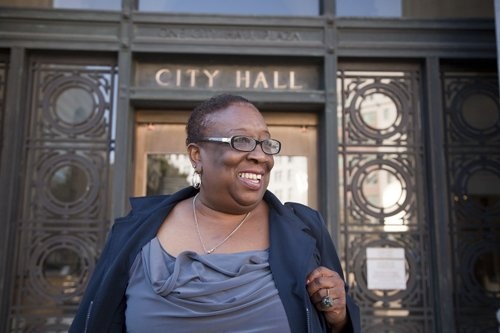
Margaret Gordon, 63, co-director, West Oakland Environmental Indicators Project, in Oakland, Calif.
Ms. Gordon, a former cook and maid, became an activist to combat the high rates of asthma in her neighborhood, much of it traced to the nearby industrial Port of Oakland.
In 2003 she was named a co-director of the West Oakland Environmental Indicators Project and has worked to help mitigate the effects of the port’s pollution. She and her organization have worked to help reroute diesel trucks away from residential areas. They have also pressured the city to try harder to stop illegal dumping by manufacturers and develop a Port of Oakland plan to improve air quality.
Inez Killingsworth, 72, board president, Empowering and Strengthening Ohio’s People, in Cleveland
Ms. Killingsworth founded the East Side Organizing Project in 1993 as a way to help her fellow Cleveland residents fight predatory mortgage lending, Two years ago, the group’s name changed to Empowering and Strengthening Ohio’s People, with a statewide mission to match.
The organization negotiates with banks to win more favorable mortgage terms for distressed homeowners and served 8,000 Ohio families last year. More than 80 percent of those clients, according to the charity, benefited from new and successful deals struck with their banks.
Judith B. Van Ginkel, 71, president, Every Child Succeeds, in Cincinnati
Ms. Van Ginkel, a professor of pediatrics at Cincinnati Children’s Hospital Medical Center, founded Every Child Succeeds in 1999 as a program under the hospital’s auspices to provide support to first-time low-income mothers.
The program assigns a social worker to visit women during their pregnancy and until their child turns 3, to offer guidance, education, and access to additional services. More than 16,500 families have benefited from the program since its inception. The group reports that the infant mortality rate among children in the program is less than one-third the rate for Hamilton County overall, that 95 percent of children in Every Child Succeeds are showing normal social and emotional development, and that all kids in the program have a primary-care doctor.
The Purpose Prizes also recognized the following individuals with awards of $50,000 each:
Barbara Chandler Allen, executive director, Fresh Artists, Lafayette Hill, Pa.
Ms. Allen, a former administrator for institutions including the Philadelphia Museum of Art, created Fresh Artists in 2008 as a way to finance art education in urban public schools. The group invites schoolchildren to donate their artwork for large-scale reproduction. Corporations and other organizations that donate to the group receive images of the artwork for their offices, and the donations are then used to buy art supplies for schools. So far, the group has purchased more than $100,000 in supplies for Philadelphia’s public schools.
Dana Freyer, 66, chair of the board of directors, Global Partnership for Afghanistan, in New York
Ms. Freyer, a former corporate lawyer, started the Global Partnership for Afghanistan in 2003 to help rural Afghans plant trees to help bring financial stability to the region. Since its inception, the group has planted 8 million trees in 12 provinces, revitalizing vineyards, orchards, and other agricultural businesses.
Hubert Jones, 76, president of the board of directors, Boston Children’s Chorus
Mr. Jones, dean emeritus of the Boston University School of Social Work and a veteran leader of community organizations, started Boston Children’s Chorus in 2003 as a means to draw young people together across racial and economic lines to share a love of music. The chorus, now numbering about 400 participants, has performed around the country and the world, and its annual Martin Luther King Jr. Day concerts have been televised nationally.
Donald Stedman, 79, president, New Voices Foundation, in Raleigh, N.C.
Mr. Stedman, a psychologist and grandfather of a teenager with autism, created New Voices in 2005 to advocate for services to help young people with extreme mobility and communicative disabilities in the public schools. The mostly volunteer organization has trained more than 50 teachers in five North Carolina school districts and, says Mr. Stedman, plans to open its own school within the next two years.
Bo Webb, 61, co-founder, Coal River Mountain Watch, in Whitesville, W.Va.
Mr. Webb, a retired small-business man, helped start Coal River Mountain Watch in 2004 to fight the practice of blasting open the tops of mountains with explosives to expose the seams of coal within for mining. The grass-roots advocacy group has drawn attention to its issue on a national scale, has been successful in moving a West Virginia elementary school away from a coal-processing plant, and has brokered meetings between coalfield residents and the state’s governor.
Editor’s Note: Videos are courtesy of Civic Ventures.





