
Charities Rethink Galas to Attract—and Please—More Donors

By Raymund Flandez
Contributor
October 3, 2010 | Read Time: 8 minutes
New York
In Cipriani 42nd Street, a popular place for high-profile social events, Selita Ebanks, the former Victoria’s Secret model, walked the red carpet. Heads turned and flashbulbs lit as she stopped and posed in a pewter laminated-lace dress by the fashion up-and-comer Christian Cota.
She wasn’t just there for the cameras, though, but to also host the annual New Yorkers for Children gala, a black-tie charity event that’s a must-stop and must-be-seen event for New York’s society and fashion circles. The mission for the night was to raise money to help the city’s foster children.
“I joined the committee for New Yorkers for Children almost two years ago and it’s stuck with me because I was, too, a foster child at a very young age,” Ms. Ebanks said. “If there’s anything I can do to encourage young people to pursue their goals or just to give them that little ounce of confidence that they can achieve their goals, then I am 100 percent down. I’m living proof.”
At the event, the Grammy award-winning artist Estelle sang her hit “American Boy.” And the singers Courtney Love and Kanye West came to support the cause.
Downtown that same balmy New York night, in a white tent in Union Square, it was anything but a sit-down. A crush of 1,200 people grabbed food and small paper cups of wine as they meandered through restaurant stalls in a southern-comfort food-tasting atmosphere. A live country band called the Nashville Attitude performed upbeat songs. Many folks were in jeans and sneakers for the 15th annual “Harvest in the Square” sold-out event to benefit the Union Square Partnership. More than 80 restaurants and wineries served food and drinks; there were T-bone steaks, teriyaki sliders, filetmignon sandwiches, sashimi rolls, toasted marshmallow milkshakes, and a whole roasted pig.
The two fund-raising events couldn’t be more dissimilar. One raised more than $1.6-million; the other, about $300,000—before expenses. But they both had one thing in common: They sought hard to attract participants.
While one relied on celebrities, the other relied on giving supporters an experience. Both are important, says Justin Baer, chief executive and publisher of CharityHappenings.org, an organization that sells tickets to charity events. In a new survey of 850 charity eventgoers nationwide that his organization produced, donors said that celebrities and an appealing theme both motivate people to attend a charity event.
With a sluggish economy still wreaking havoc on donations, charities often want to do anything to make their fund-raising events a success. Still, pitfalls arise with experimentation, especially those events that take tons of time, effort, and money to organize. The new study by Mr. Baer’s group is designed to help give nonprofit organizers a better sense of what donors want.
Paring Expenses
Perhaps the most instructive finding for fund raisers will be to learn how much of a ticket price supporters expect to go to a charitable cause. Forty-seven percent want to see three-quarters of the ticket proceeds go to the charity sponsoring the event. And about a third expect at least half of the ticket price to be donated to charity.
Mr. Baer says he’s been to events where only 10 percent to 20 percent of the money go to the cause itself. The events are just ways to bring in people, he says. “That always kind of bugged me,” Mr. Baer says. “I could have just given them a donation.”
The Fred Hutchinson Cancer Research Center, in Seattle, says it works hard to pare expenses when putting on its annual gala event—and last year got the cost down to 4 percent of the gala’s revenue of more than $9.7-million.
“That’s quite low in the land of nonprofits,” says Kevin Parker, special-events manager. He says the charity decided to cut back on the look of the room, the menu, and bar items. Instead of mailing out a 100-page catalog of auction items two weeks in advance to attendees and also having copies at the event,, the charity printed a 50-page catalog for the night of the event.
“Of course you want to build a luxurious night for people, but you don’t want to go over the top,” Mr. Parker says.
Social Networks
While appearances by celebrities are a big draw, especially if they’re A-list or B-list, people aren’t necessarily going to spend the money just to see them, the CharityHappenings survey found. What matters more is whether donors have a personal connection to the cause. Mr. Baer says organizations need to do a better job of inviting people who can relate to the organization’s mission.
But the next big influence in getting people to attend is a friend on the board. “Think about who’s on your board,” Mr. Baer says. “Don’t just pick a popular person to be on your board. Get a popular person who’s willing to go to their friends and get them to support your organization.” They should also be willing to develop new contacts as well, Mr. Baer adds.
With Ms. Ebanks as both host and on the “Friends Committee” for New Yorkers for Children, the charity hit a “home run with her,” Mr. Baer says. “She’s a great presence, she’s a great speaker, and she’s been affected by the cause.”
The third most influential factor is the possibility of networking or even dating someone. That’s how Liron David met his wife—at a charity event in 2009.
“Even in a recession, people are saying that at the end of the day, you have to look at it as an investment,” says Mr. David, founder of Eventique Productions, in New York. “If you’re looking to date, or looking to meet new friends, charity events are the best way to go.”
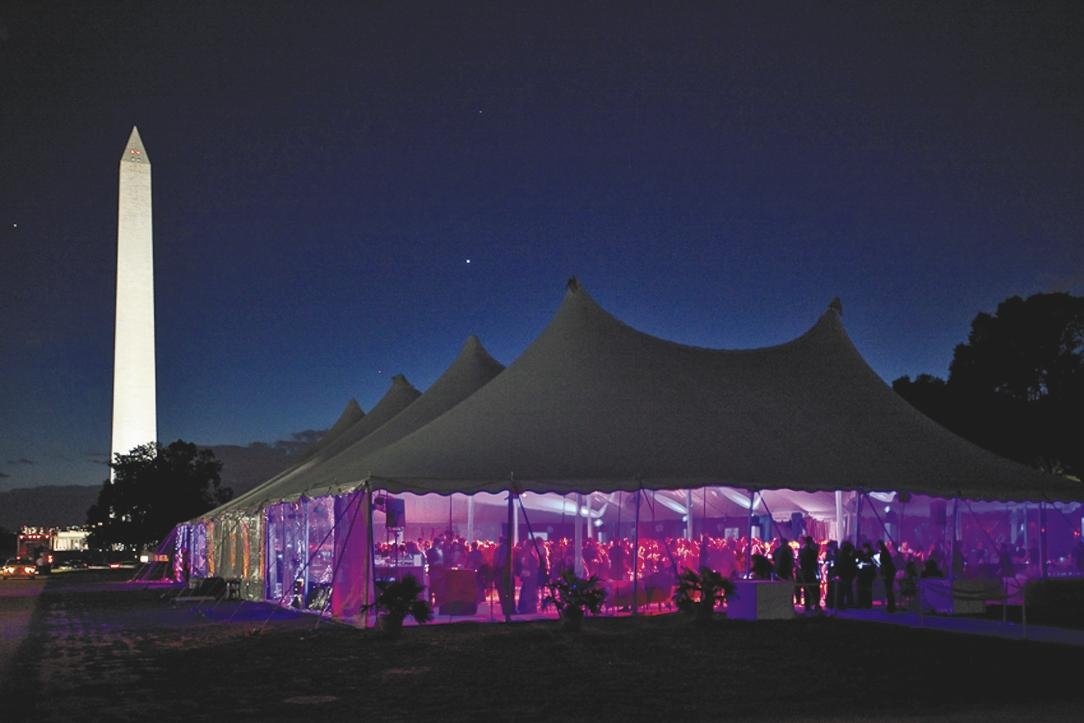
Access to event guests is one of the top reasons people attended the “Ball on the Mall” fund-raising event for the Trust for the National Mall, says Lizette Corro, chief executive of Linder & Associates, an event-planning group in Washington. In May, a cross-section of the capital’s diplomatic, political, social and corporate world was present.
“I don’t know about finding a date, but the access to other leaders is extremely important in every event that happens in Washington,” Ms. Corro says. “That access is a priority as they select what they want to attend and what they decide to invest in. Who’s going to go there and who do I want to be at the table with is very important.”
Two out of three people in theCharityHappenings study say that they preferred that a charity event carry some kind of theme. Mr. Baer says a theme, such as a food-tasting event like “Harvest in the Square,” can draw more guests to the organization.
“We’ve heard it time and again: eventgoers crave experiences that take them outside of their day-to-day lives,” Mr. Baer writes in the report.
Camillus House, a homeless shelter in Miami, changed its gala event “Hope for All Ball” in 2006 from a black-tie event to themed events such as “Denim and Diamonds” and for the past two years, “Guayaberas and Good Times.” (Guayaberas are open-necked cotton shirts usually worn untucked.)
“Because there are so many charities in South Florida, so many black-tie events in Miami, we wanted to be different,” says Marcy Belfi, director of special events at Camillus. “We wanted to be casual. I call it casual chic or tropical chic.” Last year’s event raised $1.4-million and drew 950 people; the black-tie events typically raised less than $1-million.
Social networks have not quite caught on as the primary vehicles for getting word out about the event—nearly 99 percent of eventgoers said e-mail messages were effective and nearly 95 percent said word of mouth was most effective. And Facebook announcements also work for four out of five eventgoers, but Twitter postings just don’t—barely one-third said such invitations worked.
The New Jersey Performing Arts Center in Newark, though, knows traditional methods of communicating are not enough. For its annual “Spotlight Gala,” the organization marshaled its guests, members, and trustees to encourage them to post on Facebook, to re-tweet the center’s messages on Twitter, and to go on the radio to help sell more than 2,000 tickets. “We’re really trying to embrace social media and use it to enhance the message,” says Sheila Klehm, president of the Women’s Association of the arts center.
‘Fast, Lean, and Targeted’
Conveying an organization’s mission at the gala is important, organizers say. With a captive audience, charities have an opportune moment to get its message across and seek donations. But many organizations do too much: They let their president or M.C. go on and on. And that’s a turn-off to many. More than 200 of the eventgoers in the survey said that long speeches were the No. 1 nuisance at a special event.
A way to make sure the president is still seen and heard is to make him or her an M.C. of the events, Mr. Baer says. “Like every great sales pitch, it should be fast, lean, and targeted.”
Respondents of the survey said the best way to communicate an organization’s mission is hearing from someone affected by the cause. A touching, short video also works, says Mr. Baer.
To read a free copy of the findings from the 2010 Charity Event Market Research Report, go to http://www.charityhappenings.org.




