A Nonprofit Veteran Creates a Novel Look at Controversy and Charity

By BRENNEN JENSEN
Contributor
September 19, 2010 | Read Time: 6 minutes
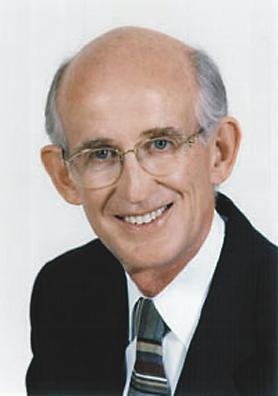
In Curt Weeden’s 1998 book Corporate Social Investing, the veteran philanthropy consultant outlines new ways businesses and charities can form mutually beneficially alliances. His 2003 work, How Women Can Beat Terrorism, explains how philanthropy can reduce global conflict by empowering impoverished women.
And in this year’s Book of Nathan, readers meet the unflappable head of a New Jersey homeless shelter, a raggedy ex-college professor dubbed “One Nut,” and the prostitute daughter of a pugnacious mob boss who traipse up and down the East Coast trying to solve a murder while searching for a lost book of the Bible.
Confused? Mr. Weeden has simply made the literary leap from nonfiction to fiction. Book of Nathan, co-written with Richard Marek, a veteran book author, and published in August by Oceanview, is his debut novel. It is a comedic hybrid of mystery and thriller in which a charity leader is the hero and much of the plot unfolds within the world of philanthropy.
Began as a Hobby
Indeed, while adventure tales usually build to an action-packed climax in exotica—a nuclear-submarine base or London Bridge at midnight—Nathan’s whirlwind wrap-up transpires at a United Way dinner to honor big donors. Picture a throng of tipsy philanthropists dancing to the Village People’s “YMCA.”
So are The Girl With the Dragon Tattoo trilogy and the Twilight series about to be overtaken by a new flavor of fiction? Mr. Weeden chuckles at the notion.
“I don’t know if charity leaders are the next hot thing in fiction, but there certainly is a vacuum,” he says over the phone from his home in suburban Charleston, S.C. “Why aren’t there more books about philanthropy? Why does it always have to be a cop or detective or a CIA guy?”
Mr. Weeden says he began the novel two years ago, primarily as a hobby.
“When you ride around in airplanes a lot, you have to do something,” he says.
He took an old literary maxim to heart: “Write about what you know.” In his case, it’s philanthropy. Before becoming a globe-trotting consultant, Mr. Weeden oversaw corporate giving for Johnson & Johnson, the medical-supply giant, and worked as a fund raiser for several charities, including the Asia Foundation, in San Francisco.
And so Nathan features a character called Doug Kool, who in another author’s book might have been a rap star or a playboy snowboarder. Here, he’s a fund raiser, a silver-tongued rainmaker in pursuit of the megagift.
“A lot of my characters—though, boldface and underline, not the prostitute—are composites of people I know,” Mr. Weeden says. “I was in the fund-raising world.”
But what really got his creative juices flowing, and forms the backbone for his plot, is the question of “ensoulment,” or the moment when human beings gain a soul. It’s a much-debated topic among theologians and others. Is it at conception? When the fetus first stirs in the womb? At birth?
“The novel came out of an interesting issue: What if some credible information emerged that would clarify the religious side of the abortion debate?” Mr. Weeden says. “When does the soul enter the body? There’s nothing concrete in the Bible or any other religious text.”
So Mr. Weeden created the novel’s namesake: the Book of Nathan, a lost biblical text alleged to answer this epic conundrum.
‘Humor and Anecdotes’
When the story opens, we meet Rick “Bullet” Bullock, a former Madison Avenue ad executive, who, distraught over the death of his philanthropic wife, quits the corporate world to run a men’s shelter in Brunswick, N.J. When one of his former charges—a haunting but harmless man-child called Zeus—is accused of murdering a prominent evangelist in Orlando, Fla., an incredulous Bullet begins to investigate. He and his sidekicks soon discover that the killing is part of a pitched battle among extremist groups on both sides of the abortion debate and a billionaire philanthropist, who are all anxious to get their hands on the elusive Book of Nathan.
And so Nathan plunges into one of the most serious and contentious issues of the day, and does so with a character called One Nut (the less said about the origin of this name, the better) and a protracted scene involving a sort of ersatz Wienermobile—a hot-dog-shaped truck called the Kielbasavan. Sacred meets profane.
The idea to weave humor into the book, Mr. Weeden says, came partially out of his experiences on the philanthropic lecture circuit.
“If you just have a sack of data-driven information, very dry studies, and trend data, you just lose people,” he says of his speeches. “What people take away are humor and anecdotes. Lightness and humor around a serious subject, that’s the formula I was hoping to get at. A tad of information and provocative thought mixed into an entertaining, quick read.”
‘Writing About My World’
The approach appears to have clicked, as Nathan has garnered favorable reviews from Publishers Weekly, The Mystery Gazette, Booklist, and other media outlets. Mr. Weeden gives a lot of credit to his co-author and editor, Mr. Marek, a publishing veteran who has worked with the likes of Robert Ludlum and James Baldwin.
“He took my original manuscript and was very tough,” Mr. Weeden says. “I learned a tremendous amount.”
Mr. Weeden says he’s also received unsolicited encouragement from nonprofit leaders who have read the book, some of whom have thanked him for “writing about my world.”
While the author stresses that there is nothing too preachy in the pages of Nathan, he couldn’t help putting the occasional editorial commentary about the state of philanthropy into his characters’ mouths, such as when Bullet says to the hired-gun fund raiser Doug Kool: “Paying the bills would be a lot easier if guys like you could arm twist the upper crust into using their tax-deductible donations to help the sick, poor, and homeless instead of buying privilege and status.”
When it comes to conveying his more expansive thoughts on philanthropy, Mr. Weeden is returning to the nonfiction bookshelf.
Due out early next year is Smart Giving Is Good Business, which will present formulas companies can use to determine how much cash support they should give to charity.
But Bullet, One Nut, and the rest are not done yet. Mr. Weeden is also working on a sequel novel—working title, Dutch Island, concerning a location off the coast of Rhode Island where a billionaire Lebanese Muslim hopes to erect a giant mosque. But things go awry.
So how does our charity-leader hero come to get involved with these coastal doings?
“Well,” Mr. Weeden responds, “even a guy who runs a homeless shelter can go on vacation.”