A Preservationist Lies Down to Stand Up for Saving Slaves’ Homes

By Eric Frazier
Contributor
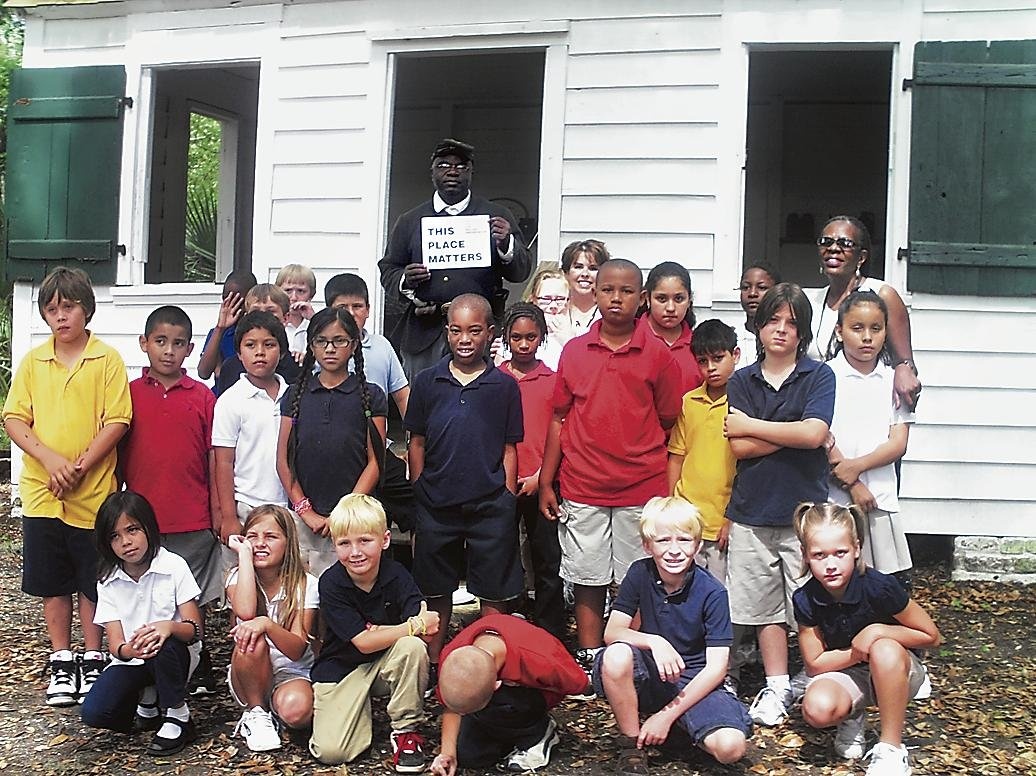
September 6, 2010 | Read Time: 6 minutes
Georgetown, S.C.
Most people wouldn’t be thrilled about the idea of spending a Saturday night in a hot, dark former slave cabin in the middle of a mosquito-infested pine forest.
But most people don’t have the kind of passion for preserving old slave cabins that drives Joseph McGill, a program officer at the National Trust for Historic Preservation’s Charleston, S.C., office. This spring, he began spending nights in former slave cabins around South Carolina in hopes of bringing attention to the need to restore and preserve these often-overlooked structures.
One recent night, he bedded down in a two-room, 1840s-era cabin in Hobcaw Barony, a 17,500-square-foot wildlife preserve that once served as home to 14 rice plantations along a heavily wooded coastline between Charleston and Myrtle Beach.
His campaign is attracting attention, but it hasn’t necessarily been met with universal acclaim. He has been cheered on by many, but he’s also had people—both black and white—suggest to him that they would rather not be reminded about that painful chapter of American history.
For instance, when MSNBC’s Web site ran a news story about Mr. McGill’s campaign in July, the first online commenter to react to it declared, “This ain’t 1865 or 1965. Get over it already.”
Mr. McGill is unfazed by critics. “These buildings mattered to someone,” he says. “These structures are a way to tell the real story of America. Not only the story of the big house, if you will, but those plantation houses that housed the slaves who made that plantation work.”
Sleeping Rough
That doesn’t mean sleeping in them is easy. As night gathered at Hobcaw Barony, an invisible army of cicadas wailed in the trees. Mr. McGill looked around the cabin, checking for snakes or rodents. He had been told bats had once made their home in the brick chimney of the roughly 200-square-foot structure.
When he stood in the front doorway, he could look down and see the ground through the floorboards. Part of the ceiling was missing, so he could also stand in the house, look up, and see a cedar tree’s branches shake roof tiles.
He placed a small wooden club beside his sleeping bag—just in case any wildlife more menacing than mosquitoes showed up.
“I couldn’t do this if I believed in ghosts,” he says, chuckling.
Experts say no one knows for sure how many cabins still stand around the country, but they estimate hundreds exist in the South.
“Most are not well-maintained at all, and very few have been properly restored,” says Craig Hadley, a preservation consultant who led a South Carolina slave-cabin preservation project last year.
Stephen Small, a sociologist at the University of California at Berkeley who researches slave cabins, says that of the 120 plantation museums he and a colleague have visited, about one quarter had slave cabins on site, most of which had been restored.
But he believes several hundred or more cabins around the South haven’t been incorporated into plantation museums; most of those are in disrepair, and many are used for storage or as holding pens for farm animals.
Mr. McGill first spent the night in a cabin about a decade ago, and the experience was recorded as part of a History Channel documentary called The Unfinished Civil War. The documentary chronicled a bitter political fight over the appropriateness of flying the Confederate battle flag atop the South Carolina State House.
The producers decided to follow two people involved in re-enacting Civil War battles; one on each side of the fight. Mr. McGill, one of the film subjects, had founded a group that recreates the battles of the all-black 54th Massachusetts regiment, made famous in the 1989 movie Glory.
When he mentioned to TV crew members that he had been toying with the idea of spending a night in a slave cabin, they encouraged him to do it as part of their project. The crew filmed his sleepover at Boone Hall, a historic plantation near Charleston.
Stars ‘Realigning’
Mr. McGill says that as his re-enactment activities brought him closer to the history of black Civil War soldiers, they also helped kindle his curiosity about the slave quarters on plantations. He wanted to know more about them, and he wanted to see more of them preserved.
“Those men fought to take people out of these conditions,” he says of the black Civil War soldiers. “What those men fought for is now what I’m researching.”
His next chance to spend a night came this year, as a member of a team of professionals charged with evaluating a cabin-renovation project at Charleston’s Magnolia plantation. “The stars were realigning themselves to make it happen,” Mr. McGill says. “It wasn’t any, ‘Maybe, let me think about it.’ It was, ‘Yes, yes, let’s do that.”
But that particular sleepover wasn’t easy. His nerves were tested by swirling winds and by branches scraping against the roof. He says he got up at least five times to check on noises.
Mixed Reactions
Hobcaw Barony, now owned by a private, nonprofit foundation, was the fifth plantation in his sleepover campaign.
He has enjoyed good cooperation from most plantations, he says, but has gotten rejected by others. One told him he couldn’t sleep over because of concerns about legal liability should something go wrong.
Francis Marion University, a public institution in Florence, S.C., declined Mr. McGill’s request to sleep in one of the two slave cabins it houses on its campus. The cabins have been restored, have a curator watching over them, and are open for tours, says Darryl Bridges, a university spokesman. “It wasn’t a matter of us not wanting him in particular to be there,” says Mr. Bridges. “But if we allowed him to do that, as a public institution we’d have to allow others to do it as well.”
George Chastain, executive director of the Belle W. Baruch Foundation, Hobcaw Barony’s owners, commends Mr. McGill’s crusade. The cabin where Mr. McGill slept had nearly collapsed at one point, Mr. Chastain says, but the foundation gave it new brick footings, a new chimney, and a new roof.
“We feel like anything we can do to help raise awareness of historic structures, we have to do,” he says.
Mr. McGill says many plantations are doing a good job preserving their cabins. But others aren’t; some demolish them so they don’t have to keep paying property taxes on them.
He wants to shine the spotlight on the plantations that are restoring cabins and also bring attention—perhaps even help—for those properties that are not. His sleepovers usually draw curious reporters.
October promises to be a busy month for his campaign: He is giving a speech at the National Preservation Conference about his work on October 27, and earlier in the month plans to do his first out-of-state sleepovers at a plantation in Alabama.
At Hobcaw Barony, he fell into a sound, snoring sleep sometime after midnight and woke early the next morning with a renewed sense of purpose.
Despite the tough conditions, he says, he sometimes sleeps well in the cabins. However, he allows, “It’s a lot to think about when you’re out here, alone with your thoughts.”