

January 29, 2010 | Read Time: 3 minutes
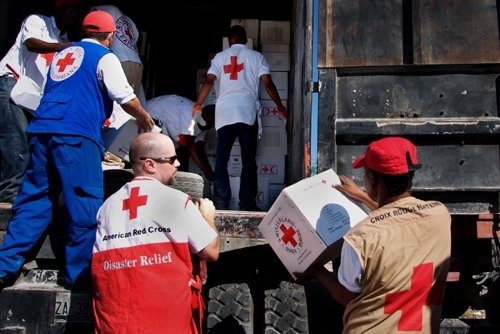
As aid efforts continue in the earthquake-shattered capital of Haiti, the American Red Cross finds itself in a familiar position.
As with Hurricane Katrina and other pressing humanitarian emergencies, the nonprofit organization is the primary recipient of America’s generosity—garnering more than one-third of the $560-million raised for Haiti so far.
With this influx of cash comes scrutiny.
Some aid experts question whether one organization should receive such a significant portion of contributions, while others wonder if America should use a “joint appeal” for disasters.
For example, in a recent blog article, Tony Pipa, a philanthropy consultant, asks if an approach like Britain’s would work better; British donors can give to the Disasters Emergency Committee, an umbrella organization of 13 charities.
David Meltzer, the Red Cross’s senior vice president for international services, doesn’t think such a pooled fund would work here.
“I don’t think taking the choice from the donors is what the donors want,” he says. “When the donors choose the American Red Cross they are expressing confidence in our ability to spend their money wisely.”
He emphasizes that in Haiti and other global disasters the charity works closely with other Red Cross and Red Crescent groups and will give the money to other charities if needed.
Redistributing Dollars
After tsunamis struck parts of South Asia in 2004, the Red Cross raised $581-million, but 46 percent of that money went to non-Red Cross organizations, he says. For example, it gave a grant to the World Wildlife Fund to make environmental assessments of Red Cross recovery work.
“We’ve been accused of ‘Hoovering’ up all the donor dollars, but you have to look not just at where the dollars go in, but where they go out,” he says.
Another common misperception that the Red Cross is trying to clear up is that it only performs immediate relief work.
“Long after cameras have left and the interest has declined, the Red Cross is there,” says Nan Buzard, the charity’s senior director of international response and programs.
In Haiti, the Red Cross is just starting to plan for the long term.
Red Cross representatives from America, Canada, Spain, and other nations will meet next week with the Haitian government, the World Bank, the United Nations, and others to start mapping out future work.
As part of this, key questions must be answered.
“Are we talking about 600,000 homeless, 700,000 homeless, or a million? Are people being relocated outside of Port-au-Prince on a temporary basis or is it on a permanent basis?” asks Mr. Meltzer. “It’s hard to know, for example, how to develop a new community if you don’t know where that community is going to be located.”
Because of these unknowns, the Red Cross officials say it’s too soon to say how long disaster recovery operations will last or how much the organization will need for its entire earthquake response.
A variety of factors make Haiti a more challenging rebuilding process than others.
For instance, the urban environment of Port-au-Prince makes planning tremendously tricky.
“In some cases, there were 20 or 30 families in a building and now you only have a footprint that’s really only big enough for two to be in,” says Ms. Buzard. “Urbanization is a huge issue.”
The key to a successful recovery, she says, is working with the Haitian Red Cross, which has more than 10,000 employees and volunteers across the country.
Mr. Meltzer says the American Red Cross has been working in Haiti for years and has a close relationship with its counterpart there, which will build trust among Haitians.
“There is a good reason why in our relief distributions to date, we’ve not had the outbreaks of violence,” he says. “We’re not going in there with military escorts in large part because we’re working with the Haitian Red Cross.”






