
Progressive Advocates Should Hold Obama Accountable for Service Office’s Woes

By PABLO EISENBERG
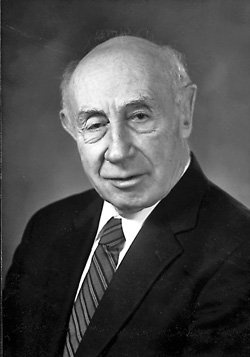
Contributor
July 23, 2009 | Read Time: 6 minutes
Progressives and liberals have always had a hard time holding their political leaders accountable when they reach the White House.
The agency that oversees national service seems to be a case in point, as progressives exacerbate the problems by staying silent about them.
Poor judgment, incompetence, partisan action, and political ineptitude seem to be the order of the day at the Corporation for National and Community Service, which oversees AmeriCorps and other programs scheduled to get a big infusion of money under a law enacted in April.
The organization lacks a leader after the administration’s nominee for director, Maria Eitel, withdrew from consideration because, she said, she had health problems. Two months later, there is no sign that a replacement is in the immediate offing. Another top post will soon be vacant because Alan Solomont, current chair of the corporation board, has been nominated to serve as American ambassador to Spain. The board itself is still waiting for full representation; six members have yet to be appointed by the White House.
Adding to the leadership void was President Obama’s decision in June to fire the organization’s inspector general, Gerald Walpin. Mr. Obama said Mr. Walpin was incompetent and had behaved bizarrely.
But Mr. Obama did not follow the procedures spelled out in the Inspector General Reform Act, which Mr. Obama supported as a co-sponsor. Under the measure, enacted last year, the president must give Congress 30 days’ advance notice of the dismissal of any inspector general along with the reasons for termination. While Mr. Walpin has been described as a difficult, prickly, and undiplomatic official, he did not deserve the treatment he received.
Mr. Walpin’s firing seems to have been triggered by two investigations. One was his finding that one of the largest AmeriCorps program, the Teaching Fellows program at the City University of New York, was ineligible for AmeriCorps money.
The other was his inquiry into spending by St. Hope Academy, in Sacramento. The organization was a recipient of AmeriCorps money and run by Kevin Johnson, the former basketball star for the Phoenix Suns, before he was elected mayor of Sacramento.
The inspector general’s office found that almost all of the money granted to St. Hope, some $850,000, had been either misspent or undocumented.
Mr. Walpin sent his findings to the Sacramento U.S. attorney’s office and recommended that it pursue a criminal prosecution and the full restitution of the grant money.
He also asked the corporation to suspend Kevin Johnson from receiving further federal money, and it did so.
The suspension raised political problems for the White House and for Mayor Johnson, since the mayor’s lawyer said the suspension seemed to shut the city of Sacramento out of money received through the federal stimulus program.
To ensure the city’s eligibility, the U.S. attorney negotiated an agreement with St. Hope and the mayor that would require the school to repay only half of the AmeriCorps grant money while lifting the mayor’s suspension from receiving federal funds.
The agreement also stipulated that Mr. Johnson would initially provide $72,000 toward restitution, but would be repaid that amount by St. Hope when it raised the money.
The deal bypassed the inspector general’s office, which normally would have been part of the negotiations.
In a report to Congress in May, Mr. Walpin found serious fault with the agreement, saying that Mr. Johnson, who was primarily responsible for the irregularities at St. Hope, escaped unscathed and that St. Hope did not have the resources to pay back the grant money in question.
After Mr. Walpin criticized the settlement, the U.S. attorney, Lawrence G. Brown, who like Mr. Walpin had been appointed by President Bush, raised concerns about Mr. Walpin’s conduct during the Johnson investigation. He asked the Council of the Inspectors General on Integrity and Efficiency, an independent entity charged with investigating complaints against government watchdogs, to examine what had happened.
Regardless of how Mr. Walpin handled himself, several years of coverage of St. Hope by The Sacramento Bee and the findings of two other investigators from the inspector general’s office seemed to confirm Mr. Walpin’s assessments.
Neither the corporation’s board or staff members nor White House executives seemed willing to recognize that the terms of the AmeriCorps grant to St. Hope had been violated; that Mr. Johnson, an ally of the president, was responsible for the organization’s problems; and that the settlement did little to punish them.
Politics apparently trumped preserving the integrity of a federal grant program.
As might have been expected, the firing of Inspector General Walpin provided a field day for right-wing newspapers, bloggers, and editorial writers.
But where were the mainstream newspapers and progressive commentators?
Few, if any, progressive observers raised the matter, nor have leaders in the national and public-service movement.
That is not the only issue they have kept quiet about.
Many people from progressive nonprofit groups, public-service groups, and labor unions to whom I spoke expressed their concern about the appointment of Maria Eitel, president of the Nike Foundation, to the head of the corporation. Many of them said they felt she was not qualified for the role because she had limited experience overseeing big organizations and was tied to a corporation accused of workers’-rights violations (Opinion, “National Service Head Must Have Hands-On Experience,” June 18).
Yet none of them were willing to speak out publicly about the nomination. Except for a few Democratic senators, few progressives were willing to criticize the manner in which the inspector general was fired or the substance of the St. Hope investigation.
And nobody seems to have the temerity to question the current leadership of the corporation and its board of directors, or those in the White House who are supposed to be providing direction and oversight to the Corporation for National and Community Service.
Where are the watchdog groups when both the corporation and the public-service movement need them?
The corporation’s budget, currently $1.2-billion, is scheduled to increase in size to almost $6-billion in five years, and it could eventually oversee approximately 250,000 members of AmeriCorps.
The corporation will need visionary and courageous leadership from both its board and staff. The sooner they are appointed the better.
Neither the corporation nor the White House can afford to make serious political mistakes as they seek to make community service a major priority in the Obama administration. Nor can they seek to protect or serve only political allies.
Progressive nonprofit groups must provide tough counsel and oversight to make sure the White House follows an appropriate course. Keeping quiet or staying on the sidelines is not a constructive option.
Pablo Eisenberg, a regular contributor to these pages, is a senior fellow at the Georgetown Public Policy Institute. His e-mail address is pseisenberg@ verizon.net.





