Ten Years Later, Turner’s U.N. Fund Continues to Evolve

By Caroline Preston
Contributor
June 12, 2008 | Read Time: 6 minutes
When Ted Turner pledged $1-billion in 1997 to benefit the United Nations, not even he had much of a clue as
to how the gift might be used.
He initially wanted to buy the United States’ debt to the world organization and then sue the American government for the money it owed him. After revising that plan and working out the logistics of creating the United Nations Foundation a year later, Mr. Turner envisioned the fund would close after operating for 10 years.
Plans for the foundation have continued to evolve. It now intends to stick around for the long haul, building on its role as a hub for companies, individuals, and charities interested in working with the United Nations. It also hopes to provide ordinary Americans with a straightforward way to support international causes.
“We would like to be, in 10 years, the community foundation for the world,” says Timothy E. Wirth, the fund’s president and a former Democratic senator from Colorado. “People who want to become involved with a big global problem may have a vehicle to do that, such as their church or service organization. But they may also decide to do it through some aspect of what the U.N. does.”
To date, the U.N. Foundation has helped mobilize more than $700-million in private donations for United Nations causes, in addition to the $692-million that Mr. Turner has so far contributed to the fund.
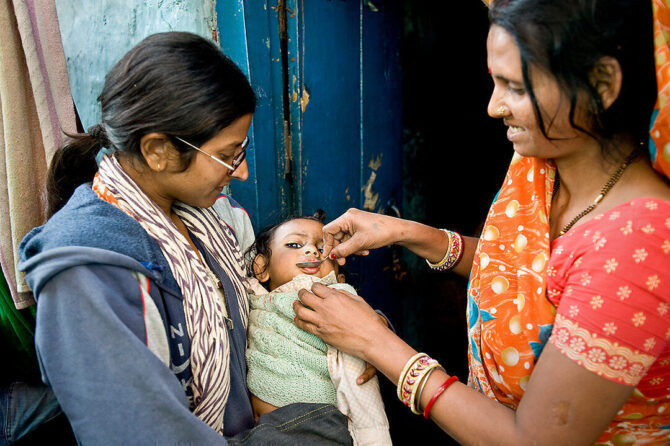
It has built partnerships around fighting childhood diseases, promoting renewable energy, advancing women’s rights, and other issues. An effort with the Bill and Melinda Gates Foundation, Rotary International, the World Health Organization, and other institutions, for example, helped to reduce the number of countries plagued by polio from 30 to four.
A collaboration among the American Red Cross, Unicef, WHO, and others contributed to a 90-percent drop in measles deaths in Africa. Approximately 70,000 people have donated to buy bed nets that help prevent the spread of malaria through the foundation’s Nothing but Nets campaign.
“It would have been a waste of an important resource if we didn’t try to prolong the potential of the foundation,” says Gro Harlem Brundtland, a foundation trustee and a former head of the World Health Organization. “We’ve proven that it’s possible, through partnerships and the mobilizing of outside resources, enthusiasm, and campaigning, to support U.N. causes.”
‘In a Blue Minute’
The U.N. Foundation will need considerable help from donors if it is to survive once Mr. Turner’s money dries up. The CNN founder, whose wealth has plummeted from a high of nearly $10-billion in 2000 to roughly $2.3-billion, declined to say if he would give more to the organization beyond his $1-billion pledge.
He says he’s disappointed not to have been able to put more money into the foundation.
“I just wish I hadn’t had the misfortunes I did with the AOL Time Warner merger,” Mr. Turner says. “If I had a little more money I’d put another billion into the U.N. Foundation in a blue minute, because it’s been such a huge success.”
The foundation will use roughly $170-million of Mr. Turner’s pledge — now set to be paid by 2015, instead of by now as he first promised — to create an endowment. But the organization hopes to keep operating with an annual budget of about $100-million.
That means it will need to add more to its endowment and continue seeking outside donations toward the campaigns it supports in order to keep going at that rate and to keep its operations running. The Gates foundation has provided the first large unrestricted grant, $10-million over five years.
Kathy Calvin, chief operating officer, says the biggest obstacle for fund raisers will be convincing Americans that a foundation started by a billionaire needs their help.
Some people probably think Mr. Turner didn’t fulfill his commitment, she says, or that he endowed the institution from the outset.
For his part, Mr. Turner is meeting with other philanthropists in hopes of securing financial help. The financiers Warren Buffett and Peter G. Peterson have stepped in to help another of his charities, the Nuclear Threat Initiative, and U.N. Foundation leaders say they would like to find similar backers. The U.N. Foundation might also make changes in its board as it looks to increase donations.
Today, its trustees include such international-development experts and political leaders as Muhammad Yunus, the founder of Grameen Bank, and Andrew Young, former mayor of Atlanta and U.S. ambassador to the United Nations. But Ms. Calvin says the foundation is considering including philanthropists and communications experts, among others.
The foundation is simultaneously seeking new ways to save money. It is being selective about the projects it starts and examining how much it spends on events and travel.
“I don’t think we can anticipate what we’ll look like in 2015,” says Ms. Calvin. “But we’re anticipating what we need to do to get there.”
Seeking Advice
The foundation is also re-evaluating how it can support the United Nations. Over the next 18 months or so, the fund will be soliciting advice from government and U.N. officials, business leaders, and others on how it should operate in the future.
Mr. Wirth says the foundation might open offices in places such as Beijing and Dubai to build support for the United Nations in other countries.
U.N. and charity leaders say they are pleased that the U.N. Foundation is forging ahead.
Many U.N. officials were deeply worried that Mr. Turner’s money would give him undue influence over the world body. They also questioned whether a private foundation had any role to play in U.N. affairs.
But much of that skepticism has dried up over the last decade, says Will Kennedy, senior program officer with the United Nations Fund for International Partnerships, which was created to manage the U.N.’s relationship with Mr. Turner’s foundation. Meanwhile, the foundation has helped build support at the United Nations for the notion that governments, businesses, and philanthropic organizations need to work together to solve social problems.
“When we talk about public-private partnerships, it’s pretty mainstream language,” he says. “Ten years ago, it was really just rhetoric.”
A Helpful Partner
Grant makers who have worked with the U.N. Foundation say the organization has broadened the influence of their giving.
“We’ve looked to organizations like the U.N. Foundation to help think about how to extend our grant making by forming partnerships with other agencies where we can leverage our resources,” says Joe Cerrell, the Gates foundation’s director of global health policy and advocacy.
Some charity leaders say the foundation has made it easier for them to work with the behemoth that is the United Nations.
Says Charles F. MacCormack, president of Save the Children: “They know their way around the labyrinthian corridors on First Avenue and 44th Street, and they can steer you to the people who can get things done.”
Mr. Wirth, the foundation’s president, says he’s hopeful that donors will see the value in working with the United Nations.
“The U.N. has an enormous mandate,” he says. “It can’t possibly do everything it’s being asked to do by itself.”