Philanthropy From the Core
Utah billionaire and cancer survivor focuses his giving on finding a cure

By Ben Gose
Senior Editor
January 24, 2008 | Read Time: 13 minutes
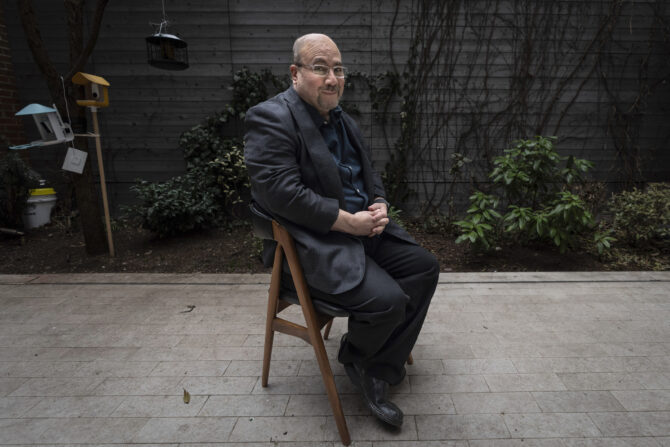
Once a week, Jon M. Huntsman Sr. travels to the cancer institute he started here to greet and comfort patients battling a disease with which he is intimately familiar.
Mr. Huntsman and his wife, Karen, founded the Huntsman Cancer Institute at the University of
|
ALSO SEE: DATABASE: America’s Top Donors ARTICLE: A Big Year for Big Giving ARTICLE: 23 Donors Claimed Spots on Both ’06 and ’07 Most-Generous Lists ARTICLE: How The Chronicle Compiled the List of the Top Donors in the United States ARTICLE: Secret Admirers ARTICLE: A Passion for Improving Kids’ Lives ARTICLE: Head of the Class ARTICLE: Social Studies ARTICLE: Philanthropy Retreats Help Married Couples Learn How to Balance Their Giving Priorities LIVE DISCUSSION: Join a live discussion with a donor from The Chronicle‘s Philanthropy 50 on January 22 at 12 noon, U.S. Eastern time. |
Utah in 1993. Mr. Huntsman lost both his mother and father to cancer, and he himself has survived mouth, prostate, and skin cancer. The couple has already given $225-million to the institute, which has a 50-bed hospital and a research wing, and is known for its successes in deciphering the genetic pathways that allow cancer to develop. The Huntsmans have vowed to double their giving to the institute in coming years.
The cancer hospital is attractively decorated, with original artwork and Navajo rugs on the walls, and each room has an extra fold-out bed so that a family member could essentially live at the hospital with a cancer patient.
But Mr. Huntsman, a 70-year-old billionaire, goes even further to help patients feel comfortable: He makes weekly rounds at the hospital’s 20 chemotherapy stations.
“It’s just nice to go over there and greet the patients,” Mr. Huntsman says. “We take the sickest of the sick — we’re a last resort.”
He became a billionaire by assembling the Huntsman Corporation, a chemicals company whose headquarters sit on the eastern edge of the city, over more than three decades.
He confirms that Forbes magazine’s estimate of his net worth, $1.9-billion, is roughly accurate. But it hasn’t been a straight line to the top. The company stumbled in 2002, and Mr. Huntsman sold a 50-percent stake to what is commonly called a “vulture investor”
|
||||||||||

to keep the company afloat. That investment firm now wants out, which is one reason that the Huntsman Corporation is to be sold to Hexion Specialty Chemicals in a transaction expected to close in April.
But another reason for the sale is that Mr. Huntsman wants more time and money for his philanthropy. The Huntsmans estimate that they have given away more than $1.2-billion over the past decade, counting the $700-million that they used to endow their private fund, the Huntsman Foundation, last year.
The couple has given or pledged more than $100-million to several universities over the years, including a total of $53-million to Mr. Huntsman’s alma mater, the Wharton School at the University of Pennsylvania, $26-million to Utah State University, and $10-million to Brigham Young University. They also have given more than $20-million to long-term relief efforts in Armenia, where Mr. Huntsman’s company conducts business. And on top of the $700-million they put in their foundation, the couple gave or pledged $50-million to charities in 2007; in addition to Brigham Young, the Huntsman Cancer Foundation (which supports the institute), the University of Utah, Utah State University, and the Wharton School, beneficiaries included the local chapter of the YWCA and Intermountain Health Care in Salt Lake City.
Mr. Huntsman expects to double his contribution to the Huntsman Foundation — adding another $600-million or so to last year’s $700-million — over the next five to 10 years. He also tithes 10 percent of his income each year to the Mormon Church. He does not count the church-related giving in his totals.
“Giving is at his very core as a human being,” says Jon M. Huntsman Jr., the governor of Utah and one of the couple’s nine children. “I grew up when there was no money to give, but he always talked about giving. He has spent his entire life giving and thinking about others.”
Building a Legacy
The $700-million that Mr. Huntsman put into the Huntsman Foundation last year has likely already made it the largest foundation in Salt Lake City. (The George S. and Dolores Doré Eccles Foundation, which had been widely considered the largest in the city, has $650-million in assets.) The Huntsman Foundation’s bylaws stipulate that 80 percent of grant making stay within the state of Utah, and that at least half of the in-state spending support cancer research or treatment.
Janet Bingham, who leads the Huntsman Cancer Foundation, has also assumed day-to-day leadership of the Huntsman Foundation. Their son David remains president of the Huntsman Foundation, but he is spending most of his time overseeing a land-development project in Idaho. The elder Huntsman says he expects the family foundation to eventually hire 10 to 15 staff members. He intends to distribute about 5 percent of assets per year — the minimum required by the Internal Revenue Service — so that investment returns can increase the foundation’s assets over time.
During an interview in his spacious office, which has floor-to-ceiling windows that look west over the city and to Great Salt Lake, Mr. Huntsman beams when considering the possibility that his foundation could grow to $20-billion or more in 100 years.
“This is our home state, and it’s a state without great foundations or charities,” Mr. Huntsman says. “It’s very important for our family, and for me personally, to leave a legacy that will be a vital force for good.”
Mr. Huntsman grew up in Blackfoot, Idaho, where his father taught music, and he later attended Wharton on a scholarship. He and his brother started a packaging company in 1970. In the same year, Jon Huntsman went to work for President Richard Nixon. He would eventually become special assistant to Nixon, but he left the administration before the Watergate scandal.
“It was heartbreaking to see a great man falter when he didn’t need to,” Mr. Huntsman says.
The Huntsman Container Corporation made plastic egg cartons, and the “clam shell” containers that were once ubiquitous at McDonald’s restaurants. That company was sold in 1976, but Mr. Huntsman later founded a chemicals company, which eventually bought 34 other businesses and rapidly expanded in value. There were some setbacks along the way, most recently in 2002, when surging oil prices, excessive supply in the chemicals industry, and a heavy debt load pushed the company to the brink of bankruptcy.
“We’ve been on the cliff of trouble three or four times, and I’ve been able to work through them all, very fortunately,” Mr. Huntsman says. “I don’t want to work through any more of them. It’s really that simple.”
Mr. Huntsman won’t exactly ride off into the sunset when the sale to Hexion closes. He plans to start a $1-billion private-equity fund with his own money and money from others. And he is developing his extensive land holdings in the West, including Huntsman Springs, an upscale subdivision in Driggs, Idaho. He plans to eventually plow profits from these new ventures into his foundation.
Mr. Huntsman says he is comfortable promising to nearly double his contributions to the Huntsman Foundation in the next decade because he enacted an estate plan back in the 1980s to provide for his sizable family. A third of his business holdings will be divided among his nine children. He has also set aside enough money, roughly $200-million, to ensure that his 56 grandchildren will be millionaires when they become adults.
The Huntsmans recently changed the name of their foundation, formerly known as the Jon and Karen Huntsman Foundation, to the Huntsman Foundation so that their children and grandchildren would feel part of the fund and consider contributing their own money to it at some point. Mr. Huntsman is president of the private foundation, and Mrs. Huntsman serves on the board, along with eight of the nine children (the ninth child is mentally disabled). Mr. Huntsman hopes the family can oversee the fund for at least a generation or two — or, as he puts it, “until everyone starts scrambling and fighting and shooting, and we have to put it all out to professionals.”
‘Wrap You in Comfort’
On a tour of the Huntsman Cancer Institute, Ms. Bingham points to the cheery décor and artwork, and contrasts it with the drab hospital in Arizona where she spent five months caring for her husband, who died of pancreatic cancer five years ago.
“The Huntsmans wanted this place to feel like home rather than a hospital,” she says. “They wanted it to wrap you in comfort.”
The institute, which sits about a mile to the north of the Huntsman Corporation, is the only cancer center in the intermountain west (the area between the Rockies and the Sierra Nevadas) that is affiliated with the National Cancer Institute, which makes the institute eligible for certain federal research funds.
Prominently displayed in the institute’s lobby is a painting of Mormon pioneers on the trail west to Utah in 1847. The painting is a fitting centerpiece, as the church’s interest in genealogy has helped the institute carve out a unique niche among cancer centers.
The institute’s Utah Population Database contains nine million ndividual records that link family members to medical information, including ancestral records from the Mormon church that stretch back 10 generations. The database has medical information for 85 percent to 90 percent of the cancer patients in the region, according to Mary C. Beckerle, the institute’s executive director. The organization’s researchers can look into family histories to identify patients who might be most susceptible to certain kinds of cancers.
Researchers can also take DNA samples from family members at high risk of cancer to identify the common DNA features in individuals who develop the disease.
The database here helped Huntsman institute researchers isolate gene mutations that cause some inherited predispositions to breast, skin, and colon cancer.
“It’s a powerful tool that has been used by our investigators to make groundbreaking and critical discoveries,” Ms. Beckerle says.
Mr. Huntsman says the database has enabled the cancer institute to become a leader in family genetics, which will eventually allow doctors to shape treatments and therapies for cancer patients based on their genetic profile.
“That’s why we’re located here,” says Mr. Huntsman, who says he was courted years ago by universities in other states to establish the cancer institute on their campuses. “If we’d gone somewhere else, we never would have had the benefit of the genetics.”
He says his next major gift will probably go to help pay for an expansion that will double the size of the institute’s hospital. The State Legislature will vote on whether to approve the expansion in February.
Mr. Huntsman often talks about the Holy Grail — finding a cure for cancer — and his son, Governor Huntsman, has learned not to dismiss such talk.
“He’s a very determined human being in whatever he does — that’s been one of his greatest attributes in business,” Governor Huntsman says. “He always used to tell us, ‘No means yes at the end of the day; you just have to interpret the no a little differently.’ So when he says we’re going to find a cure for cancer, I absolutely believe what he says because of his sheer determination to succeed.”
Mrs. Huntsman, who was not available for an interview, shares many of her husband’s philanthropic interests, including the cancer institute, Ms. Bingham says.
“Given that Jon has had cancer three times, she’s concerned about her children and her grandchildren,” adds Ms. Bingham. Mrs. Huntsman pushed for the inclusion in the institute of a learning center, a small library where families can learn about cancer, and she personally picked out much of the original artwork that hangs in the cancer hospital, according to Ms. Bingham.
Mrs. Huntsman is also passionate about education, especially elementary and secondary education, Ms. Bingham says. The Huntsmans sponsor a program that awards $10,000 cash gifts per year to 10 top teachers, administrators, or volunteers in Utah’s public schools.
Utah Supporters
Aside from their support of the cancer institute, the Huntsmans’ next largest area of giving is to universities. Their largest gift, an unrestricted donation of $40-million, went to Wharton in 1998. The school later named a classroom building after Mr. Huntsman. Several members of his family have attended Penn, and he just stepped down from the university’s Board of Trustees after hitting the mandatory retirement age of 70.
James S. Riepe, the chairman of Penn’s board, says he believes the university will continue to benefit from the Huntsmans’ philanthropy, even though most of their assets will end up in a foundation that requires 80 percent of the spending to stay within Utah.
“When he stepped down, he said that after his faith and his family, Penn was the most important thing to him.” Mr. Riepe says. “Based on what he has said to us, we’re very confident that the Huntsman family will stay engaged with Penn.”
In November 2007, Mr. Huntsman pledged $26-million to Utah State University, with $25-million going to its business school, which was renamed in his honor. (The remaining $1-million will provide scholarships to Armenian students.) Mr. Huntsman says he wants Utah to have a first-class business school so that students in the region can pursue an undergraduate or master’s degree “without going to an Ivy League school and spending three or four times as much.”
He has also given more than $30-million to the University of Utah over the years (not counting his support for the Huntsman Cancer Institute), and the university’s 15,000-seat multipurpose arena is named after him.
Mr. Huntsman has long supported other causes here in Salt Lake and around the state. In 1996, he gave $1-million to help build a YWCA shelter for victims of domestic violence. In 1987, he founded the Huntsman World Senior Games, which now bring 5,000 people ages 55 and older each year to St. George, Utah, to compete in 22 athletic events.
If cancer research and treatment consume half of the Huntsman Foundation’s in-state spending, that means another $15-million or so per year could go to other causes in Utah. Ms. Bingham says she is preparing for an onslaught of requests.
“We’re going to have to gear up,” she says. “We know there are many worthy causes we’ll want to be a part of.”
And some charities in the state are eyeing the foundation’s newly expanded coffers. Deborah S. Bayle, president of the United Way of Salt Lake, says her organization has hundreds of partners, including charities and foundations, in the local social-service efforts it leads, including attempts to combat financial instability by encouraging families to save more, and a plan to put centers in schools in low-income neighborhoods to provide social services to parents as well as students.
But, she says, she has not yet solicited the Huntsman Foundation for support. “Mr. Huntsman has been concentrating so much of his efforts on the cancer institute that we decided strategically to lay low until the time is right,” Ms. Bayle says. “And now might be that time.”
Ms. Bingham says the foundation has not yet decided whether it will consider unsolicited grant proposals.
A decade ago, Mr. Huntsman says, he gave money to hundreds of causes, but he ultimately decided that he could not be “all things to all people.”
He adds, “We would rather make a substantial difference in a few areas than spread our money around to 200 or 300 areas, where you hit the tip of the iceberg but you really don’t make a change for mankind.”