March 17, 2005 | Read Time: 5 minutes
American relief charities have raised more than $990-million to help victims of the deadly earthquake and tsunamis in South Asia. Most organizations have seen the pace of donations taper off significantly,
with proceeds from special fund-raising events, employee matching gifts, and corporate or foundations grants making up the lion’s share of new money.
The American Red Cross, in Washington, has raised roughly 40 percent of all contributions, more than $410.3-million. More than $174-million of that total has come in since the organization announced on January 26 that it was no longer actively soliciting funds.
Catholic Relief Services, in Baltimore, has received $111.5-million for its relief and rebuilding efforts, while the U.S. Fund for Unicef, in New York, has collected $92.4-million.
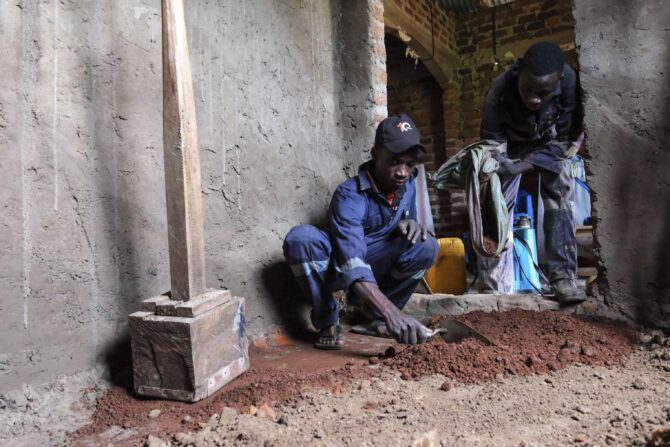
Charities that do not provide traditional emergency relief have also been raising money for their work in areas devastated by the December 26 disaster. Habitat for Humanity International, for example, has raised more than $29.9-million. In addition to building homes for 25,000 displaced families, the Americus, Ga., organization also plans to set up training centers that will teach people the skills they need to build their own homes, and produce low-cost building materials, such as compressed earth blocks, roofing tiles, and windows.
Heifer International, in Little Rock, Ark., has raised $1-million to expand its livestock donation program into hard-hit areas, and the Humane Society of the United States, in Washington, has received more than $400,000 to aid animals affected by the disaster.
Other Emergencies
Several relief organizations report that the overwhelming attention the tsunamis have received has not hurt — and in some cases has helped — their ability to raise money for their work elsewhere.
The Mennonite Central Committee, in Akron, Pa., has raised more than $5.3-million for its tsunami-relief efforts, and donations to the organization’s general fund have increased by $500,000 over last year.
“When there’s a high-profile emergency situation like this, it will actually encourage some people to donate a little more to the general fund as well,” says Dave Worth, resource network director at the Mennonite Central Committee. “They want to make sure that the other needs around the world — emergencies and ongoing long-term development programs — aren’t neglected.”
Similarly, CARE USA, in Atlanta, which has raised $41.3-million for its relief and development efforts, recently received a $1.5-million grant from the John D. and Catherine T. MacArthur Foundation, in Chicago, with instructions that the organization should divide the money as needed among its work in the countries harmed by the tsunamis, in the Democratic Republic of the Congo, and in Sudan.
Relief charities are also turning their attention to the question of how to persuade the thousands of new donors who contributed to their organizations for the first time to become long-term supporters.
That won’t necessarily be easy, says Mark R. Collins, deputy vice president of development at the International Rescue Committee, in New York, which has collected $10.8-million for its relief efforts.
“There are people who hear about something and want to help, and then they go on to the next emergency that catches their eyes and ears and hearts,” he says. “They don’t tend to think of themselves as aligning themselves with an agency and its work.”
After the refugee crisis caused by fighting in Kosovo, Mr. Collins recalls, the International Rescue Committee attracted many new donors, but the percentage of those donors the group was able to encourage to become repeat contributors was only two-thirds of the organization’s overall rate with first-time donors, which is roughly 40 percent.
But, he says, the charity is working to improve those percentages. One example of the group’s new approach: While direct-mail appeals asking people to give in response to the Kosovo crisis focused entirely on that emergency, the appeals that went out after the tsunamis, while providing a great deal of information about the disaster, also included information about the International Rescue Committee’s overall mission and its work in other areas.
Some charity officials — including Thomas Tighe, chief executive officer of Direct Relief International, in Santa Barbara, Calif., which has raised $9-million — believe that inspiring donors to commit to their missions will have less to do with fund-raising techniques than with accountability.
Says Mr. Tighe: “The best thing we can do for the long term is just do right by the people who have trusted us for the tsunami and show them their money has been well spent.”
Among the results from other organizations responding to the disaster:
Save the Children, in Westport, Conn., has received $54.5-million.
World Vision USA, in Federal Way, Wash., has received donations totaling $52.1-million.
Americares, in Stamford, Conn., has raised more than $35-million.
Oxfam America, in Boston, has collected about $30-million.
Mercy Corps, in Portland, Ore., has received $25.8-million in contributions.
Doctors Without Borders, in New York, has raised more than $20-million.
Lutheran World Relief, in Baltimore, has collected more than $12.4-million.
The Salvation Army, in Alexandria, Va., has received gifts totaling $10.2-million.
American Jewish World Service, in New York, has raised $10-million.
Church World Service, in Elkhart, Ind., has received $6.6-million in donations.
United Jewish Communities, in New York, has collected more than $6.5-million.
Food for the Hungry, in Phoenix, has raised $3.7-million.
International Medical Corps, in Santa Monica, Calif., has received contributions totaling more than $3.5-million.
Islamic Relief USA, in Burbank, Calif., has collected more than $3.5-million.
International Aid, in Spring Lake, Mich., has raised more than $2.5-million.
Brother’s Brother Foundation, in Pittsburgh, has received gifts totaling $1.5-million.
Action Against Hunger, in New York, has raised $1.2-million.