Founder’s Widow Proves to Be Perfect Match to Lead Organ-Donation Group

By PETER PANEPENTO
Contributor
August 5, 2004 | Read Time: 6 minutes
When Brian Broznick lost his two-month battle with pancreatic cancer in November, he left behind an $18-million organization and 65 staff members who had a deep connection with the man who had founded and led their charity for 16 years.
The Center for Organ Recovery and Education, a Pittsburgh charity that coordinates organ and tissue donations in a territory that covers more than 80 counties in New York, Pennsylvania, and West Virginia, spent much of the first six months after Mr. Broznick’s death in a state of grief.
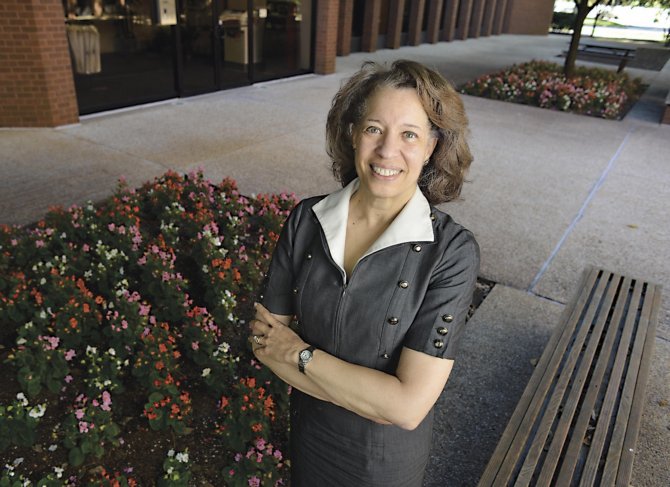
Now it is turning to a familiar face to help it move forward. After a nationwide search, the charity’s board of directors hired Susan Stuart, Mr. Broznick’s 43-year-old widow and the organization’s former assistant executive director, to return to the charity and succeed her late husband.
Since she took over her husband’s job in May, Ms. Stuart has been helping the organization to regain its grounding — and to move forward on Mr. Broznick’s priorities, such as helping the public understand more about organ and tissue donations and improving the process that brings organs to those who need them.
Such projects have been an intimate part of Ms. Stuart’s life since she joined the organization as an organ-procurement coordinator in 1987. Although she left the charity about a month before she married Mr. Broznick in 1999, in part because she was worried about how other employees would feel, she remained close to the organization.
During her time away from the charity, Ms. Stuart, a registered nurse, developed an organ and tissue donation program for the University of Pittsburgh Medical Center Presbyterian. She was promoted to oversee the daily clinical operations of 150 critical-care beds at the medical center’s Shadyside facility, with 500 staff members and a budget of more than $40-million.
Still, she was never far from the Center for Organ Recovery and Education, because she and her husband often talked about their work.
John Innocenti, a member of the center’s search committee, says Ms. Stuart was clearly the organization’s best choice, because of both her familiarity with the charity and her approach to organ donation.
“She came to the search committee with all of the answers,” says Mr. Innocenti, chief executive officer at the University of Pittsburgh Medical Center’s Shadyside facility. “Knowing the business is one thing, but she’s lived it. She was passionate about it.”
Ms. Stuart, who said she did not want to disclose the salary she will be paid in her new role, returns to the center at an important point in the organ-donation movement.
A growing number of patients are now eligible for transplants because advances in technology have reduced the risk of harm. But supply is not keeping up with demand. Patients have become less willing to use ventilators and other equipment to prolong their lives when they have little chance of recovery, a trend that makes it more difficult for the center and similar organizations to recover useful organs before a donor’s death. (Organs of patients who die before they are put on a ventilator are generally not usable.)
“We’ll never meet the demand,” says Ms. Stuart. “Seventeen people die every day waiting for an organ transplant nationally.”
To help close that gap, Ms. Stuart says she will work to help the organization continue to build relationships, both with potential donors and with all the people who help a patient get the organ or tissue he or she needs.
In an interview, Ms. Stuart spoke about her new job.
How has the staff handled the challenge of losing the founder?
By the time I arrived I could really sense that the team was really ready to move forward — for a lot of reasons: because professionally they wanted to and because they had worked their way through their own grief and knew that this is what Brian would have wanted.
Has it been emotional for you to come back?
I would not be telling the truth to say it has not been emotional. There’s been moments where I’ve thought, “Wow.” But it feels right, I know it’s what Brian wanted, and I know it’s my calling. It’s been easy to get over the emotional times when you believe in the mission.
How does your experience working at the center help you now?
Having that past experience and having the experience during the past five years working in a large academic environment really has developed me to be more effective in this position. I can understand the demands of the hospitals and how many conflicting demands are placed on the hospital.
I also know what it’s like to work here, being up for 36 to 38 hours, working with a family and rushing the organ back and having the opportunity at times to see the organs be transplanted. It makes you get out of bed each morning and think, “Wow, I’m going to make a real difference today.” If you don’t feel that way, you look at it as a job that is just much too difficult for your personal life. You either leave or you become addicted. It’s 24-hours-a-day, seven-days-a-week. You can’t stop. Unfortunately, you cannot predict death.
So how do you find the right people to do this kind of work?
It truly is about the mission, because you couldn’t pay people enough to do this job otherwise. To walk into a situation where you have families in crisis or families that are not getting along because of past history and they’re in crisis mode. To walk in as a total stranger, it really takes a unique individual who does it, being able to do that and leave there and stay focused and realize that they are doing this to help someone. It’s very easy to personalize the situation, to personalize the death too much, versus realizing that you’re making something happen that’s wonderful.
ABOUT SUSAN STUART, CHIEF EXECUTIVE OFFICER, CENTER FOR ORGAN RECOVERY AND EDUCATION
Education: Earned a bachelor’s degree in nursing from Duquesne University in 1988 and a master’s degree in public management from Carnegie Mellon University in 1996. In 2003, she completed a one-year leadership-development program at the Beckwith Institute for Innovation in Patient Care, in Pittsburgh.
Previous employment: Began her professional career in 1984 as a staff nurse at Allegheny General Hospital, in Pittsburgh, and later became a nurse and teacher. She joined the Center for Organ Recovery and Education in 1987 as an organ-procurement coordinator and was promoted to assistant executive director one year later. She became a program manager at the University of Pittsburgh Medical Center Presbyterian in 1999, and two years later was named director of clinical operations at the center’s Shadyside unit.
What she’s been reading: “It’s kind of fun being back in this job because it requires a lot of travel and I love audio books,” says Ms. Stuart. “I’ve been reading a lot of audio books, especially management books.” Among her recent favorites are Getting to Yes: Negotiating Agreement Without Giving In, by Roger Fisher and William Ury, and How to Win Friends and Influence People, by Dale Carnegie.