
Governments That Depend on Nonprofits for Vital Services Need to Help Them Thrive

By Jamie Rubin
Contributor
November 8, 2021 | Read Time: 6 minutes
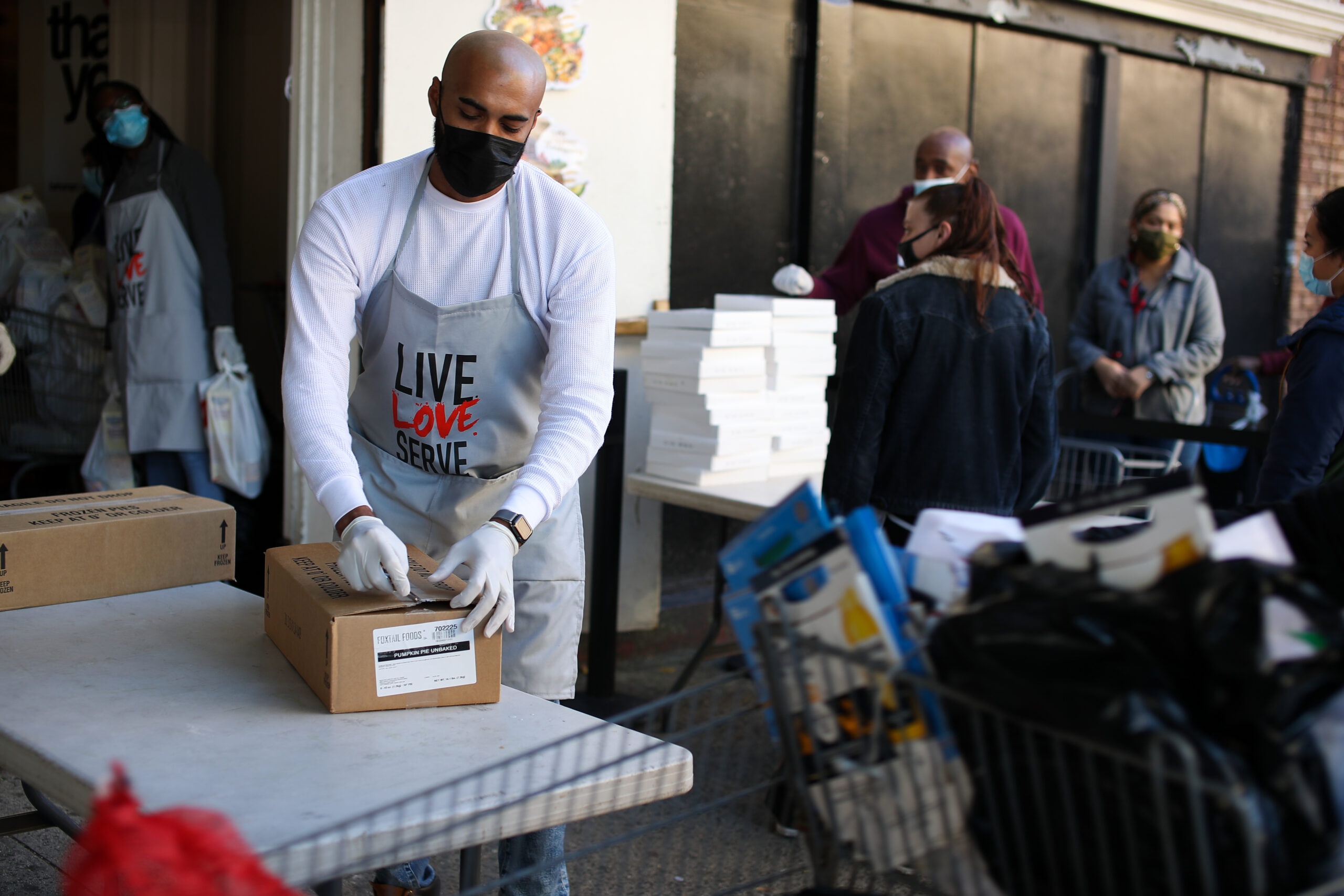
Soon after the first Covid-19 cases were diagnosed in New York City last year, sidewalks emptied, schools and businesses shuttered, and wailing sirens echoed through the empty streets. But while most of the city came to a screeching halt, nonprofit human-services organizations sprang into action, providing food, shelter, and medical assistance to frightened residents — many receiving such help for the first time in their lives.
These nonprofits were not built for disaster recovery but acted on behalf of city and state governments in response to a monumental crisis. What did they get in return? Minimal guidance and woefully inadequate government funding. Most were even forced to provide their own personal protective equipment.
Today, as these nonprofits continue to help struggling New Yorkers recover from the pandemic, this lack of government support, combined with decades of chronic underfunding, has left many on the brink of collapse. A recent report by New York’s Human Services Recovery Task Force, which I co-chair, found that 51 percent of human-services nonprofits in New York City and State saw a drop in expected revenue last year, with an average decline of nearly $9.1 million. Fully 70 percent reported delayed government payments, forcing nearly half to take out loans or draw on a line of credit. And just 38 percent were reimbursed by the government for pandemic-related expenses such as personal protective equipment.
What’s happening in New York is hardly unique. As in most states, New York’s nonprofit human-services organizations are drastically underfunded — a problem that predated the pandemic. By outsourcing to nonprofits in areas such as homelessness, mental health, disability, child welfare, and work-force preparedness, governments can save money and provide higher-quality assistance.
Unfortunately, the government does not pay the full cost of providing services, forcing nonprofits to rely on donations to make up the difference. That underfunding, combined with significant delays in payment, strips away limited resources that are in especially high demand during a crisis. Our study found that 82 percent of New York nonprofits launched new services, such as telehealth, in response to the pandemic, and 72 percent expanded existing services.
Who Gets Hurt
Those harmed most by the underfunding of human-services organizations are the low-income Black and brown communities that receive less help in the face of desperate need, and the nonprofit work forces made up predominantly of women and people of color who are paid poverty-level wages. Workers are often forced to rely on the same social services they provide to clients.
While our task force focused on the problems facing New York’s human-services nonprofits, the report’s findings and recommendations should be examined by community organizations, government partners, and philanthropic leaders across the country searching for a better path forward during the pandemic recovery and beyond. All three entities should work together to enact the following reforms:
Ensure human-services nonprofits are included in crisis-response planning efforts. Like other cities and states across the country, when the pandemic struck, New York nonprofits were tasked with helping community members understand what was happening and tending to immediate needs — all while making their own decisions about whether to close, stay open, or move to remote services. Service providers spent valuable time waiting for government agencies to determine if contracts would be honored for programs that could not continue in person and whether funding could be reallocated to different services and needs during a pandemic, including the purchase of PPE.
To avoid such problems in the future, city and state governments should bring nonprofit leaders to the table at the start of the disaster planning process so they can identify what is needed to both provide services and maintain their own work forces. They should also offer greater funding flexibility so services can shift as demands change during an evolving crisis.
Prioritize equitable wages for contracted human-services workers. Nonprofit employees are chronically underpaid compared with private business and even government employees, whose salaries are often set by the same government officials who determine how much contracted human-services workers are paid. This pay disparity hurts a highly educated work force that is disproportionately made up of women and people of color, a problem that was exacerbated by the pandemic. We found that 63 percent of these employees had four-year college degrees or better — 10 percent higher than workers at private businesses. On average, 85 percent of frontline workers at New York human-services organizations identified as people of color.
As we move toward recovery, the human-services field, like many other industries, is suffering from worker shortages because of stagnant wages and the need for in-person staff. Our survey of New York organizations found average job-vacancy rates of about 11 percent as of March 2021, with more than 30 percent reporting a vacancy rate higher than 15 percent.
To stabilize this work force, local governments must establish a living-wage floor for government-contracted human-services workers that is comparable to government employees. These compensation guidelines should be incorporated into all contracts, along with funding to support career advancement and promotion opportunities, as well as annual cost-of-living adjustments.
Philanthropy can continue to help fill the gaps for both programs and wages, but that gap has grown too large for foundations and individual donors to make up the difference on their own. Philanthropic leaders, however, can play a critical role by insisting on equitable wages when partnering with government on social-service efforts.
Provide payments in full and on time. Government contracts rarely cover the true costs of nonprofit programs. This was a particular problem during the pandemic when expenses increased to meet the demand for additional services, and delays in government reimbursement led to cash-flow problems. Additionally, arbitrary caps on spending for anything that isn’t directly related to providing services prevented nonprofits from using funds for much-needed operational upgrades in areas such as technology for remote service delivery and cybersecurity, and cleaning and maintenance, which was especially crucial during the pandemic.
In our survey of New York nonprofits, 79 percent reported using funds from philanthropy to help cover costs for items essential to maintaining operations during the health crisis. Unfortunately, some of those funds were for one time or emergency use and will not cover ongoing needs.
It’s time for government to recognize the true costs of operating human-services programs and put an end to delayed reimbursements.
State and local governments have come to depend on human-services organizations to help solve pressing social problems while asking them to accept contracts that don’t cover full program costs, provide equitable wages, or allow them input on program design and services. No company contracted by the government to build a bridge or fix roads would accept such parameters. Why should nonprofits?
The lopsided economic rebound across the country demonstrates how essential human-services organizations are for achieving an equitable recovery. During this unpredictable period, nonprofits will continue to hold communities together through services such as job placement, eviction prevention, and childcare. In return, governments need to do much more to support them.





