
A Giving-Local Mind-Set Reinforces the Chasm Between Wealthy People and Those in Need

By Davey M. Kim
Contributor
September 28, 2021 | Read Time: 5 minutes
Giving local has become a common mantra in philanthropy, especially among advocates of traditional philanthropy who argue that supporting one’s community is the cornerstone of charitable giving. The number of community foundations serving local needs has doubled in the last few decades. And many advocates, especially in response to Covid-19, have called for wealthy philanthropists to pay more attention to problems in their own backyard.
Donors, the thinking goes, have a bigger stake in their own community and will forge better connections to nonprofits with intimate knowledge of local challenges and how to address them.
While this approach has its merits, a narrow focus on geography ignores the fluidity and complexity of social issues, which can’t be boiled down to mental shortcuts like “give where you live.” Even worse, it perpetuates inequitable funding trends between wealthy people and those in need and fails to address historically discriminatory policies that force Black and brown people out of higher-income areas.
Who Is Responsible?
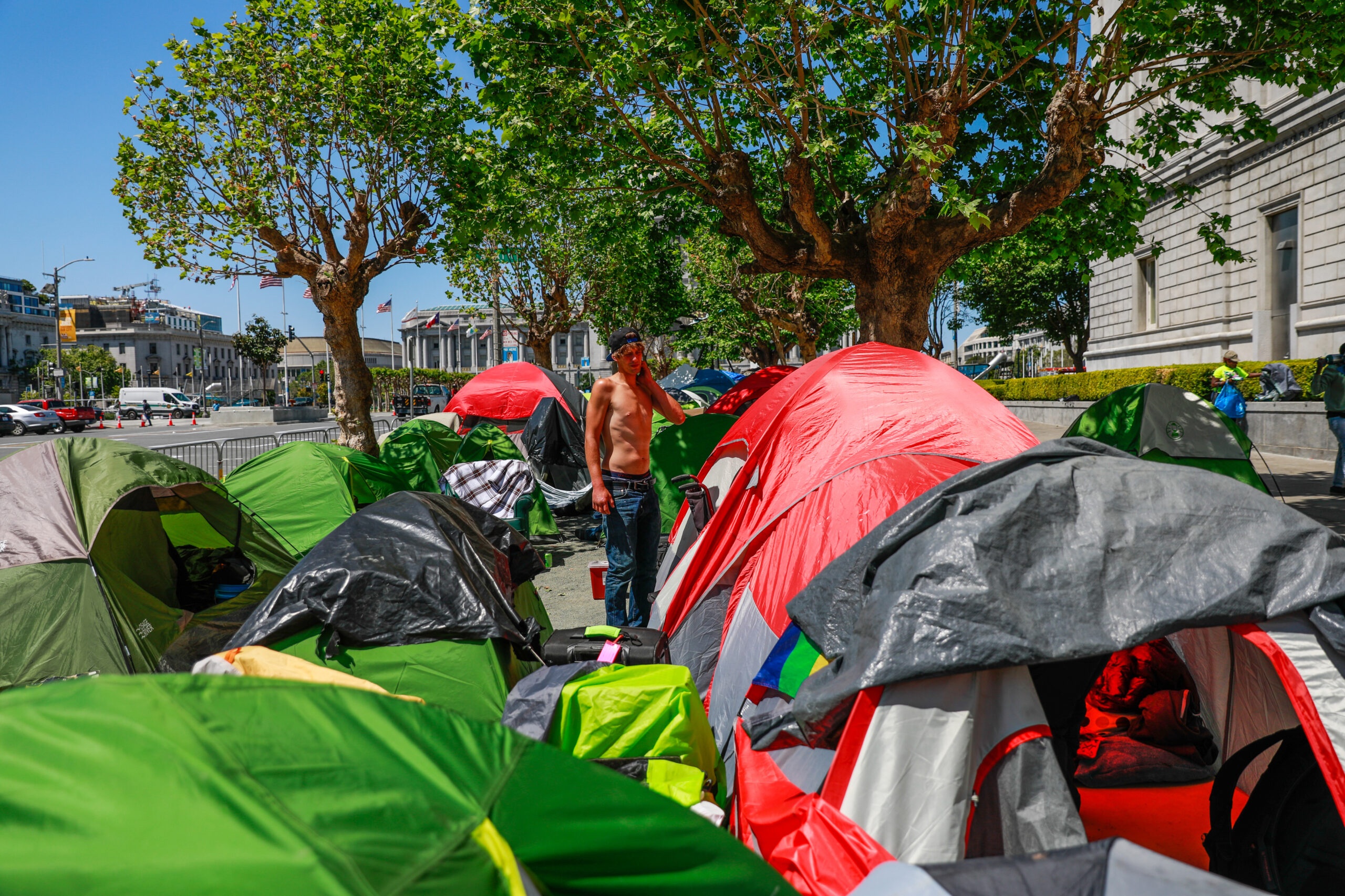
In reality, social problems are experienced by people, not places. For example, in the San Francisco Bay Area, where I live, the housing and homelessness crisis is often seen as purely local. Blame is ascribed to city leaders for their failed policies, tech entrepreneurs for driving up housing prices, and billionaire philanthropists for not giving more to local causes.
San Francisco, however, is one node within a larger Bay Area system that is collectively responsible for creating homelessness. The entire region has been slow to supply new housing in any meaningful way that meets the needs of its growing population. Though recent state measures promise to speed up housing production, some communities will still suffer the fallout more than others for the foreseeable future.
Consider the issues of migration and displacement. Fully 30 percent of San Francisco’s homeless population originate from other counties and even other states before ending up in the city. San Francisco Mayor London Breed went so far as to discourage homeless newcomers: “If you were not on our list to receive support and care in our homeless system … and you came here thinking you could receive help in some capacity, unfortunately we will not be able to help you.”
How would proponents of local giving respond? Should neighboring counties relinquish all responsibility for their own citizens who end up homeless in San Francisco? Or consider the reverse: Should priced-out residents of the Bay Area who get pushed inland into the San Joaquin Valley simply not count as part of the local community any longer?
Countless other social issues, such as the spread of Covid-19 and management of scarce water resources, cross geographic boundaries, making localities highly dependent on each other. Philanthropists need to treat such issues as anything but local.
A fixation on the local also poses equity dilemmas. Resources typically don’t travel far from where the wealthy live, which perpetuates funding disparities across a region. Research shows philanthropy’s disregard for distressed rural communities compared with major metropolitan areas, where nonprofits typically enjoy greater access to donors. For instance, Solano County, northeast of San Francisco, has received less foundation funding per capita than any county in the Bay Area, despite high rates of family poverty. It’s no coincidence that Solano is home to far fewer millionaires and billionaires than San Francisco and Silicon Valley.
Decades of Discrimination
Are social causes more worthy the closer they happen to the wealthy? Surely not. Applying a people-based, rather than a place-based, approach to giving fosters responsibility for those who might otherwise live in a philanthropist’s wealthy community if they hadn’t been excluded by decades of discriminatory behaviors and policies.
Struggling neighborhoods do not just organically appear. They were created by historical racial and class-based segregation, such as redlining and exclusionary zoning, and other discriminatory practices that continue to this day. A recent study by the University of California at Berkeley found that 81 percent of all metropolitan regions of the United States were more segregated in 2019 than they were in 1990. When wealthy and poor are sorted into different communities, the local-giving approach does not allow for proper scrutiny of how the boundaries that define these communities evolved in the first place.
History offers clues about how central segregation is to poverty. Radical experiments such as the Movement to Opportunity program in the 1990s, which relocated thousands of poor families to wealthier communities with abundant resources, showed remarkable increases in earnings, educational attainment, and quality of life. Living close to good schools, employment, transportation, and other critical services can be game changers, but nonprofits working in areas of concentrated poverty can’t replicate these civic amenities on their own.
So, how can those who have based their philanthropy on local needs respond to such a reality?
First, giving strategies should acknowledge that affluent and high-poverty locales are not two separate entities, but rather parts of the same system. What happens in one affects the other. The problem is not simply that struggling communities lack resources, but that neighboring communities might be hoarding too much. Local behaviors such as mandating single-family zoning or blocking the development of affordable housing, especially in higher-income cities and towns, are two of many mechanisms that work to exclude others from sharing in valuable public resources.
Second, foundations should consider expanding their grantee portfolios to organizations that take a more regional approach to solving problems. This is not a call to stop giving to local nonprofits. To the contrary, the phrase “think globally, act locally” still applies here.
Local projects that demonstrate regional thinking include collaborative groups of stakeholders such as All Home’s Regional Impact Council, which brings together policy makers, affordable-housing advocates, service providers, and business and philanthropic partners from all nine Bay Area counties to address the homelessness crisis. Advocacy groups like YIMBY (Yes In My Backyard) Action also take a broad view by working to ensure cities uphold their legal responsibility to build housing for all income levels, not just for those who can afford single-family homes on large plots of land.
Sure, go ahead and give to local nonprofits, but don’t stop there. To make a real difference, donors should embrace a more geographically fluid mindset — and recognize that we are all in this together.





