September 8, 2021 | Read Time: 2 minutes
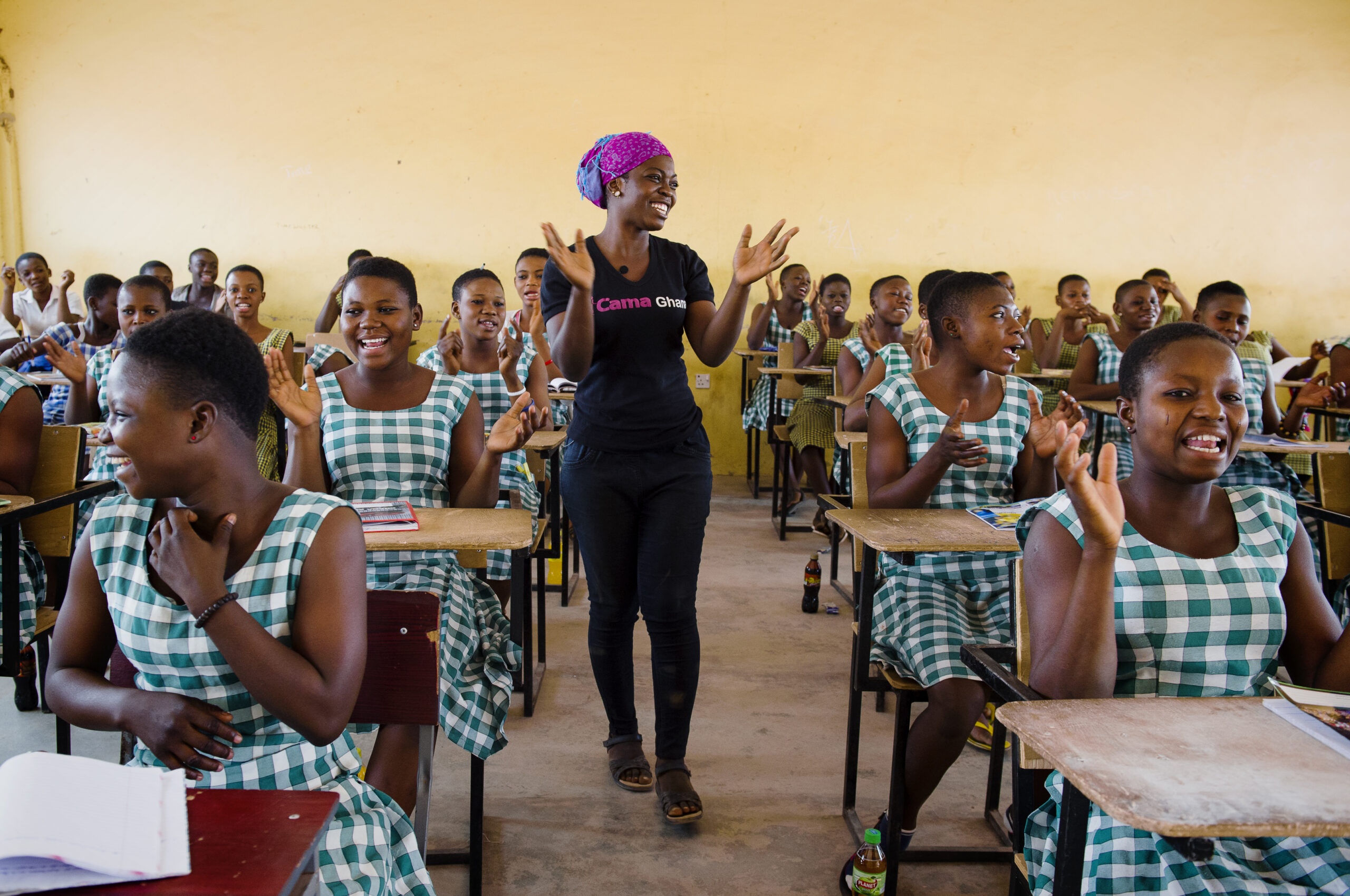
Poverty and hunger, long distances to schools, and other challenges often make it difficult for girls in rural sub-Saharan Africa to get an education. Camfed, the Campaign for Female Education, has been working to help them overcome those obstacles since the nonprofit was founded in 1993.
But the organization has something important now that it didn’t have then: the Camfed Association, a network of 178,000 women who were educated with the organization’s help. Members of the association support Camfed financially, mentor today’s students, and act as role models. On average, the annual donations that each association member gives support three girls’ schooling for a year.
It means everything to be able to help the next generation of girls succeed, says Faith Nkala, the organization’s national director for Zimbabwe and a founding member of the Camfed Association.
“We are using our own personal experiences really to then say, how can we make it better for our younger sisters who are also coming through the system?” she says. “We are proud of this because we are not keeping the education which we’ve got to ourselves. We are actually multiplying it.”
Camfed, which works in Ghana, Malawi, Tanzania, Zambia, and Zimbabwe, recently won the $2.5 million 2021 Conrad N. Hilton Humanitarian Prize. The award comes at a critical time for the organization. Camfed has ambitious plans to serve more girls and to start a program to help graduates start climate-smart agricultural businesses. But at the same time, leaders worry that the health and economic disruptions caused by the pandemic could stall — or reverse — progress in girls completing their education.
“Having additional resources to continue to support more girls with all these emerging needs and the magnified barriers during this time of Covid is just immense,” Nkala says of the Hilton prize.