New Program Trains Athletes in Advocacy and Philanthropy

By Emily Haynes
Senior Editor, Nonprofit Intelligence
March 8, 2021 | Read Time: 4 minutes
Players on the Indiana Fever WNBA team are learning how to play a new position: advocate. That’s thanks to the new Athlete to Advocate program at the Indiana University Lilly Family School of Philanthropy designed to train professional athletes in how to choose a cause they care about and inspire people to support it. The first of five three-hour classes began last month, with seven Indiana Fever players in attendance.
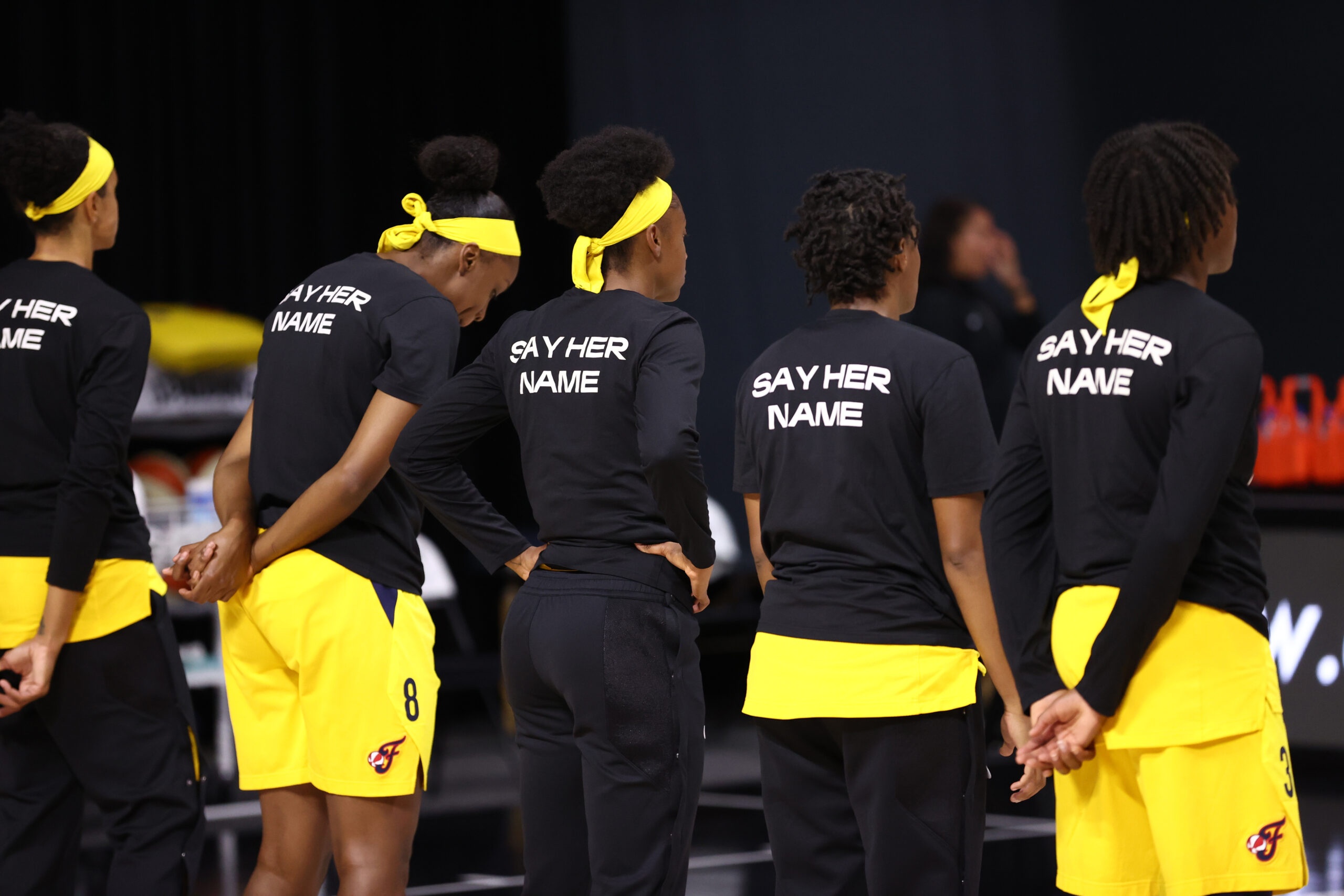
The Fever is no stranger to advocacy. In 2016, the team was the first in the nation to have all players kneel in protest of racial injustice during the national anthem. This summer, the team protested police violence by participating in the basketball league’s Say Her Name campaign, in which the athletes warmed up in jerseys emblazoned with the slogans “Black Lives Matter” and “Say Her Name,” in reference to Breonna Taylor and other Black women killed by police. The team also raised money for the Central Indiana Community Foundation and the Women’s Fund of Central Indiana by auctioning the custom-designed basketball shoes players wore during games and launching a giving challenge in which fans pledged donations for every rebound the team made.
Those efforts came out of discussions the Fever had last summer about how players could use their visibility as professional athletes to effect change, says Tamika Catchings, general manager of the team. Catchings spent last season with the team in the “wubble,” the sealed-off WNBA bubble where the league lived and played under strict Covid-19 precautions in Bradenton, Fla. She kept the team’s president, Allison Barber, updated on the players’ conversations about their advocacy efforts.
“Being a part of it is one thing, but really being able to understand the why it is another,” Catchings says. Barber, who has degrees in elementary education, wondered whether they could craft an educational program to train the players on how to be even more strategic about using their voices for change and raising money for causes that matter to them.
Barber connected with academics at the Lilly Family School, and — with the help of funding from the health-insurance company Anthem — the Athlete to Advocate program was born.
Baseball player Roberto Clemente, Olympic track stars Tommie Smith and John Carlos, and tennis pro Althea Gibson are just a handful of the well-known athletes who historically used their fame to advance social good. “We’ve seen professional athletes really use all of their resources — their money, their time, their voice, and their platform,” says Una Osili, who directs the Mays Family Institute on Diverse Philanthropy at Lilly School of Philanthropy at Indiana University. But this is an especially important time for many professional athletes, she says. Social media enables athletes to reach more people at a time when the nation is focused on health disparities and racial injustice.
“Many of them are involved in philanthropy; they have foundations,” she says. “But they’re also realizing that they have a voice and that there are a lot of people that they can influence and impact and they can move the needle on issues that matter to them.”
That’s the case for the Indiana Fever, whose players are already involved in charities, and at least one team member, Tiffany Mitchell, already runs her own foundation. Catchings, who is joining the players in the Athlete to Advocate program, is herself a former Fever player and founder of the Catch the Stars Foundation, which provides fitness, literacy, and mentoring programs to young people in Indianapolis.
The Athlete to Advocate program, which is taught by faculty and staff from the Mays Family Institute on Diverse Philanthropy and other departments within the Lilly Family School, is a crash course in savvy philanthropy and advocacy. “Because the athletes are so active and involved, this only enhances the tools that they already have,” said LaKoya Rochell, director of programs at the Mays Family Institute and one of the course instructors.
Lessons seek to expand players’ concept of who a philanthropist is and widen their understanding of how to advance justice and give back to their community. They dive into lessons on leadership, mass communications, social-media advocacy, and fundraising. Other lessons will focus on diversity, inclusion, and racial and gender equity. The team also plans to put their lessons into practice by volunteering and advocating for Indiana charities.
After just one lesson, Rochell is inspired. “You can just see the passion that they have and the legacy that they truly want to leave behind — not just on the basketball court but also off,” she said.
Rochell and her colleagues hope to expand the program to other professional athletes after completing the pilot course with the Fever.
Catchings, for her part, hopes that the lessons learned in the program will set her players up for a lifelong commitment to philanthropy and advocacy. “Even post-basketball, this is something that you’ll always have.”