Championing Capitalism and Conservative Donors: A Q&A With Philanthropy Roundtable’s New CEO
Christie Herrera, who started working at the organization in 2019, has long advocated to lawmakers on conservative issues.

By Jim Rendon
Director, Fellowship Program and Impact Journalism
October 26, 2023 | Read Time: 9 minutes
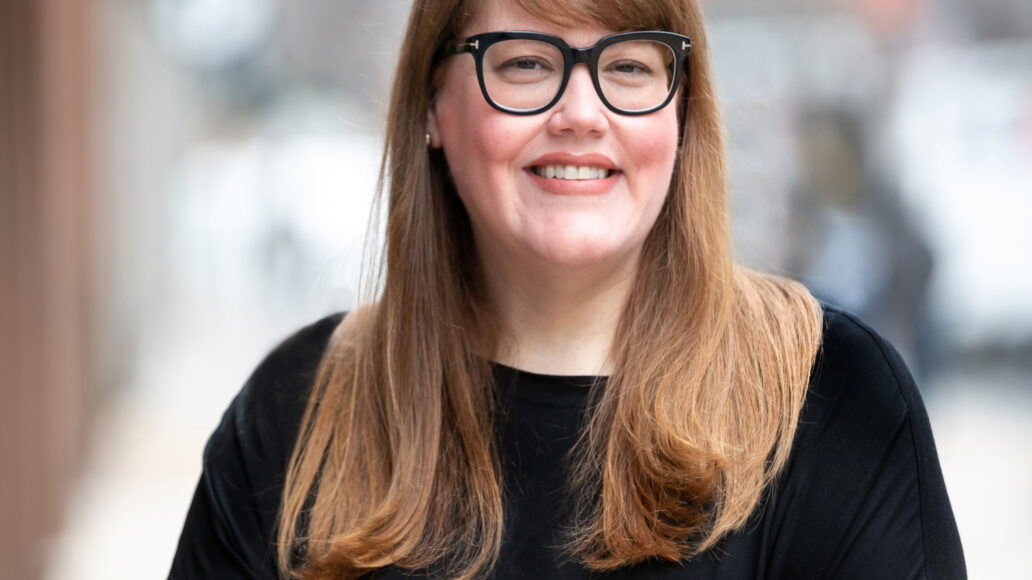
The Philanthropy Roundtable has appointed Christie Herrera as its new CEO. A stalwart of conservative philanthropy, the Roundtable provides guidance on grant making, advocates for fewer new regulations on foundations, and champions rules to protect donor privacy.
“I’ve worked with nonprofits my entire career, both in policy and advocacy roles and also with nonprofits on the ground who want to see great policy enacted because it directly affects what they do,” Herrera says. “I feel like I am more than prepared to step into this role and continue the work that I’ve been doing in the charitable sector.”
Herrera started working there in 2019 under then-CEO Adam Meyerson. She oversaw the group’s philanthropic programs and policy work as well as marketing and communications and since June has served as its interim leader.
Before joining the Roundtable, Herrera had a long career advocating to lawmakers on conservative issues. At the Foundation for Government Accountability, she advocated to stop the expansion of Medicaid. The organization has been in the news lately for efforts to weaken child-labor protections. Herrera also worked for the American Legislative Exchange Council, another organization that advocates for conservative policies and helps state legislators draft legislation. It has advocated for stand-your-ground laws and criminal penalties for those engaging in some forms of climate protest.
The Roundtable has long championed donor privacy and freedom, issues that groups from many ideological backgrounds rally behind. In August, the Republican-led House Ways and Means Committee announced its intention to more tightly regulate nonprofit political activity. It is also weighing whether the IRS should require greater disclosure of donors — moves that the Roundtable has opposed.
On her own time, Herrera sits on the board of two 501(c)(4) political organizations, Independent Women’s Voice, which works to engage more women in public-policy advocacy, and People United for Privacy, which advocates for donor privacy.
Herrera takes the helm after a period of significant change at the Roundtable. She succeeds Elise Westhoff, who left the group in May to spend more time with her family. Westhoff, who took over the Roundtable in 2020 following the adoption of a new strategic plan, brought on a lot of new staff members and changed the organization’s structure and direction.
Westhoff alienated some longtime members, who left the organization over her criticisms of “woke philanthropy” and diversity, equity, and inclusion efforts at major foundations. During her tenure, the organization launched its True Diversity campaign, which promotes a definition of diversity that considers not just gender, race, and religion but also the individual experiences and characteristics that make people unique. One of the Roundtable’s board members, businessman Vivek Ramaswamy, has appeared in a video for the campaign. He is also a Republican presidential candidate.
Westhoff said that taking those positions helped the group appeal to new members, and many supporters defended her critiques as part of a necessary debate about the direction and role of philanthropy. Contributions to the Roundtable increased during her tenure.
Herrera sees no reason to back away from Westhoff’s public critiques of progressive grant makers. Yet she is also proud that she’s been able to work with groups from an array of perspectives on issues that she says are fundamental to the health and future of philanthropy.
We spoke with Herrera about her experience as a policy advocate, the challenges that she says are facing philanthropy, and her plans for the future.
This interview has been edited for brevity and clarity.
You’ve been at the Roundtable since 2019. What are you most proud of so far?
I joined the Philanthropy Roundtable in 2019 under Adam Myerson. I’ve been able to work with the past two CEOs of the Roundtable and really see the organization take off.
Philanthropic freedom is the reason that I came to work at the Roundtable. It’s something that’s very important to me. With all of the threats we’re seeing to charitable giving, I think philanthropic freedom is what I’m most proud of. We’re at the tip of the spear at the Roundtable when it comes to those issues.
Were there particular issues related to philanthropic freedom that you worked on?
We have seen threats from the left and the right when it comes to donor disclosure. And one of the things that we’ve been able to do at the Roundtable is really reach across the aisle and make strange bedfellows — partnerships with groups like the ACLU and Planned Parenthood, as well as the U.S. Chamber of Commerce and right-to-life groups. All of these groups are working in concert to protect donor privacy.
Your predecessor implemented big changes at the Roundtable. Do you see this as another time of change for the organization?
I’ve been here for exactly two minutes, so more to come on that. In taking over the Roundtable in this new era, I feel like the Roundtable is going to do what it’s done over the past 30-plus years. We are the only home for donors who share our values. We are still going to be passionate about philanthropy and optimistic about philanthropy. We’re going to be passionate about values-based giving and philanthropic freedom and philanthropic excellence. The Roundtable that the sector has come to know and love will be the Roundtable of the future.
Right now, what are some of the biggest issues that you are focused on?
Philanthropic freedom at the federal level and the state level — we see threats to giving all over the place, and they come from left and right so it’s a bipartisan issue.
True Diversity is something that we’ll continue to work on. We’re very proud of this initiative to give people an alternative to some of the DEI proposals that are out there in the charitable sector.
Philanthropic excellence is something that will continue to be a big part of what we do. The nuts and bolts of grant making have been lost with some of the peers in our sector with the increased focus on social issues.
We really think it’s important to show our members how effective they can be in their charitable giving and answer some of those operations and governance questions for them. Our donor community puts our values at the center of their giving, and we will continue to find the most effective organizations on the ground that put our values at the heart of what they do.
The Roundtable opposes the House Ways and Means Committee’s interest in tighter regulation of nonprofits’ political activity and increased disclosure of their donors. Can you elaborate on your concerns?
It speaks to the larger concern of donor disclosure from Republicans and Democrats. We have seen this crop up at the federal level. We’re seeing states across the country introduce donor disclosure measures. We’re going to continue to be at the tip of the spear when it comes to fighting these proposals.
Do you think that the board, in hiring you, was looking for somebody with a strong advocacy and policy background?
That’s a question for our board. But I’ll tell you that philanthropic freedom is what makes charitable giving possible. If donors are not free to give how, where, and when they choose, all of the work that they do in mental health and veterans and K-12 doesn’t matter. It’s really thing one for the entire sector.
You sit on the board of two 501(c)(4) political organizations. What have you learned with those groups that you can bring to the Roundtable? And do you have any concerns about your involvement with those political groups?
The issues that People United for Privacy and Independent Women’s Voice work on are personal passions of mine. And I think they are passions for a lot of people. Women in leadership is something that the sector has been grappling with, and IWV does a great job in elevating women’s voices. On donor privacy, I think it’s important for right, left, Republican, and Democrat.
Some of the work that I’ve been able to do here at the Roundtable and through my board membership at People United for Privacy speaks to that. The Roundtable is a 501(c)(3) organization. We don’t engage in political activity. We don’t take a position on candidates or elections. These are personal passions of mine. But the issues are universal.
Your predecessor, Elise Westhoff, was criticized for her outspoken takes on what she termed “woke philanthropy.” Will you be as outspoken about progressive philanthropy?
Absolutely. I feel like that’s our job, to not only stand up for the charitable sector and the donors that share our values but also for philanthropy in general.
Coming into this field four-plus years ago, philanthropy seemed to be having an existential crisis. Think about the attacks on the capitalism that fuels the generosity that makes philanthropy possible, the attacks on the pluralism of the charitable sector, and the diversity of organizations that exist in it.
Philanthropy is our best hope for a vibrant civil society, for us to help people in need, for us to solve society’s biggest problems. We should be protecting it and defending it and be happy warriors for philanthropy. That’s what I hope to do in this next era.
Do you see any conflicts between Vivek Ramaswamy’s presidential campaign and membership on your board?
We’re a 501(c)(3) organization. We don’t engage in political activity. We don’t take a stand or position on candidates or elections. Vivek is a friend to the Roundtable. We wish him well, and he’ll remain on our board.
Would you like to hear him talk more about philanthropy on the campaign trail?
I’m not really following Vivek’s campaign. It seems like there are a lot of people in the field, and I’ll be interested to hear if any of them talk about philanthropy.
When you think about your future at the Roundtable, do you have a top priority? Is there a particular area that you really would like to focus on?
That’s for our board and staff to decide. I’m new in this position, so stay tuned on the future. But we are going to continue to be who we’ve been for the past 30 years. We are going to be a home for the donors who share our values. We’re going to be a place that stands up for philanthropic freedom, and we’re going to be a connector to donors who want to learn about great groups on the ground.