Fundraisers Explain Their Big Move to a Small Nonprofit

By Drew Lindsay
Senior Editor, Special Projects
July 6, 2016 | Read Time: 4 minutes
Two seasoned professionals reflect on the deep satisfaction they found after swimming against the career tide.
An Infinite Universe of Donors
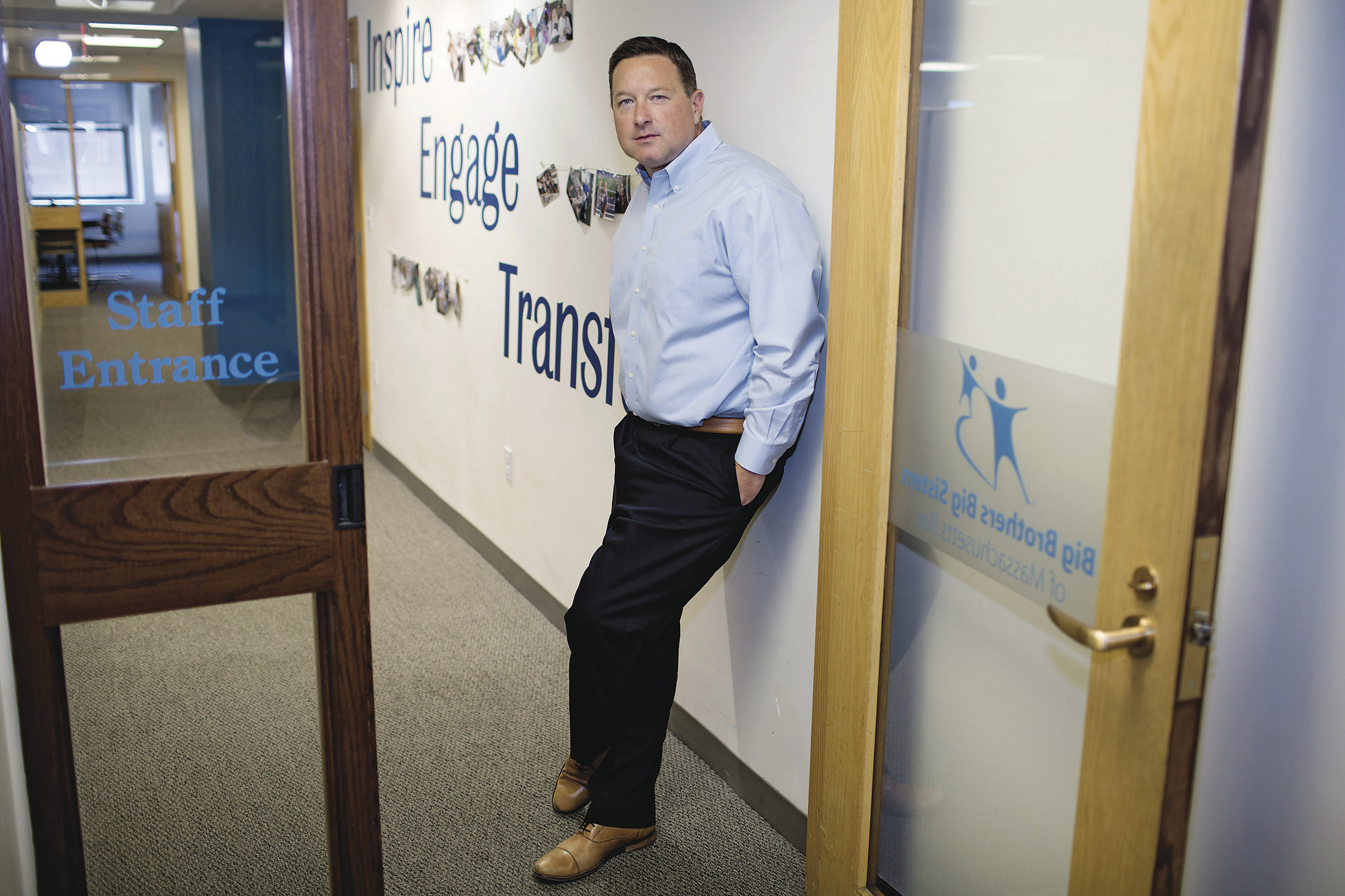
When he was first courted by the Boston-area affiliate of Big Brothers Big Sisters, Mark O’Donnell said no. A top fundraiser at Northeastern University, Mr. O’Donnell routinely landed multimillion-dollar gifts. Why would he consider leaving to run the small development office of a struggling charity? “My ego didn’t even allow it,” he says.
But his suitors persisted; an organization doing good work needed his help. And he had begun to feel too caught up in the chase to raise the most dollars. So he jumped.
Almost immediately, the new job challenged Mr. O’Donnell’s ideas of how you raise money. In more than a decade of work at three colleges, he had always been given a prospect list and told to “knock the pins down, from richest to poorest.” But Big Brothers Big Sisters did not have a built-in constituency. Donor fatigue had set in with many supporters. His job, it became clear, was to create webs of influence. He would knock on doors and network his way to a healthy base of donors.
A pro at reeling in megagifts, Mr. O’Donnell adjusted to his new task of raising scores of donations of $10,000 or $20,000. “If you’re a good fundraiser at a university, you can make up your entire year with five good prospects because you have the ability to close a $20 million gift,” he says. “People don’t give $20 million to small organizations.”
“It’s the hardest job I’ve ever had,” he adds.
Still, the crucible has left him a better, more entrepreneurial fundraiser. He sees his donor pool not as a defined list of alumni but as an almost infinite universe. Getting in the door is hard, but he likes the creative challenge of finding “points of leverage” — a donor who’s a colleague or friend, for instance — to get access. “My network has increased thirtyfold,” he says.
When he decided to leave Northeastern five years ago, Mr. O’Donnell says, some colleagues tried to persuade him he was making a mistake. “They laughed at me,” he says. “They said I was killing my career.”
Ironically, he believes working for Big Brothers Big Sisters has made him more marketable. “Put me in any nonprofit that needs money and I’ll figure it out,” he says. “I’m not afraid of any job.”
‘Something Different Every Day’

Greg Cole had only a short stay in what would be paradise for many fundraisers. It was January 2013 when he arrived at the Atlanta headquarters of Habitat for Humanity International, one of America’s most beloved nonprofits. His seemingly plum assignment: raise money from potential major donors.
Yet within four months, Mr. Cole left, signing on with a tiny charity that works with families in a low-income Atlanta neighborhood. He didn’t make the move lightly — he had worked for Habitat’s Jacksonville affiliate previously and loved the organization — but he chafed at life in a big shop. He spent the bulk of each day working the phones to establish relationships with prospects mined from direct mail. “Having only one thing to do all day just drove me nuts,” he says.
The work also felt impersonal compared to his experience in Jacksonville. “At the affiliate, we were doing things to strengthen the community in which I lived. I was part of doing something that I could see and touch.”
In his new post at Emmaus House, which runs education and social-service programs in Atlanta’s Peoplestown neighborhood, Mr. Cole handles both communications and development, including the annual fund, grant writing, and a gala. “It’s literally something different every day,” he says. “To me that’s fun. I feel like I get to use the full range of skills that a fundraiser needs.”
He also works with the charity’s executive director and board to develop strategy — something the average gift officer at a large organization wouldn’t do. Best of all, Mr. Cole says, he’s back at a local charity and feeling the power of its work daily.
“Sometimes I think, You probably could be somewhere bigger and making more money,” he says. “But then I wouldn’t have this sense of rootedness in a community-based organization. The people that we serve — you see them on the street, you see them coming in to our help center. There’s a real sense of connectedness to the mission.”