March 2, 2016 | Read Time: 6 minutes
As a two-year, $30 million renovation of the Smithsonian Museum’s Renwick Gallery wound down, curator Nicholas Bell and his colleagues worked furiously to pull together the reopening exhibition.
The construction fencing was cleared away. Commissioned works from nine contemporary artists were installed. Tickets for two celebratory galas sold apace.
About a month before the November 13 reopening, a staff member showed Mr. Bell an example of signs to be placed around the gallery space. It read “photography permitted.”
“I just thought the word ‘permitted’ seemed kind of begrudging, almost like ‘You can take a photograph. It’s not like we’re happy about it, but I guess you can,’ ” Mr. Bell said.
Was there a friendlier way to convey that photography at “Wonder,” as the exhibition is titled, was allowed?
The 36-year-old curator and his staff changed “permitted” to “encouraged.”
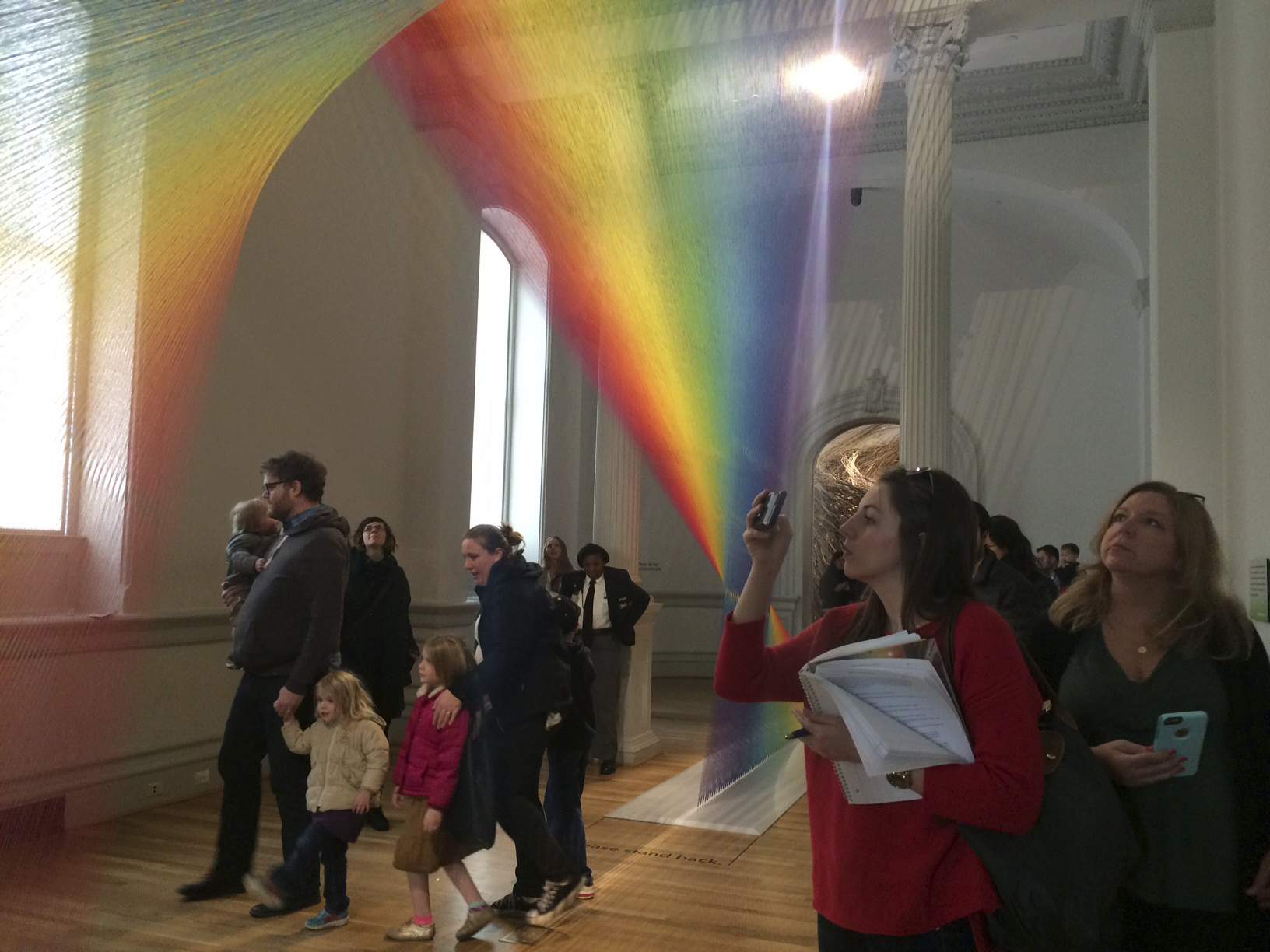
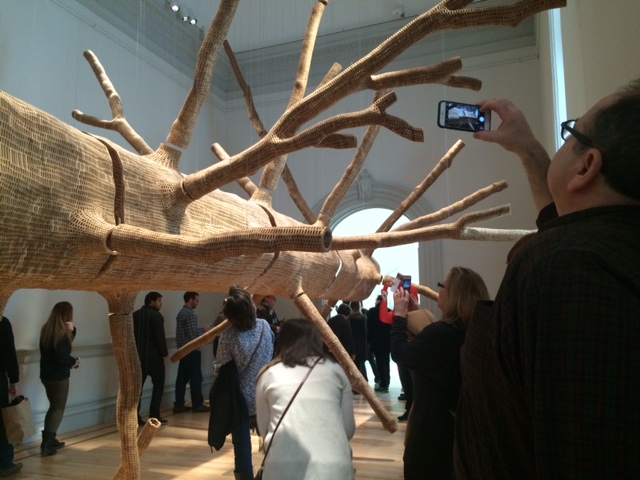
That verbiage, combined with art installations so vibrant, so textured, and so colorful that they all but goad visitors to break out cameras, proved social-media gold.
The gallery, a branch of the Smithsonian American Art Museum located in a historic 19th-century building 100 yards from the White House, has now been tagged nearly 40,000 times on photo-sharing site Instagram, according to spokeswoman Courtney Rothbard.
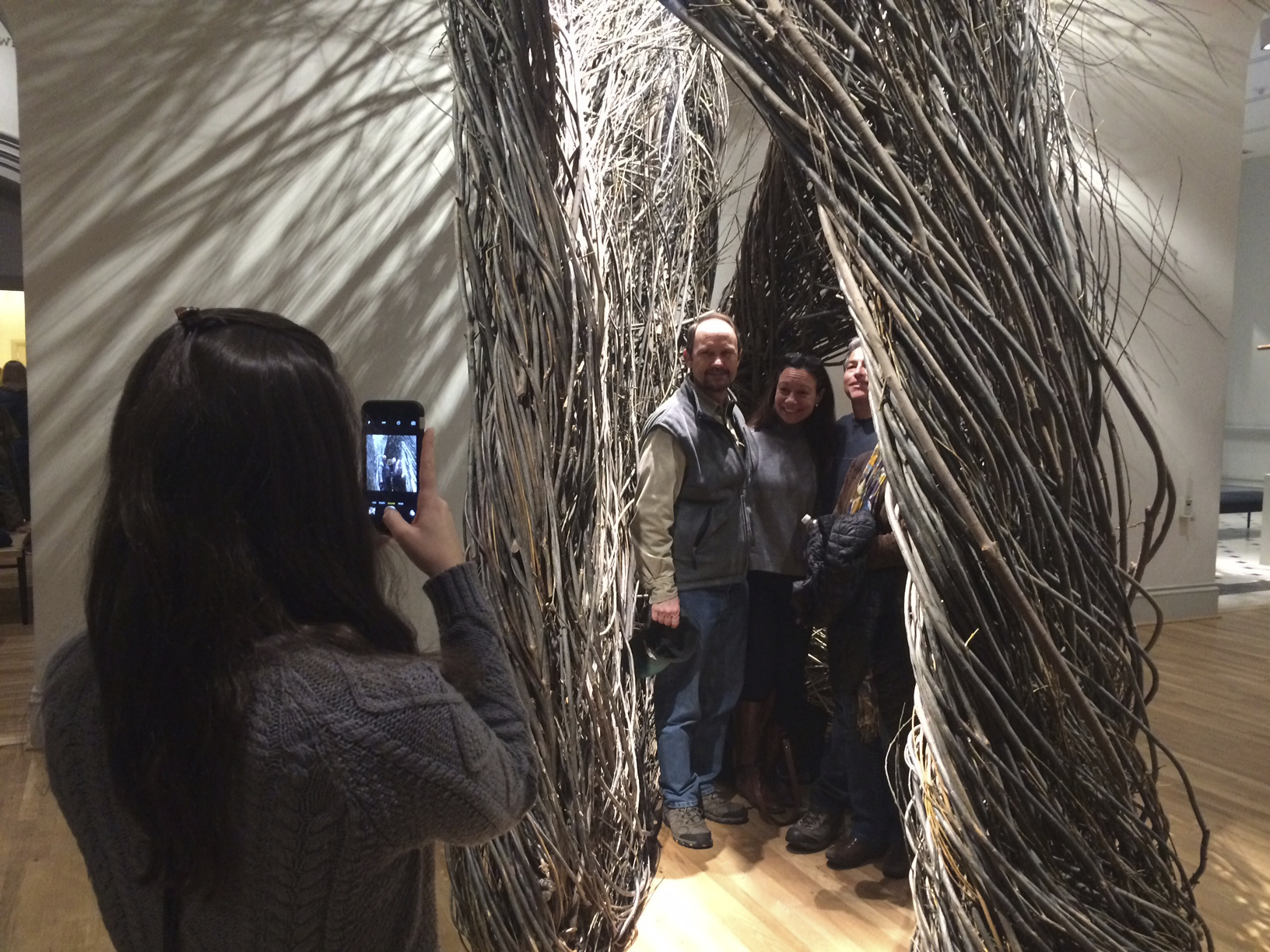
Under hashtags including #renwickgallery, there are photos of friends peeping between the spindly branches of human-size nests that look like they could have been formed only by the Wizard of Oz tornado. There are images of babies posed amid colorful threads strung from floor to ceiling in imitation of a rainbow. There are even photos of museumgoers mugging with the “photography encouraged” signs.
“We knew the building looked great,” Mr. Bell said. “We knew that the artwork looked great. But we never could have anticipated the social-media response.”
Attendance Soars
The publicity sent attendance soaring nearly 1,000 percent. Before the Renwick closed in 2013 for renovations, it saw about 3,000 guests a week, enough to make it one of the top 50 most-visited museums in the country, according to Mr. Bell. Since the November reopening, it is seeing about 30,000 visitors weekly.
The gallery matched what was its annual visitation average of 150,000 just six weeks after it reopened its doors to the public. Total visitation has topped 300,000. The Renwick now has a line every weekend and holiday. On Martin Luther King Jr. Day, for example, there were 1,500 people snaked around the block by the time it opened at 10 a.m.
Mr. Bell is both charmed and baffled by guests’ willingness to queue up. It is a first for one of his exhibitions.
“When do you see people wait in line to go to an art museum?” he said. “Maybe if King Tut is in town.”
New Word of Mouth
Renwick staff members sometimes walk up and down the line to chat with people about what brought them to the Renwick. In the first few weeks, many attendees cited coverage in traditional media.
That soon changed to “people saying, ‘I’ve seen this all over my Instagram, I had to see it for myself. I’ve seen it all over Facebook. I’ve seen it all over Twitter. I wanted to know what it was about,’” Mr. Bell said.
Mr. Bell, whose formal title is the Fleur and Charles Bresler Curator-in-Charge of the Renwick Gallery, did not have an Instagram account before the social-media site thrust his work into the spotlight. Now the self-described “slow adopter” of technology logs on every day to read comments about “Wonder.” In some ways, such sites have become the new “word of mouth,” he said.
“People are really feeling a strong personal connection with the show, and with the museum, and they are looking for ways to express that and share it as widely as possible, and so they have decided to do that online.”
Toilet-Paper Shortage
While hoards of visitors might seem like any curator’s dream, the success of “Wonder” has not been without headaches. Mr. Bell, who in addition to being the subject expert at the Renwick is the administrative head, drew up his budget based on pre-renovation attendance numbers.
As the crowds amassed, he had to go to the Smithsonian to request more security and maintenance. He hired staff to direct what is now one-way traffic through the gallery on the weekends.
“We went through 18 months of toilet paper in two months,” Mr. Bell said.
Still, they are “the right problems to have,” he said.
The success of the reopening has delighted its big donors, who matched $15 million in public funds to pay for the renovation.
Much of the private fundraising was completed before the work began, and the pitch was built around the history of the Renwick Gallery building itself. It was the first in the United States constructed specifically to house art. But it has also been a courthouse, and the epicenter of a power struggle between President Kennedy and first lady Jackie Kennedy. (He signed an order for its demolition; she battled to have it preserved.)
“It was really this history of this building that drove our fundraising efforts,” Mr. Bell said. “I give all of the credit to my director Betsy Broun, at the American Art Museum. She started traveling the country telling people this history and saying, ‘This place has this incredible auspicious tale.’”
Younger Audience
The museum hosted two ticketed galas in November as part of the reopening celebration.
“Both parties sold out and a huge percentage of the buyers were young professionals, which was a new audience for the Renwick,” Donna Rim, chief development officer for the Smithsonian American Art Museum and Renwick Gallery, said in an email.
The museum is working to engage those attendees through a new membership group for young professionals called SAAM Creatives. Memberships are $250 for individuals and $400 for a couple.
Attendance has increased across all demographic groups, Mr. Bell said.
Orchestrating the publicity that the Renwick has seen on social media in recent months would be difficult, Mr. Bell said. He does not believe museum administrators should design programming to evoke such a public response.
“What I do think all of us can do quite easily is change our tone. When we talked about the photography signage, that was a very simple solution that has had a huge public impact. It has changed the way people experience the museum and it didn’t cost us a thing.”