Moore Foundation’s New Leader Aims to Calm Staff Turmoil After Tough Year

By Alex Daniels
Senior Editor, Foundations
October 27, 2015 | Read Time: 5 minutes
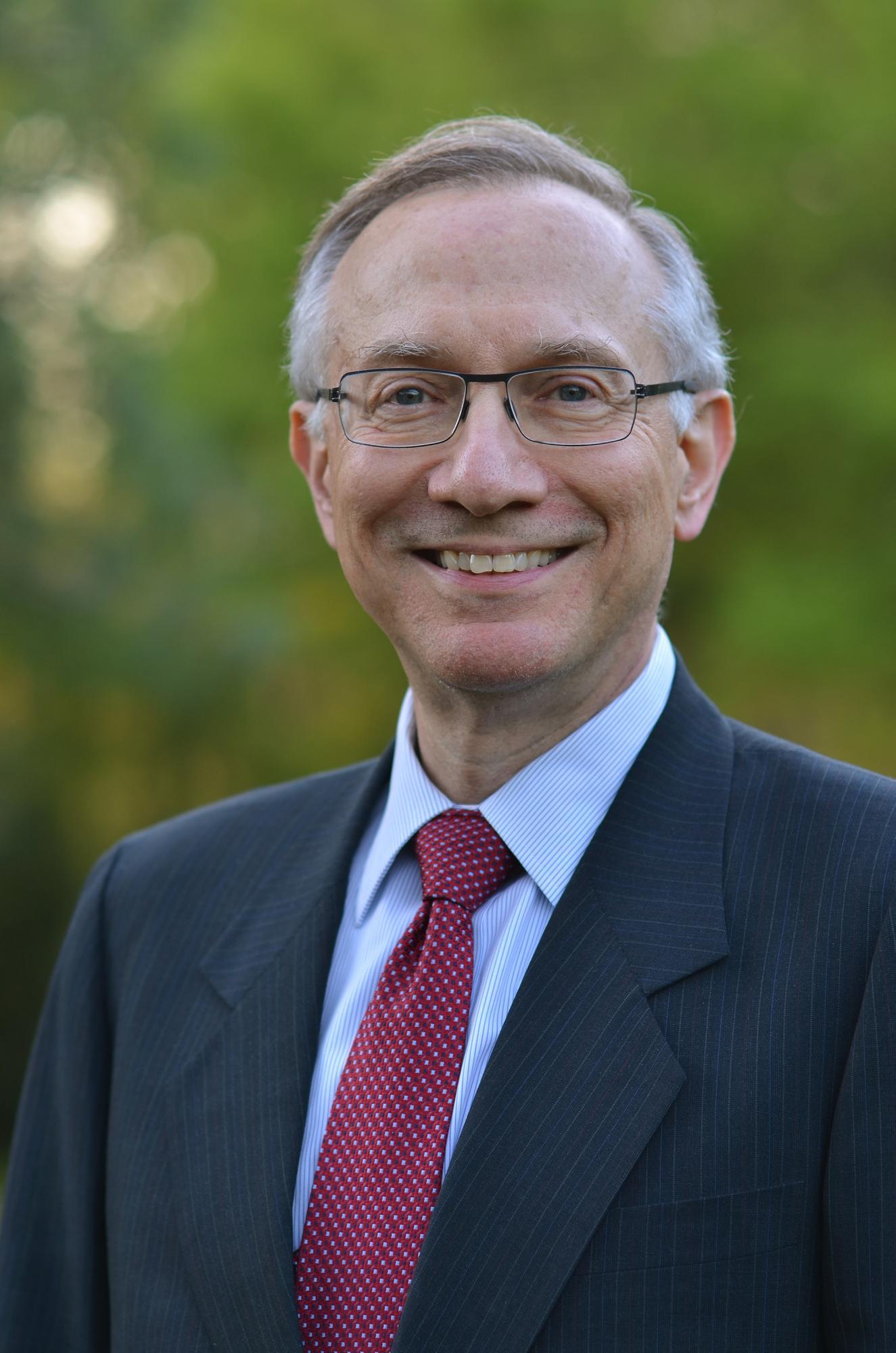
Following a year of leadership upheaval, the Gordon and Betty Moore Foundation last October tapped as its leader Harvey Fineberg, a public-health expert and former chairman of the board of the William and Flora Hewlett Foundation. During a visit this week to the Chronicle’s offices, Dr. Fineberg reflected on his experience since he took the helm in January at Moore, a $6.4-billion grant maker that focuses on environmental conservation, science and health, and projects in the San Francisco area.
Dr. Fineberg talked about his working relationship with the foundation’s chairman, Mr. Moore, the Intel co-founder who came up with “Moore’s Law,” which predicted the rapid increase in computer chip speed and memory. The reticent Mr. Moore, his foundation chief says, is a “quiet revolutionary. He just did things, he never proclaimed things. I’ve never interacted with someone who offers more value per word.”
The following excerpts from the conversation with Dr. Fineberg have been edited for brevity and clarity:
The Moore foundation experienced 20-percent staff turnover last year and an unexpected leadership change. Why did you decide to take the job?
It’s true the foundation had its difficulties in leadership and management. I came in after there was an abrupt exit and an interim president. I’ve learned over the years that if you have to start a job, it’s better to come in when it’s difficult than when it’s going great, because if it’s going great you can only make it worse. If there are difficulties, you have a chance to improve things. What I’m working on is making it a place everybody can’t wait to get to and relishes being part of the team. It’s almost all upside potential.
When employees leave for the right reasons, it is always a good thing. But there are reasons that are not good. You’re frustrated. You can’t accomplish what you want. You can’t stand the people you’re working with. Your boss is treating you like dirt. If those are the reasons you’re leaving, it’s not good. We have an opportunity with staff to improve.
You’ve dramatically cut down the foundation’s reliance on consultants. Why?
I’ve been sort of a tiger on this. I believe consultants can be extremely helpful when used for the appropriate purpose.
One for us is external evaluation. When you are invested in a program for five or eight years, you are not in a good position to do an independent evaluation of how you are doing. It’s like grading yourself.
Second, there are times when you may be exploring a topic that’s sufficiently remote from the expertise you have at the foundation and where you’re sufficiently uncertain as to whether it will become a part of your portfolio. You’d be better off employing a consultant who already has deep substantive expertise and can carry out the task relatively efficiently.
Where I think they make less sense is when you use consultants as simple extensions of your staff, because you’re losing the opportunity to gain that human capital and experience internally.
Moore is the U.S. partner in a five-nation consortium constructing the Thirty Meter Telescope in Hawaii. Why support such a big project, and how do you respond to criticism from many Hawaiians that the project is being built on sacred ground?
Will the world really be a worse place if we fail to learn more about the origins of the universe? When you see more distant, more remote light, what you’re really seeing is back further in time. So does it matter that we can or can’t get back to the beginning of the universe? That is what humanity is distinguished by: its curiosity, its quest for knowledge, its desire to know and understand what nature is and how the natural world came to be the way it is.
There are already eight-plus telescopes that have been built since a century ago on the mountain, with the endorsement and encouragement of the then-king of the Hawaiian people. The Polynesians who discovered and traveled to Hawaii had to navigate by the stars, so they were already using astronomy.
Culturally, its complicated. There’s a movement of resistance to doing anything on this mountain that is different than a spiritual recognition of the mountain. It’s the premier place on the planet to accomplish this scientific objective, but it does have to be done in accommodation with both the culture and the law in the state of Hawaii. It may prove to be not feasible in the long term, but we hope it will be.
The Moore foundation supports conservation projects and, at the same time, invests part of its endowment in oil and gas firms. What is your opinion of lining up investments with the mission of the foundation?
It’s become a topic of great currency among foundations. The philosophy at the Moore foundation traditionally has been that the job of the investment group is to make the money, and the job of the program team is to spend the money. We have not taken as part of our current strategy for investment decisions to also help accomplish program objectives.
Each board has to think about it both in the broad and specific senses of what its programs are and what its philosophy is and how it wants to balance the objectives of perpetuity and capacity to do good against the sentiment about the nature of what is or is not an appropriate investment. That is a board-level decision.
What is it like coming from the Hewlett foundation, where you were chairman of the board, to Moore?
The Hewlett foundation had a predominance of nonfamily members on the board who were often unsure what Bill and Flora Hewlett would have wanted.
At Moore, where the founders are still active, you hear directly from them about their interests and values, not just what they’ve been remembered for. To the credit of the founders, Gordon and Betty Moore, they went a step further and put their intent down in writing. I believe this kind of document will stand the test of time.
Correction: A previous version of this article incorrectly stated the size of the foundation, which is $6.4-billion.