

August 31, 2015 | Read Time: 2 minutes
It’s a question that would alarm most museum leaders: “Did you lose a work of art?”
But when a concerned woman called the Detroit Institute of Arts to ask that question, Kathryn Dimond, director of community relations, was thrilled. She knew the caller was referring to one of 40 replicas of iconic paintings the museum had recently installed in communities throughout southeastern Michigan as part of its Inside Out program.
The project, which began in 2010, aims to “show that the Detroit Institute of Arts is fun, help people make a personal connection in a place familiar to them, and surprise and delight them. That all happened, and then more,” says Ms. Dimond.
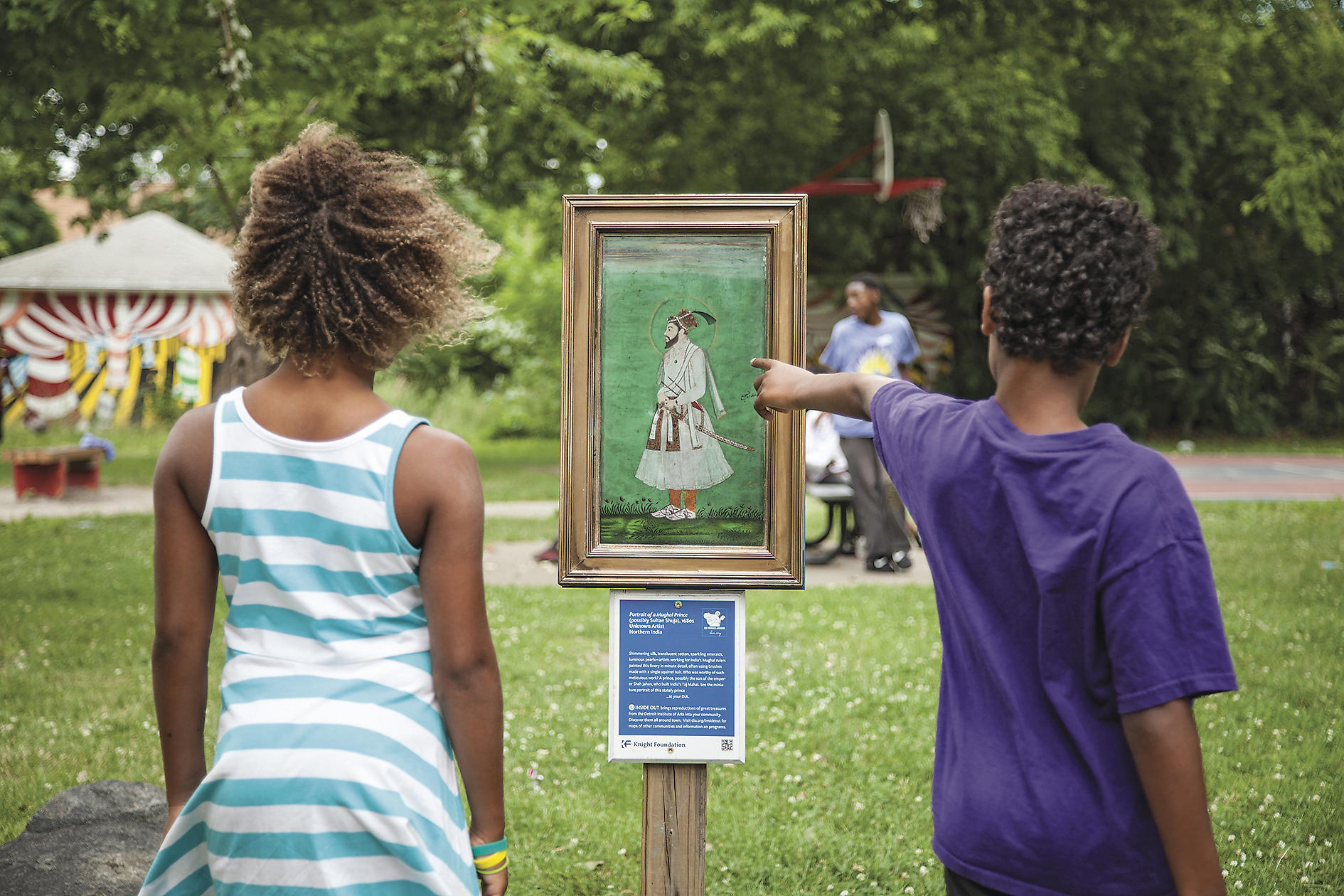
It was so successful that the museum has repeated the Inside Out program every year since. The outdoor exhibits take place twice a year for several months at a stretch. Each time the artworks appear at different locations, like “Portrait of a Mughal Prince,” by an unknown artist from India, which was placed in a northwest Detroit neighborhood (below).
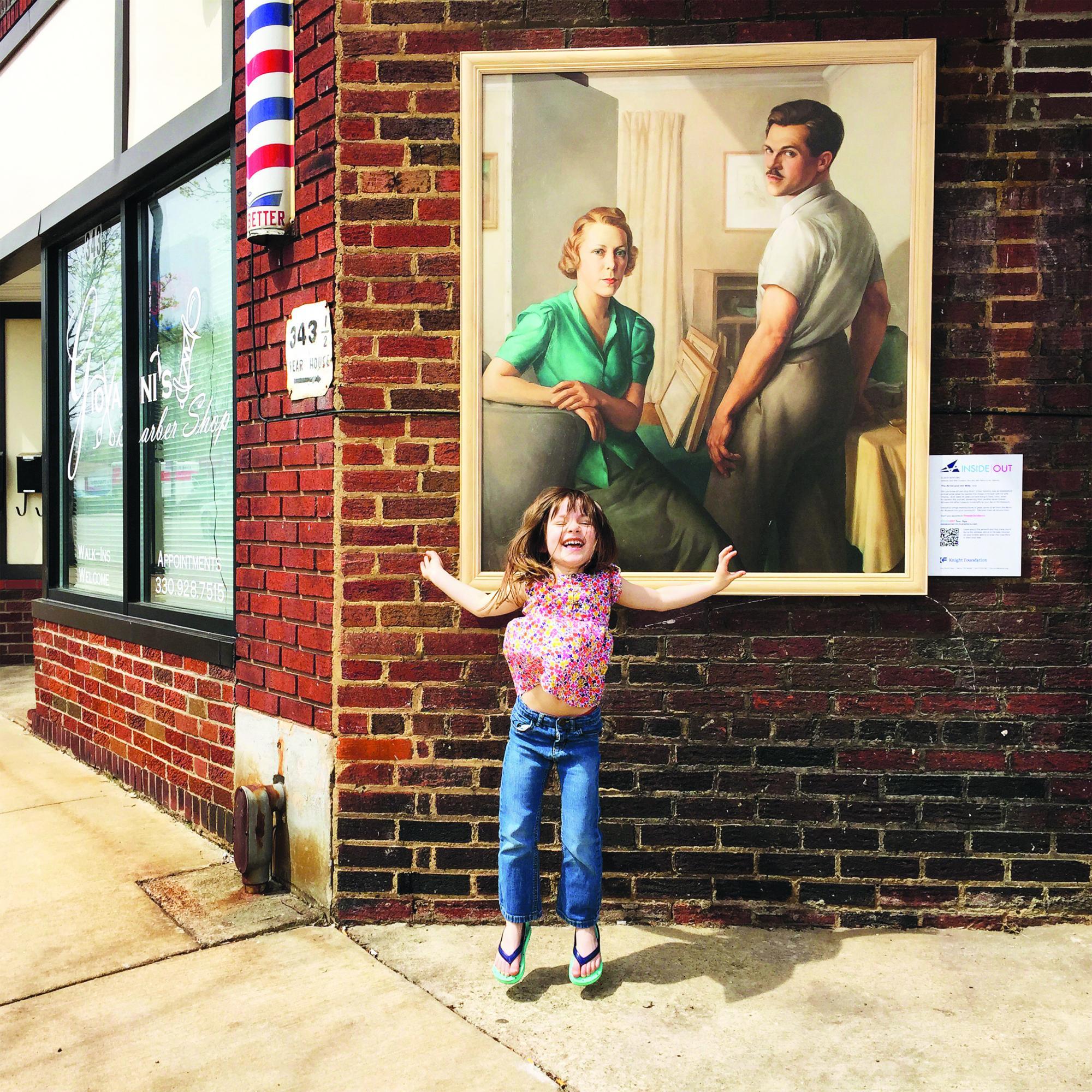
In June, the John S. and James L. Knight Foundation announced a $2-million grant over three years to support the effort in Michigan and expand it to the Pérez Art Museum Miami, the Philadelphia Museum of Art, and the Akron Art Museum, which displayed “The Artist and His Wife,” by Elmer Novotny, on the wall of a barbershop (at right).
Communities have embraced the paintings by creating related walking and biking tours, holding open-air painting classes, and requesting paintings in specific locations, such as farmers markets.
“Using art to draw attention to community resources has been really profound,” Ms. Dimond says. “People say things like, ‘I never realized how beautiful this old building is until this painting made me stop and look at this space.’ ”
The program has made artwork more accessible to a broader audience, says Mark Masuoka, executive director of the Akron Art Museum.
“People feel the museum has virtually moved into their neighborhood,” he says.
And they quickly get attached to the artworks, he adds. When a replica is removed at the end of the three months, people ask where it is. “It’s amazing how much ownership people pick up in a short period of time.”




