Pandemic Lowered CEO Salaries at Big Groups Initially — but Fierce Competition May Be Sending Them Back Up

By Sara Herschander
Contributor
September 15, 2022 | Read Time: 5 minutes
In 2020, as organizations grappled with the onset of the Covid-19 crisis, executive salaries decreased at the largest nonprofits — a stark contrast to the tight labor market and rising salaries found across the nonprofit world in recent months.
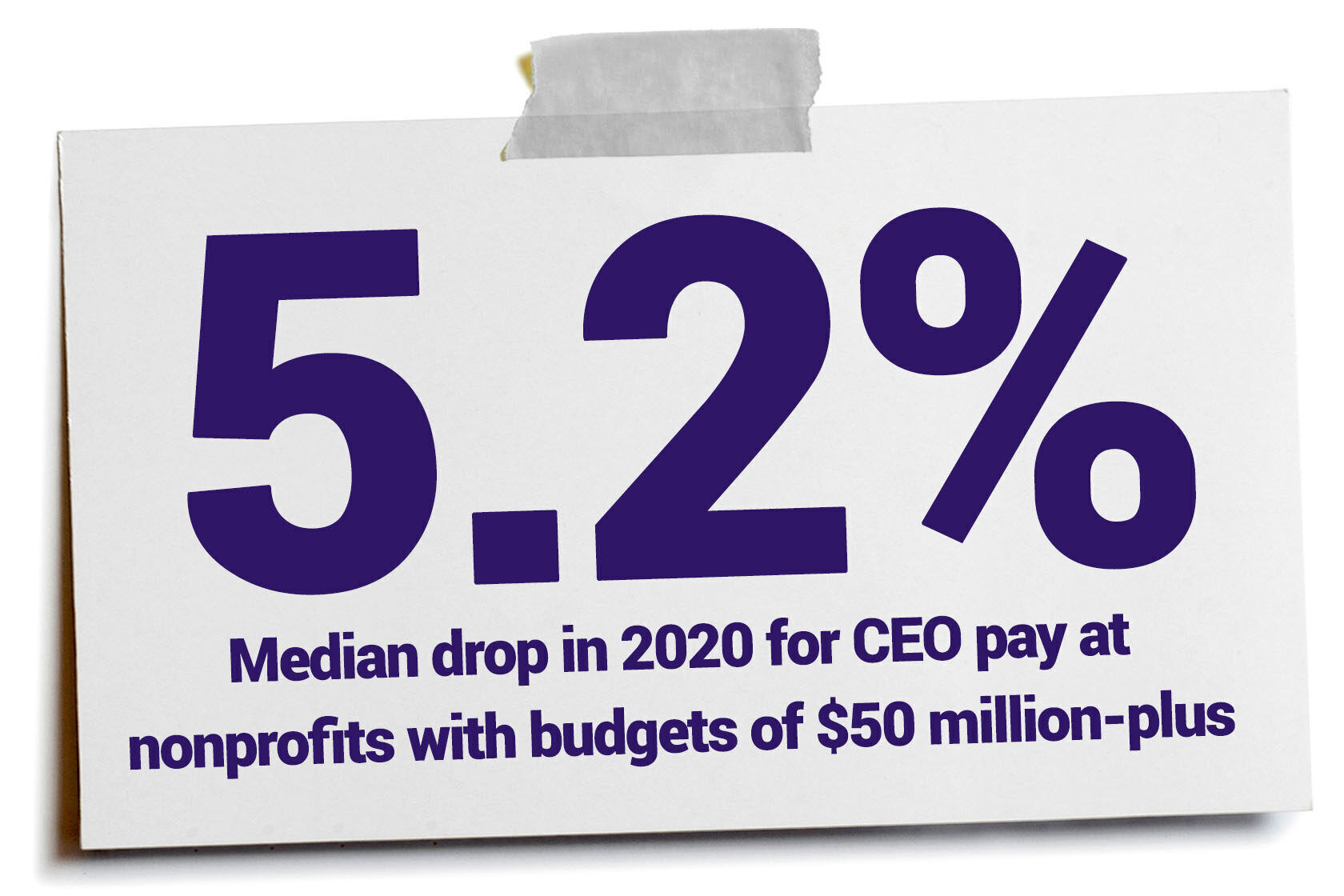
According to Candid’s latest Nonprofit Compensation Report, the median compensation for CEOs at nonprofits with budgets of over $50 million decreased by 5.2 percent over the course of the 2020 fiscal year, and compensation for CEOs increased by 4.7 percent over all. The report, the most comprehensive nonprofit compensation study of its kind, draws from the tax data of nearly 88,000 nonprofits.
When the pandemic struck, executives across the economy — including those who lead nonprofits — reacted to the initial economic shock by announcing cuts to their own salaries. While the report does not draw an explicit connection between the pandemic and nonprofit CEO pay, it offers a snapshot of executive compensation at a pivotal moment for the nonprofit world.
Since then, salaries have largely increased at all levels, as organizations struggle to attract candidates amid staffing shortages, rampant inflation, and limited funding.
“The question of compensation — both for executives and for staff — is fundamentally about the ways that money flows to organizations in the sector,” said Sean Thomas-Breitfeld, co-executive director of the Building Movement Project. “It’s about not investing sufficient resources for human-service organizations to meet the demands for their services, particularly in this post-Covid era, where we are seeing a lot of economic insecurity.”
Since 2020, organizations have struggled to retain staff — including at the executive level — as a result of burnout and competition over adequate compensation and benefits. In 2019, a survey by the Building Movement Project found that more than two in five nonprofit CEOs of color felt their salary was not high enough for their workload.
For Thomas-Breitfeld, the dip in executive compensation at the largest nonprofits in 2020 might be a cause for concern as it came at a time when more people of color and women were assuming leadership roles. In the wake of protests sparked by George Floyd’s murder by Minneapolis police in 2020, nonprofits across the country stepped up efforts to recruit leaders of color.
The Candid report, which does not collect data on race, found an increase in women CEOs at nonprofits of all sizes, though they continue to make less than men. This is especially true at large nonprofits: While women CEOs made 96 cents for every dollar that men made at nonprofits with budgets under $250,000, they made only 81 cents for every dollar that men made at nonprofits with budgets of over $50 million.
“I worry that as leadership of the sector becomes more representative of the communities who are being served, that it will potentially lead to that same kind of disinvestment in our organizations that has happened in our cities — when the demographics change and white flight happens,” said Thomas-Breitfeld.
Stiff Competition for Leaders
Jan Masaoka, CEO of the California Association of Nonprofits, was surprised to see the drop in pay for CEOs at the largest nonprofits in 2020. Her organization, which collects its own data on salaries at California-based nonprofits, has noticed a rise in salaries over the past several years as groups struggle to retain and attract executives as well as employees who work directly with clients.
Yet she also noted that many nonprofits have been struggling to pay workers enough, with funding that can’t keep up with inflation and an intensified need for services as pandemic-era relief measures expire.
“There has been this sense of impending doom among nonprofits about money — that kind of pessimism usually results in lower salary increases,” said Masaoka. “We’re even seeing organizations turn down contracts and foundation grants because they can’t hire staff at the amounts that the contracts pay.”
Though an increase in charitable giving and federal relief after the initial shock of the pandemic have allowed nonprofits to offer significantly higher salaries to candidates, many organizations are still struggling to fill positions.
According to a 2022 survey by PNP Staffing Group, an organization that helps nonprofits recruit professionals, 50 percent of nonprofits noted that salaries had increased 20 to 25 percent over the past year. Yet in the same survey, 45 percent reported that they were unable to meet the salary expectations of their candidates.
“During the pandemic, nonprofits were in a really frightening situation because they didn’t know what was going to happen. They were losing donors because people were afraid of their feasibility,” said Ira Madin, executive vice president at PNP Staffing Group.
Madin said that while some executives at large organizations took temporary pay cuts at the beginning of the pandemic, their high earnings still left them at the “top of the range” for nonprofits.
According to the Candid report, executives at nonprofits with budgets of over $50 million earned a median salary of $279,000 in 2020, despite the pay cuts. The median salary for executives at nonprofits of all sizes was $150,000 in 2020.
Other data from the report:
- Executives employed at science, technology, and medical organizations earned the highest median compensation in 2020, at $187,000. Executives employed at religious institutions earned the least, at $65,000.
- While women now make up the majority of CEOs at smaller organizations with budgets under $2.5 million, they make up only 29 percent of CEOs at nonprofits with budgets of over $50 million.
- Executives in the Northeast earned the highest salaries, at $139,000, while executives in the Midwest earned the lowest, at $110,000. The District of Columbia had the highest median executive compensation in the country, at $175,000, followed by New York and Massachusetts.